- Android vs iOS App Development: Which Platform Should You Build First?
- iOS App Development: Strengths and Considerations
- Confused Between Android & iOS?
- Android App Development: Strengths and Considerations
- Android vs iOS App Development: Cost Comparison
- App Store vs. Play Store: Approval Process Guidelines
- Which Platform Has More Users
- Matching the Platform to Your Target Audience
- Not Sure Where Your Users Are?
- Monetization: Android vs. iOS
- Launching on Both Platforms at Once: Is it the Right Choice?
- Ready to Build the Right App First?
- FAQs – Android vs iOS app development
- So, Which Platform Wins?
Android vs iOS App Development: Which Platform Should You Build First?
Android vs iOS App Development depends on your budget, audience, and goals — Top Branding Altimeter helps you evaluate cost, timeline, and reach to pick the right platform and launch first, faster.
Let’s say you have an app idea – now comes the real decision: where should you build it first?
Before we get started, it is important to understand that the Android vs. iOS debate isn’t really about which platform is better; it’s about which fits your budget, your timeline, and your audience.
That is exactly what we’ll cover in this guide so you can make the call with actual data behind it, not a coin flip.
iOS App Development: Strengths and Considerations
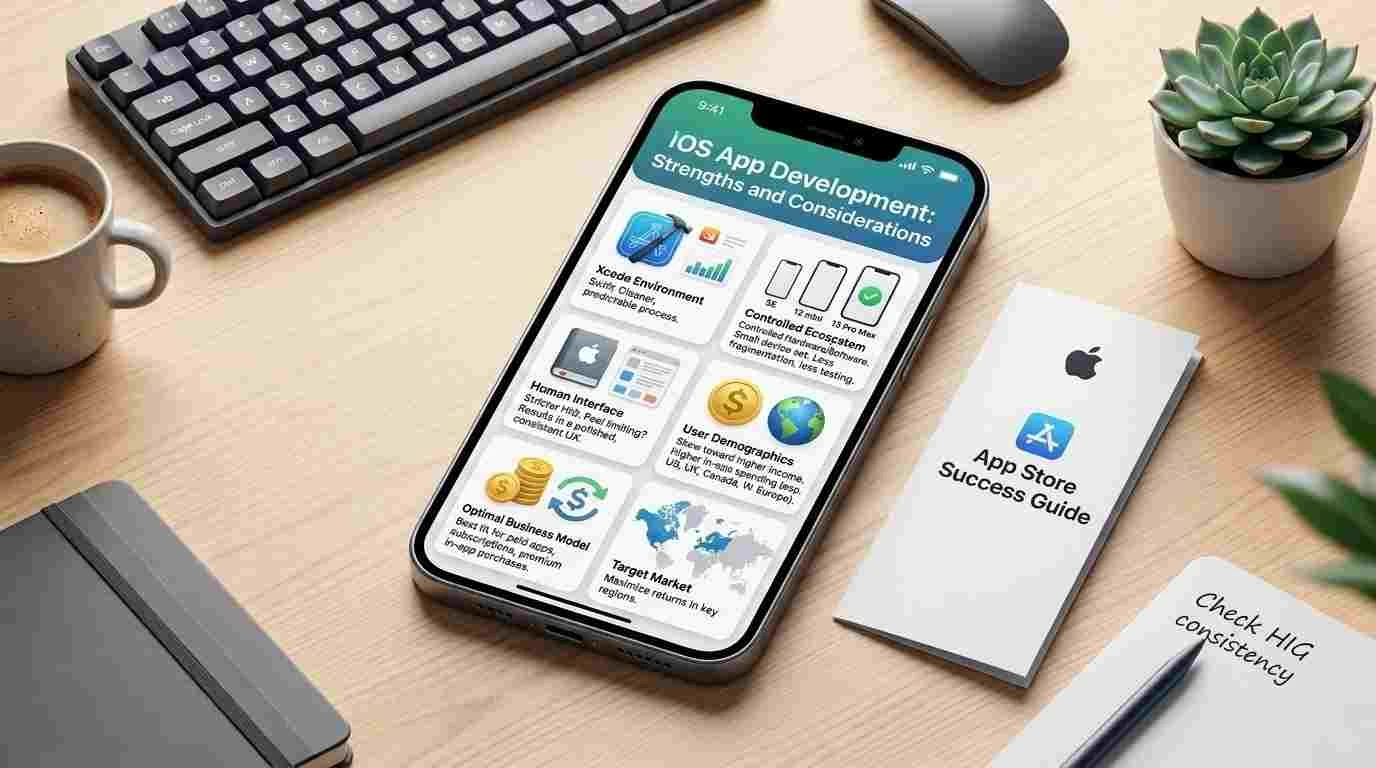
- iOS app development is built in Swift using Apple’s Xcode environment, which is widely considered a cleaner, more predictable dev process.
- Apple controls both hardware and software, so you’re designing for a much smaller set of device and screen sizes than Android: less fragmentation, less testing overhead
- Apple’s Human Interface Guidelines are stricter, which can feel limiting early on but usually results in a more polished, consistent user experience
- iOS users skew toward higher household income and higher in-app spending, especially in the US, UK, Canada, and Western Europe
- Best fit if your business model relies on paid apps, subscriptions, or premium in-app purchases and your target market is in one of those regions.
Confused Between Android & iOS?
Get expert guidance tailored to your brand — completely free consultation
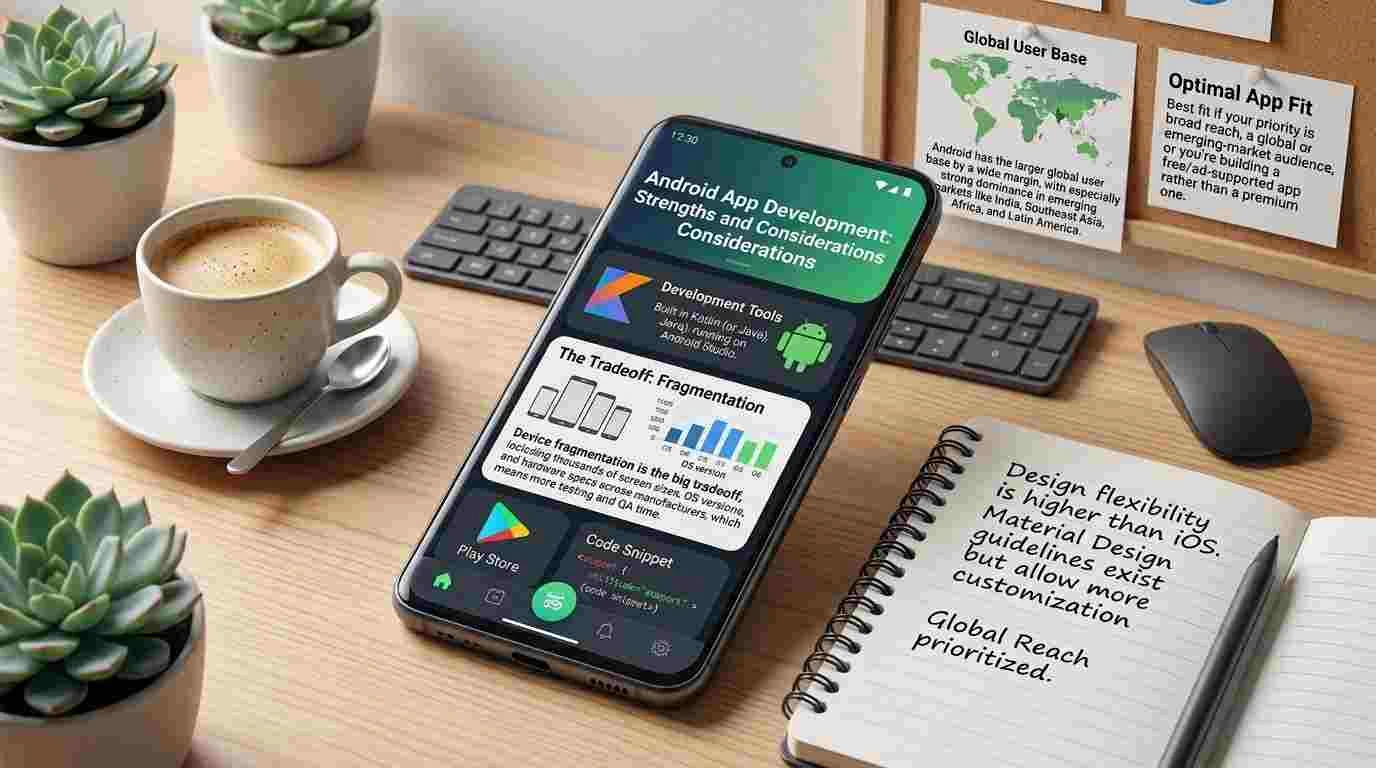
Android App Development: Strengths and Considerations
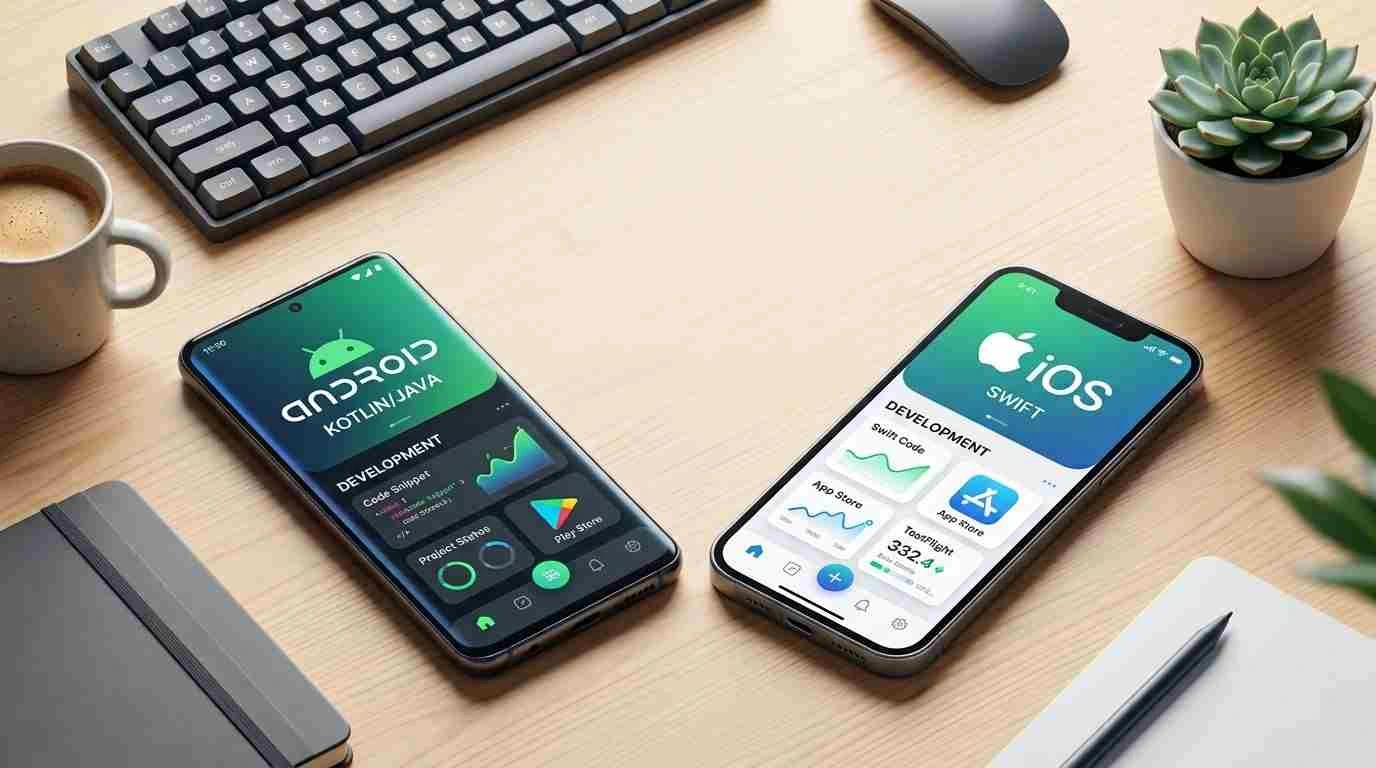
- Android mobile app development, on the other hand, is built primarily in Kotlin (or Java), running on Android Studio
- Device fragmentation is the big tradeoff, including thousands of screen sizes, OS versions, and hardware specs across manufacturers, which means more testing and QA time.
- Design flexibility is higher than iOS. Material Design guidelines exist but allow more customization
- Android has the larger global user base by a wide margin, with especially strong dominance in emerging markets like India, Southeast Asia, Africa, and Latin America
- Best fit if your priority is broad reach, a global or emerging-market audience, or you’re building a free/ad-supported app rather than a premium one.
Android vs iOS App Development: Cost Comparison
| Factor | iOS | Android |
| Average Dev Cost | Generally lower. Smaller devices/OS matrix means less testing and QA time | Generally higher. Device fragmentation adds testing and debugging hours |
| Design overhead | Lower — stricter HIG means fewer custom edge cases | Higher — more screen sizes and OS versions to design/test against |
| Developer availability | Slightly smaller talent pool, can push rates up in some markets | Larger global talent pool, often more competitive rates |
| Timeline impact | Often faster to ship a first version | Often takes longer due to device testing |
| Best for | Businesses prioritizing polish and premium markets on a tighter timeline | Businesses prioritizing reach and willing to invest more testing time |
Get an Accurate App Cost Estimate
Compare iOS and Android costs before you commit your budget.
App Store vs. Play Store: Approval Process Guidelines
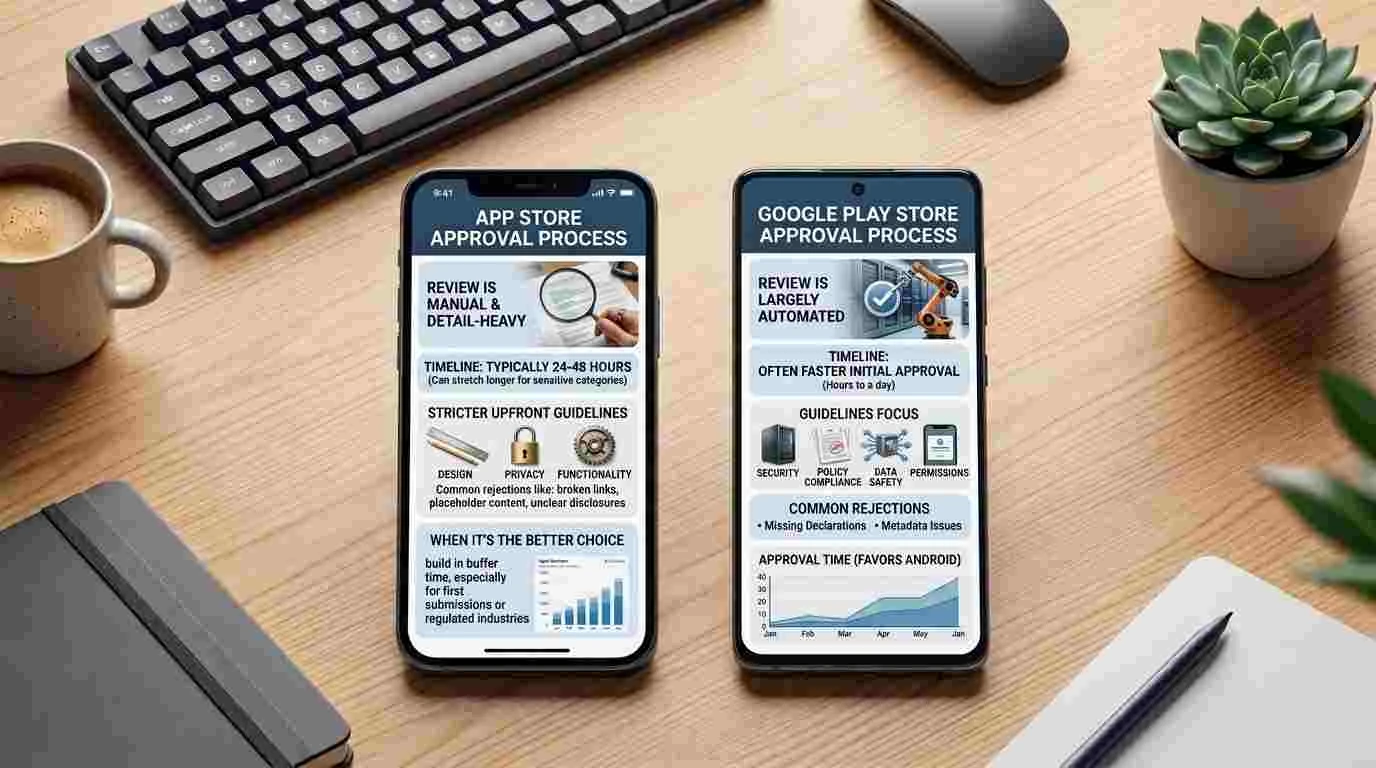
Here we’ve put together a comparison guide to help you figure out what platform works for your needs:
App Store:
- Apple’s App Store review is manual and detail-heavy. It’s typically 24-48 hours, but can stretch longer if your app touches sensitive categories (finance, health, kids)
- Apple has stricter upfront guidelines mean fewer surprise rejections after launch.
- App Store review guidelines are known for stricter design, privacy, and functionality checks — apps get rejected for things like broken links, placeholder content, or unclear privacy disclosures.
- When it’s the better choice: build in buffer time for iOS review, especially if it’s your first submission or you’re in a regulated industry.
Google Play Store:
- Google Play’s review is largely automated, with spot manual checks — often resulting in faster initial approval, sometimes within a few hours to a day.
- Approval time generally favors Android for speed.
- Play Store review guidelines focus more on security, policy compliance (data safety, permissions), and content ratings; rejections often come from missing declarations or metadata issues.
Which Platform Has More Users
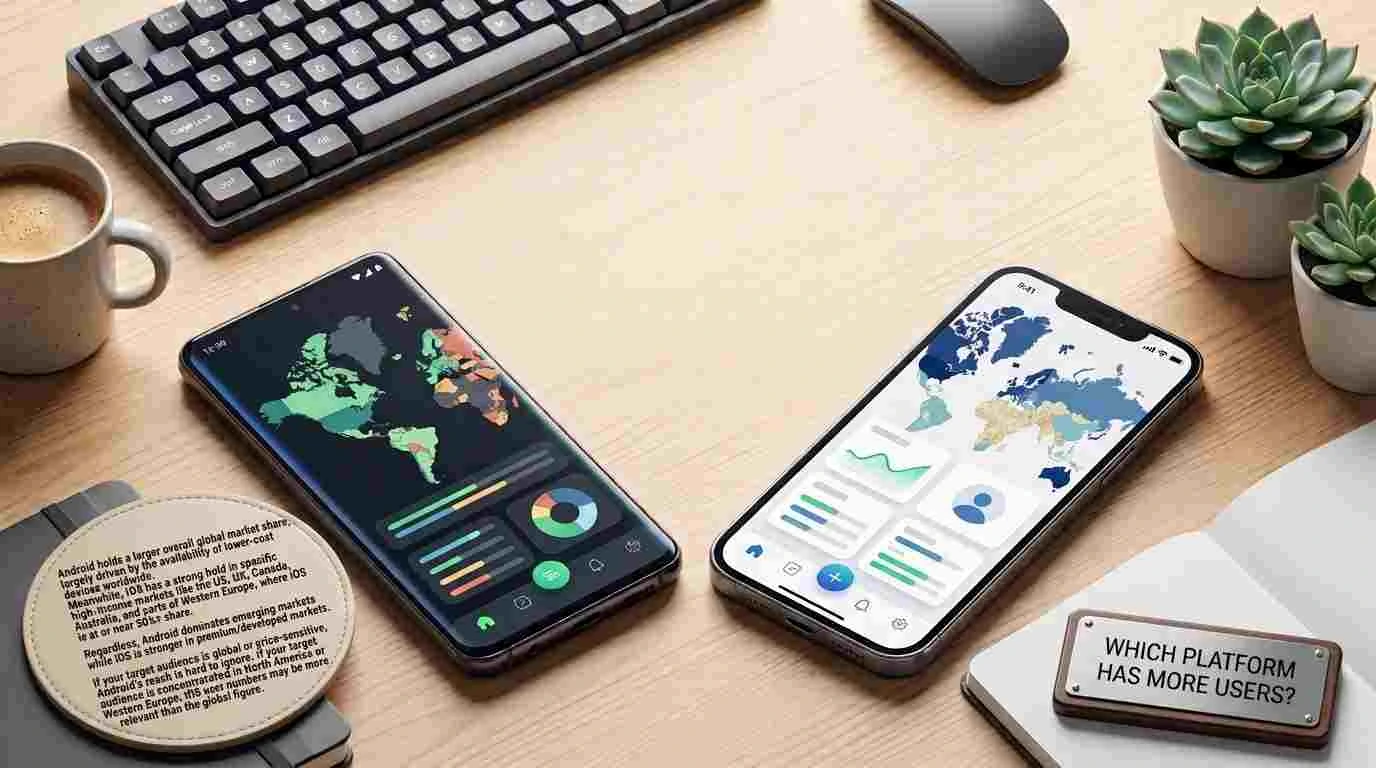
Android holds a larger overall market share globally, largely driven by the availability of lower-cost devices worldwide.
Meanwhile, iOS has a strong hold in specific high-income markets like the US, UK, Canada, Australia, and parts of Western Europe, where iOS is at or near 50%+ share.
Regardless, Android dominates emerging markets while iOS is stronger in premium/developed markets
If your target audience is global or price-sensitive, Android’s reach is hard to ignore. If your target audience is concentrated in North America or Western Europe, iOS user numbers may be more relevant than the global figure.
Matching the Platform to Your Target Audience

Matching the platform of your choice to your target audience starts with three questions:
- Where are your users located?
- What’s their spending behavior?
- What service are they most likely to use?
B2C apps targeting younger, price-sensitive, or global audiences often see stronger traction on Android first, while B2B, premium, or subscription-based apps targeting North America/Western Europe often perform better launching on iOS first
Check existing data if you have it, such as website traffic device breakdown, competitor app reviews, or customer surveys, which can reveal actual platform preference within your niche.
Don’t guess it; even basic analytics (Google Analytics device type, social media follower demographics) can point you in the right direction before you commit budget.
Not Sure Where Your Users Are?
Get expert guidance tailored to your brand — completely free consultation
Monetization: Android vs. iOS
| Factor | Android | iOS |
| Primary model | Ad revenue, freemium | Paid apps, subscriptions, in-app purchases |
| User base | Larger, more price-sensitive | Smaller, higher spending power |
| Revenue per user | Lower on average | Higher on average |
| Total app store revenue | Competitive due to volume | Competitive due to per-user spend |
| Best fit | Volume-driven models (ads, scaled freemium) | Spend-driven models (subscriptions, upgrades, one-time purchases) |
Launching on Both Platforms at Once: Is it the Right Choice?
- It roughly doubles design and QA time if built natively for both
- Cross-platform app launch strategy options like Flutter or React Native cut that cost using one shared codebase.
- Tradeoff: cross-platform apps can struggle with heavy features like AR or complex animations
- Mobile app platform strategy should start with budget. tight budget means native-first is usually smarter than a rushed dual launch
- Native-first works best for apps needing polish or platform-specific features
- Cross-platform works best for simple apps needing fast, broad market coverage.
Ready to Build the Right App First?
Get expert guidance tailored to your brand — completely free consultation
FAQs – Android vs iOS app development
Should I launch my app on iOS first or Android first?
It depends on your audience and budget. iOS suits premium, revenue-focused launches in North America/Western Europe; Android suits broader reach and price-sensitive markets.
Is it more expensive to develop for iOS or Android?
Android development is usually pricier due to device fragmentation and extra testing. iOS is typically faster and cheaper to build for.
Which platform has a faster app store approval process?
Google Play is generally faster, often within a day. Apple’s App Store review takes longer but catches more issues upfront.
How do I decide which platform matches my target audience?
Look at your users’ location, spending habits, and device data. Website analytics or competitor app reviews can help confirm the right fit.
Can I launch on both platforms at the same time on a budget?
Yes, using a cross-platform framework like Flutter or React Native. It’s more budget-friendly than building native apps for both separately.
Which platform generally sees higher app store revenue?
It’s close overall. Android wins on volume, while iOS earns more revenue per user on average.
Do Android and iOS apps need separate design guidelines?
Yes. Apple follows Human Interface Guidelines, while Android follows Material Design; each has different UI expectations.
What happens if I only launch on one platform first?
You limit your initial reach, but it lets you validate your app with less budget before expanding to the second platform.
So, Which Platform Wins?
There’s no universal right answer to Android vs iOS app development, only the right answer for your business right now.
iOS gives you polish and premium spending power. Android gives you scale and global reach. Your budget, audience, and goals decide which one comes first.
Not sure which platform fits your app? Talk to our team at Top Branding Altimeter – we’ll help you map out the right launch strategy for your budget and goals.
Ready to Grow Your Business?
Get expert guidance tailored to your brand — completely free consultation
Get Free Consultation