
Choosing the right ecommerce digital marketing agency can make or break your online store’s growth in today’s competitive market
Let’s be honest: trying to scale an online store right now feels a bit like trying to build a plane while it’s flying. The algorithms change by the hour, ad costs are fluctuating, and consumer attention spans are shorter than ever.
If you have been staring at your Shopify or WooCommerce dashboard, wondering how on earth to break through your current revenue plateau, you are not alone. Building a high-converting store requires specialized e-commerce website optimization to turn those visitors into buyers. When selecting an ecommerce digital marketing agency, focus on long-term growth instead of short-term vanity metrics.
When you reach this crossroads, the temptation to outsource becomes real. You open up Google, type in something like digital marketing services near me, and get hit with a tidal wave of options. Everyone promises the moon. Everyone claims they have a “secret framework” for 10x growth.
But here is the truth: finding a true growth partner—a specialized e-commerce digital marketing agency that actually understands margins, inventory, and cost per acquisition—is a completely different ballgame.
Let’s skip the corporate jargon and break down exactly how to find an agency that actually moves the needle for your brand, what it should cost, and how to avoid the common traps that drain your budget.
Why Generic Marketing Agencies Will Break Your Heart (and Wallet)

A lot of business owners assume that marketing is marketing. If an agency can get great results for a local dental practice or a real estate corporate office, they should be able to sell shoes or skincare online, right? But blending your visual identity with strategy is key, which is why understanding the connection between branding and web design is crucial for online retail success.
Not exactly. In fact, thinking this way is one of the fastest ways to burn through your capital. Ecommerce marketing is an entirely different beast.
You aren’t just looking for simple phone calls or form fills—strategies that work wonders when setting up Google Ads For Doctors Seo Outline or local clinics—but in retail, you need friction-free transactions, high average order values (AOV), and strong customer lifetime value (LTV).
A generic agency might celebrate a “100% increase in traffic,” but if that traffic doesn’t convert into actual revenue, you can’t pay your suppliers with those clicks.
When you hire a specialized SEO agency for e-commerce, you are paying for a team that already knows the rules of the game. They understand:
Complex Technical SEO: Dealing with thousands of product pages, handling out-of-stock items without breaking your links, and managing duplicate content issues caused by product variants (like sizes and colors).
High-Converting Funnels: Optimizing your checkout flow and setting up abandoned cart sequences that actually recover lost sales.

Data-Driven Merchandising: Understanding how your digital marketing strategy directly impacts your physical inventory levels.
If an agency spends your discovery call talking about “brand awareness” instead of conversion rates and return on ad spend (ROAS), consider it a major warning sign. A good ecommerce digital marketing agency doesn’t just bring traffic, it builds a complete revenue system for your store.
Tired of Traffic That Doesn’t Convert?
Find out what’s really holding back your store’s revenue
Global Niche Experts vs. Local Support: The Ultimate Dilemma
When you start looking for external help, your first instinct might be to search for marketing businesses near me. There is a certain comfort in knowing you can grab a coffee with your account manager or pop into their office when you want to discuss strategy.
But in the digital space, limiting yourself to a geographic radius can mean missing out on the exact expertise your business needs. For instance, while a targeted Milwaukee SEO strategy works perfectly for dominant regional visibility, a scaling global e-commerce store requires a borderless approach. Let’s look at how the two options stack up:
Local Marketing Agencies
The Good: They are in your time zone, they understand your local community, and communication often feels incredibly personal and collaborative.
The Bad: Unless you live in a major tech hub, local agencies are often generalists. They might handle your SEO on Monday, write a billboard ad for a local lawyer on Tuesday, and try to manage your complex Google Shopping feed on Wednesday.
Remote/Niche Ecommerce Agencies
The Good: You get access to world-class specialists who do nothing but scale online retail brands day in and day out. They know what is working across hundreds of similar stores and can apply those winning strategies to your business instantly.
The Bad: You are communicating via Slack, Zoom, and email. If you value physical, face-to-face meetings, the distance can take some getting used to.
The Reality Check: For online retail, niche expertise beats physical proximity every single time.
It is far better to work with an elite team halfway across the country that lives and breathes eCommerce than a friendly neighbor who is learning how to optimize a Shopify store on your dime. Working with the right ecommerce digital marketing agency can improve SEO, paid ads, and customer lifetime value together.
Pulling Back the Curtain on Digital Marketing Agency Pricing
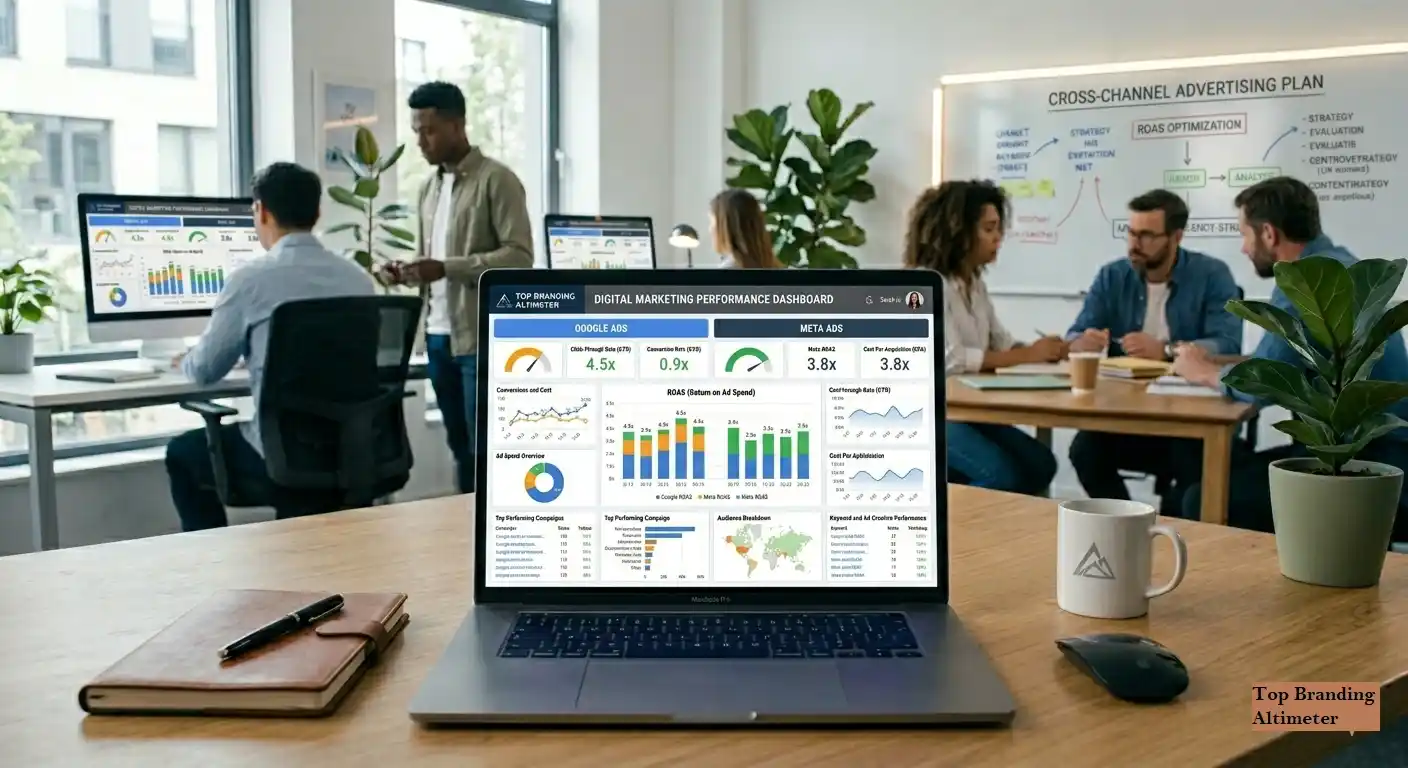
Let’s talk about the elephant in the room: money. One of the most frustrating parts of hiring an agency is dealing with the lack of transparency around digital marketing agency pricing.
You ask three different agencies for a quote, and you get three completely different numbers that look like they were pulled out of a hat.
To keep you from overpaying, let’s look at the three primary pricing models used in the industry today, along with what you should realistically expect to pay.
1. The Monthly Retainer
This is the most traditional model. You pay a flat fee every month for a specific list of deliverables (e.g., 4 blog posts, technical site audits, and continuous link-building).
What it costs: For a reputable agency, expect this to range anywhere from $2,500 to $10,000+ per month, depending on the size of your store and the depth of the work.
Watch out for “ghost retainers,” where you pay the fee but notice the communication and optimization slow down significantly after month three.
2. Percentage of Ad Spend
This model is standard practice for agencies managing your paid acquisition channels, like Meta Ads, Google Shopping, or TikTok Ads. If you want to scale organic and paid reach together, check out how tailored social media management packages can balance your budget. Many brands fail because they hire a generic agency instead of a specialized ecommerce digital marketing agency.
What it costs: Typically 10% to 20% of your monthly ad budget, often with a minimum base fee (e.g., $2,000 or 15% of ad spend, whichever is higher).
Watch out for: Perverted incentives. If an agency only makes money when you spend more on ads, they might encourage you to increase your budget even if your profit margins are taking a hit. A reliable ecommerce digital marketing agency helps online stores grow faster with data-driven strategies.
3. The Performance-Based / Revenue-Share Model
This is growing in popularity among high-tier ecommerce agencies. You pay a lower, baseline fee to cover their basic operational costs, combined with a percentage of the net revenue growth they directly generate for your store.
What it costs: Highly variable, but it aligns the agency’s success directly with yours. If you don’t make money, they don’t make money.
Watch out for: Attributions. You need to establish crystal-clear tracking from day one so everyone agrees on exactly which sales were driven by the agency’s efforts versus your organic word-of-mouth.
Get Clear, Honest Ecommerce Marketing Pricing
No hidden fees, just a plan built for your store’s growth
How to Spot the Red Flags Before You Sign a Contract
Before you hand over your credit card or sign a six-month commitment, take a deep breath and look for these common warning signs during the sales process:
They guarantee rankings or sales numbers: run away. No one owns Google’s algorithm, and no one can guarantee an exact number of sales. A trustworthy partner promises transparent data, rigorous testing, and solid strategy—not magic tricks.
The case studies lack context: If an agency brags about a “500% increase in revenue,” ask them what the starting numbers were. Going from $1,000 a month to $5,000 a month is great, but it requires a totally different strategy than scaling a brand from $100,000 to $500,000.
They hide your data: You should always maintain 100% ownership of your Google Analytics, ad accounts, and website backend. If an agency insists on building campaigns inside their private accounts that you can’t access, they are holding your business hostage.
Frequently Asked Questions (FAQs)
What does an ecommerce digital marketing agency actually do daily?
They manage technical search engine optimization (SEO), building and monitoring paid ad campaigns on Google and social media, creating automated email sequences, and analyzing user behavior to make your website easier to navigate.
Why shouldn’t I just hire a general marketing business near me?
While local generalist agencies are fantastic for brick-and-mortar service businesses, they rarely have the specialized technical skills required to run a high-volume online store.
Ecommerce requires deep knowledge of attribution modeling, conversion rate optimization (CRO), and complex product feed management that generalists simply don’t encounter in their day-to-day work. An experienced ecommerce digital marketing agency understands how to scale traffic without hurting profit margins.
How much do digital marketing services near me typically cost?
If you are looking at local, general agencies, pricing often starts lower—around $1,500 to $3,000 a month. For specialized e-commerce growth agencies, entry-level retainers typically start at $3,500 to $5,000 per month.
How long does it take to see real results from an ecommerce SEO agency?
SEO is a marathon, not a sprint. If an agency cleans up major technical errors or broken links, you might see a slight bump in traffic within the first 30 days.
However, sustainable, compounding growth in organic rankings, traffic, and revenue typically takes anywhere from 4 to 6 months of consistent effort to show its value truly.
Can I handle my store’s marketing myself to save money?
You can certainly handle the basics in the early days when you have more time than capital. However, as you scale, investing in professional website design for small business ensures your foundation is built to convert traffic automatically while you focus on operations.

Ready to Scale Your Online Store?
Partner with a team that turns traffic into real revenue
The Bottom Line
Scaling an ecommerce brand isn’t about finding a magic bullet; it’s about building a predictable system that turns traffic into profit. Before hiring an ecommerce digital marketing agency, always review their past ecommerce case studies and ROI results.
The right agency partner won’t just act as a vendor who checks off boxes—they will operate as an extension of your team, challenging your assumptions and steering you away from costly mistakes.
Take your time, ask the hard questions about pricing and data ownership, and prioritize deep industry expertise over a convenient office address. Your brand deserves a partner that knows the terrain.
Ready to take your online store to the next level? At Top Branding Altimeter, we help ecommerce businesses strip away the guesswork and scale with clear, data-driven strategies. Contact us today for a transparent, no-nonsense audit of your digital marketing setup!
Contact Top Branding Altimeter for a free ecommerce growth audit
Ready to Grow Your Business?
Get expert guidance tailored to your brand — completely free consultation
Get Free Consultation