- Software Development Life Cycle (SDLC): Complete Guide
- What Is Software Development Life Cycle?
- Why SDLC Matters in Software Development
- Main Phases of SDLC
- Requirement Gathering & Analysis
- System Design Phase
- Development & Coding Phase
- Testing & Quality Assurance
- Deployment Process
- Maintenance & Updates
- Popular SDLC Models
- Agile vs Waterfall
- How to Choose the Right SDLC Model
- Benefits of a Structured SDLC Process
- How Top Branding Altimeter Applies SDLC to Client Projects
- FAQ: Software Development Life Cycle
Software Development Life Cycle (SDLC): Complete Guide
Whether you are a startup founder planning your first product, a CTO evaluating development methodologies, or a business owner trying to understand how professional software teams operate — mastering the Software Development Life Cycle is one of the most valuable things you can do before investing a single dollar in a software project.
The Software Development Life Cycle, widely known as SDLC, is the structured process that professional software development teams follow to plan, create, test, and deliver software systems. It exists to bring order, predictability, and measurable quality to work that — without it — tends to run over budget, miss deadlines, and produce products users do not want.
At Top Branding Altimeter, we apply SDLC principles across every software, web, and mobile project we undertake — because disciplined process is what separates products that succeed at scale from prototypes that never ship.

This complete guide walks you through every phase, every major model, and every key decision point in the SDLC process — written for real people making real technology decisions in 2025.
What Is Software Development Life Cycle?
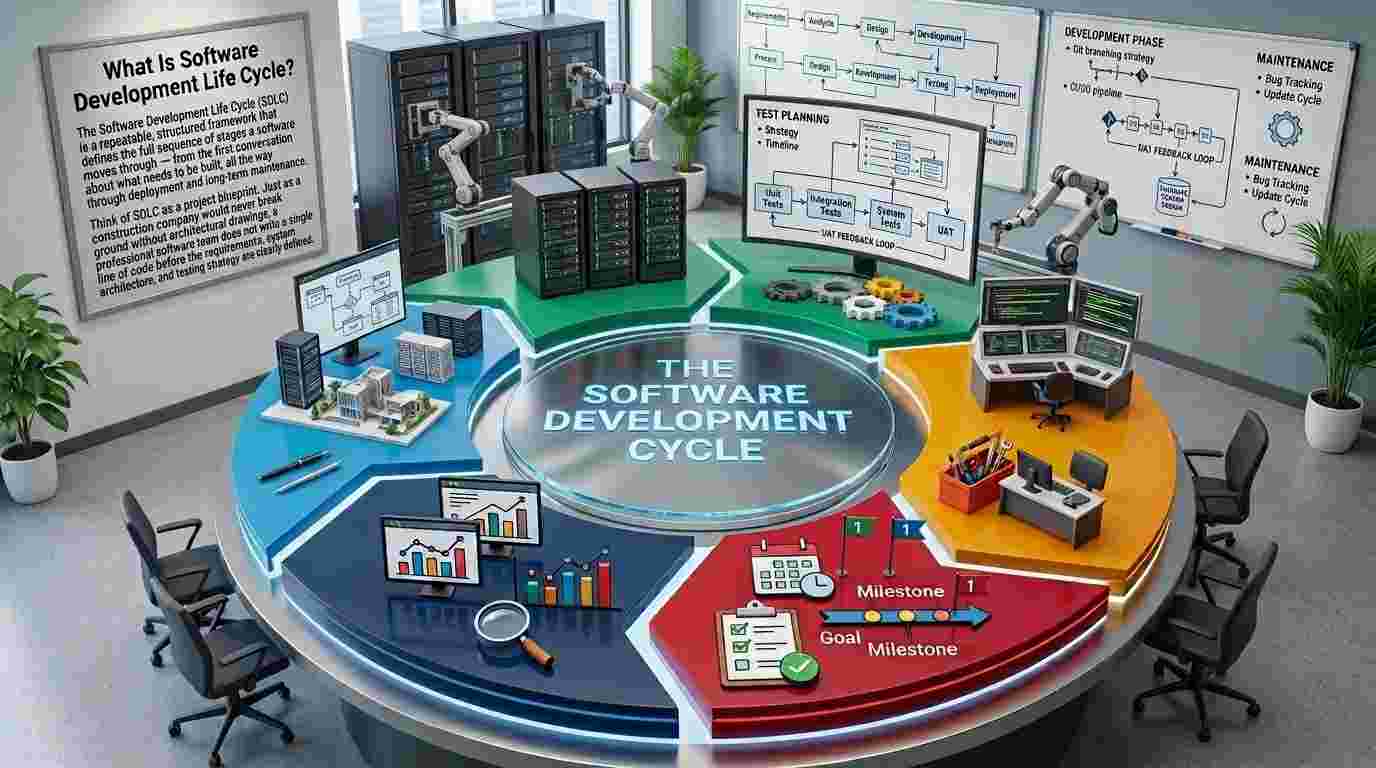
The Software Development Life Cycle (SDLC) is a repeatable, structured framework that defines the full sequence of stages a software project moves through — from the first conversation about what needs to be built, all the way through deployment and long-term maintenance.
Think of SDLC as a project blueprint. Just as a construction company would never break ground without architectural drawings, a professional software team does not write a single line of code before the requirements, system architecture, and testing strategy are clearly defined.
Why SDLC Is Not Just a Process — It Is a Risk Management Tool
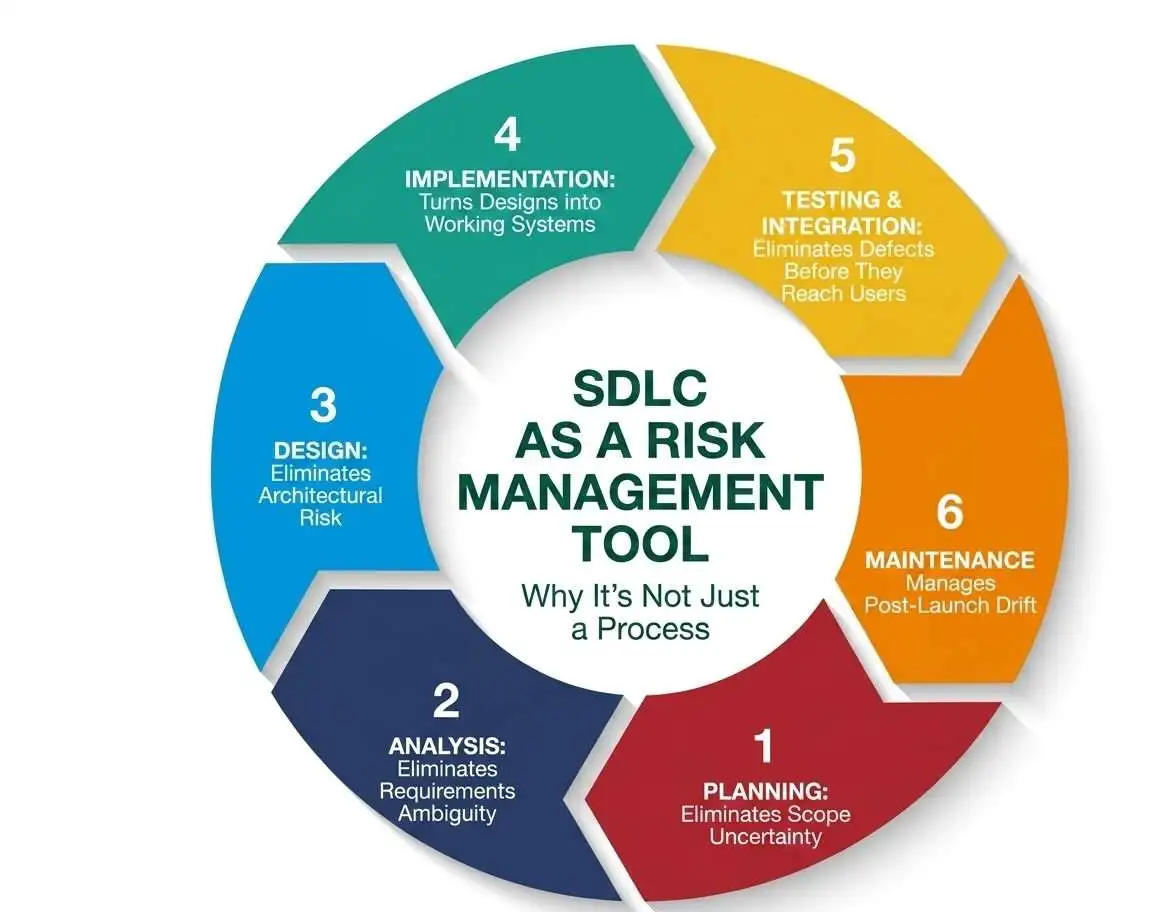
SDLC is fundamentally about reducing unknowns. Every phase of the software development life cycle is designed to surface and eliminate a specific category of risk:
- Planning eliminates scope uncertainty
- Analysis eliminates requirements ambiguity
- Design eliminates architectural risk
- Development turns designs into working systems
- Testing eliminates defects before they reach users
- Deployment controls release risk
- Maintenance manages post-launch drift
When teams skip or rush these phases, they pay for it — usually in the form of expensive rework, failed releases, or products that do not solve the problems they were built to address.
SDLC vs. Ad-Hoc Development
Without SDLC, most software projects fall into what engineers call “cowboy coding” — writing code reactively without documentation, testing protocols, or handoff procedures. The results are predictable: inconsistent quality, zero scalability, and a codebase no one wants to inherit.
SDLC replaces improvisation with engineering discipline. That is why every serious software development company — including Top Branding Altimeter — uses it as the operational foundation for every client engagement.
Why SDLC Matters in Software Development

The importance of SDLC goes well beyond technical teams. Business owners, product managers, and enterprise decision-makers benefit directly when their software partner operates within a well-defined software development life cycle.
Here is why SDLC matters across every stakeholder group:
Get a Free Software Consultation
For Business Owners and Startup Founders

SDLC gives you visibility. You know what is being built, when each milestone lands, and what quality gates exist before delivery. You are not funding a black box — you are investing in a transparent, phase-by-phase engineering process.
For Product Managers and CTOs
SDLC provides a common language between business requirements and technical execution. When requirements are documented in Phase 1, your development team is not making assumptions in Phase 3. This alignment is where great products are made.
For Development Teams
SDLC creates accountability. Every developer knows what they are building, why it matters, and what “done” looks like. Testing criteria exist before the first line of code is written. Handoffs between phases are clean and documented.
For Enterprise Decision-Makers
SDLC reduces organizational risk. When every software project follows a consistent lifecycle, audits are clean, documentation is current, and onboarding new team members is straightforward — because the process is the product.
Main Phases of SDLC
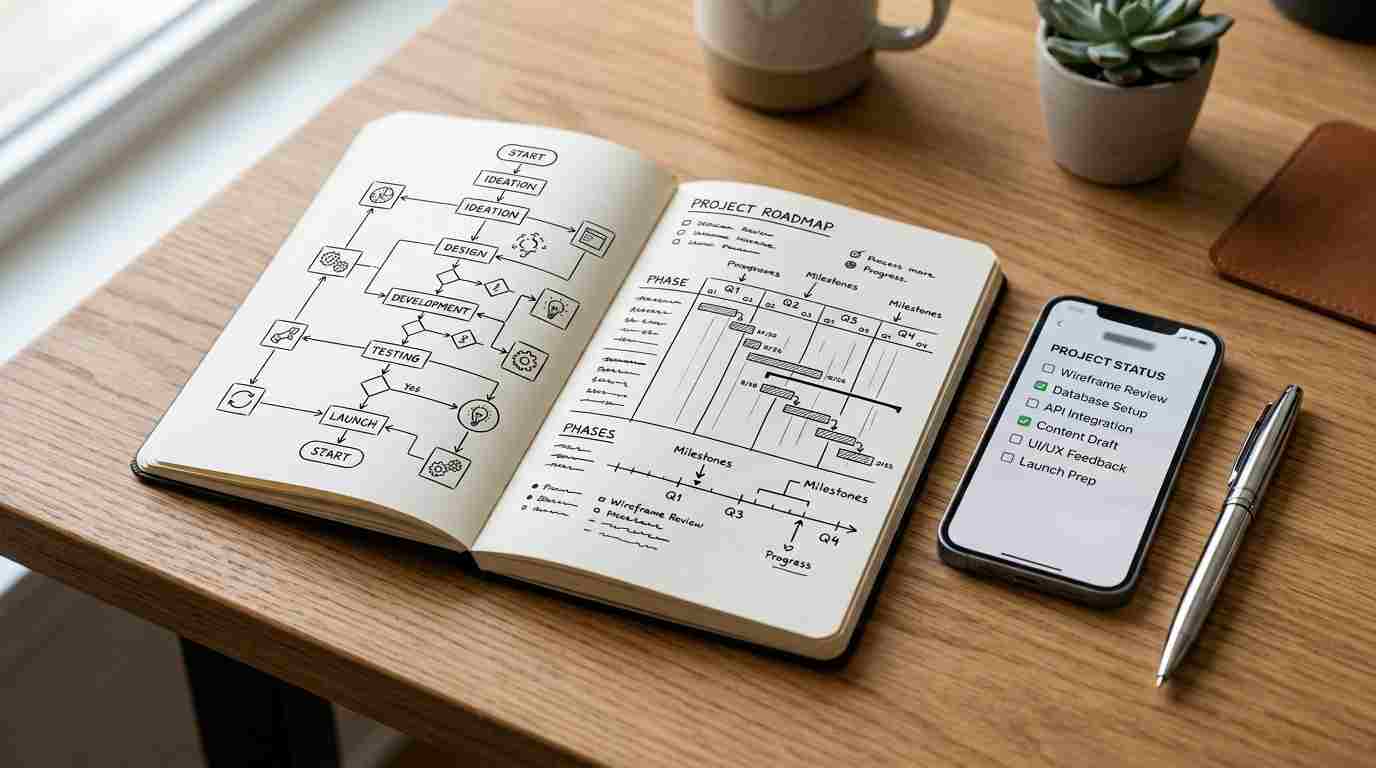
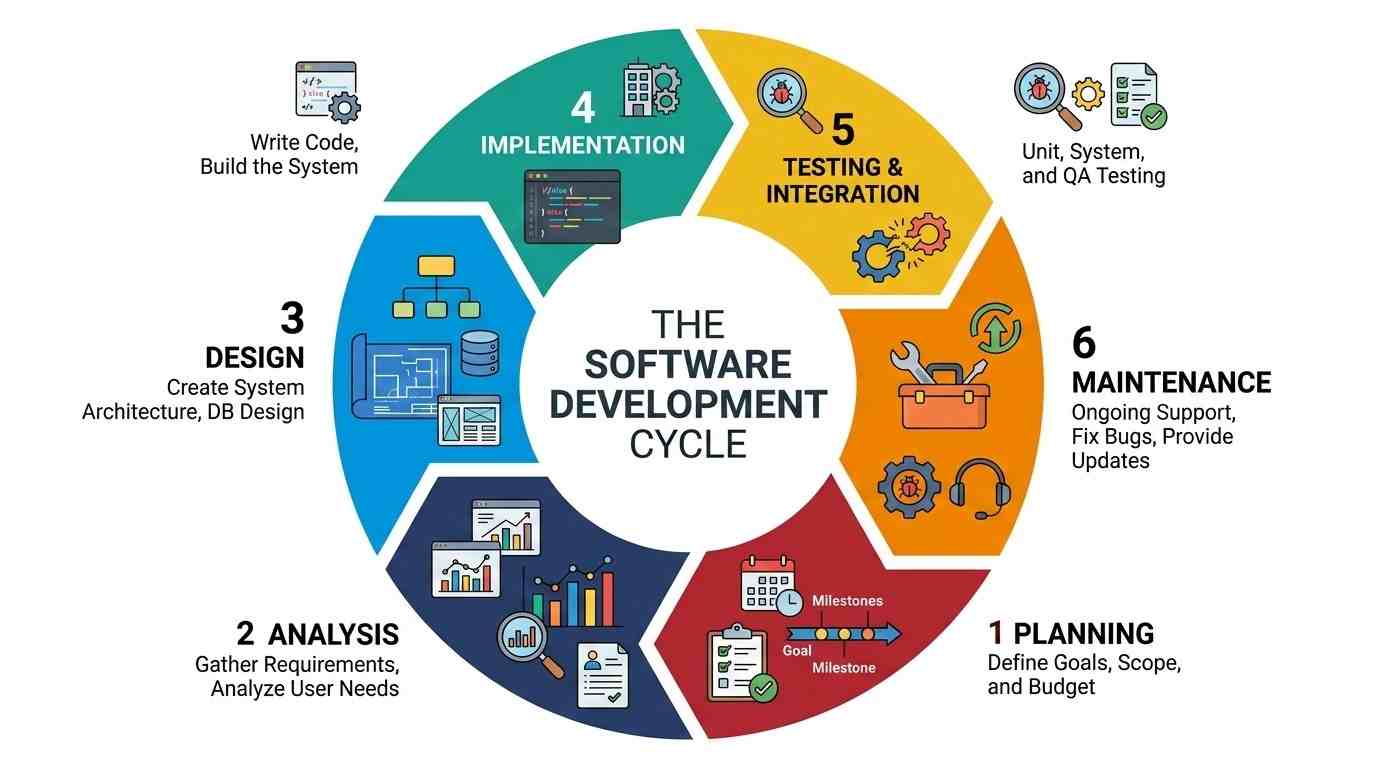
The core software development life cycle phases follow a logical sequence. While different SDLC models arrange these phases differently (more on that shortly), the fundamental stages remain consistent across the industry.
Planning
Planning is the foundation of every successful software project. During this phase, the project team defines the scope, establishes timelines, identifies resource requirements, and conducts an initial feasibility study.
Key outputs of the planning phase include:
- Project scope document — what is in scope and explicitly what is not
- Resource plan — team composition, technology stack, third-party tools
- Risk assessment — known constraints, dependencies, and risk mitigation strategies
- Budget and timeline — cost estimates tied to deliverables, not hours
Planning is where experienced software project management teams separate themselves. Cutting planning short is the single most common cause of project failure — and the one most easily prevented.
Analysis
Requirements analysis is where business needs are translated into technical specifications. This phase involves structured conversations with stakeholders, user research, and competitive analysis to build a complete picture of what the software must accomplish.
During analysis, the team produces:
- Functional requirements — what the system must do
- Non-functional requirements — performance benchmarks, security standards, compliance constraints
- Use case documentation — step-by-step user interaction flows
- Acceptance criteria — how the finished product will be evaluated
The analysis phase is critical because every decision made here cascades through the entire software development workflow. Requirements defined clearly in Phase 2 prevent costly change orders in Phase 4.
Design
System design translates requirements into architecture. This is where the technical team makes decisions about databases, APIs, infrastructure, UI/UX structure, and integration points.
Design exists at two levels in the SDLC framework:
High-Level Design (HLD): The overall system architecture — how components communicate, what platforms are used, how data flows between services.
Low-Level Design (LLD): The granular specification of each module — class structures, database schemas, API contracts, and component-level logic.
Good design documentation means developers are not making architectural decisions under deadline pressure. It also makes the codebase maintainable by anyone — not just the original author.
Development
Development is where the software is actually built. Armed with detailed design documents, developers write, review, and version-control the codebase according to the specifications established in earlier phases.
Best-practice development within the SDLC includes:
- Version control (Git) with branching strategies that match the SDLC model
- Code review protocols — peer review before any code merges to main branch
- Coding standards — consistent naming conventions, documentation requirements, and style guides
- Unit testing — developers write tests alongside code, not after
Development is not the starting point — it is Step 4. Teams that skip to development first consistently produce systems that are expensive to maintain and difficult to extend.
Testing
Testing and quality assurance validate that the software behaves as specified. This phase is where defects are found, documented, and resolved before the product reaches end users.
The SDLC testing phase typically includes:
- Unit testing — individual function and component validation
- Integration testing — verifying that modules communicate correctly
- System testing — end-to-end validation of the complete product
- User acceptance testing (UAT) — stakeholder sign-off that the product meets business requirements
- Performance testing — load, stress, and scalability benchmarks
- Security testing — vulnerability scanning and penetration testing
Quality assurance is not a gate to pass — it is an ongoing practice embedded throughout the software delivery lifecycle.
Deployment
Deployment moves the tested, approved software from development environments into production — where real users interact with it. A structured deployment process includes:
- Environment promotion strategy — development → staging → production
- Deployment automation — CI/CD pipelines that reduce human error in release steps
- Rollback plan — a defined procedure if production issues are detected post-launch
- Monitoring setup — real-time error tracking and performance dashboards active from Day 1
Modern software teams treat deployment as an engineering discipline, not a one-time event. The goal is repeatable, low-risk releases — whether deploying once a quarter or multiple times per day.
Maintenance
Maintenance is the longest phase of the software development life cycle, and the one most often underestimated in initial planning. After launch, software requires:
- Bug fixes — addressing defects reported by users in production
- Performance optimization — tuning database queries, caching layers, and infrastructure
- Security patches — responding to newly discovered vulnerabilities
- Feature evolution — adding capabilities as user needs and market conditions change
- Dependency management — keeping third-party libraries and frameworks current
Planning for maintenance from the start — including documentation, testing infrastructure, and monitoring — is the difference between software that ages gracefully and software that becomes a liability.
Requirement Gathering & Analysis
Requirement gathering deserves its own section because it is where most software projects quietly succeed or fail — long before development begins.
The requirement gathering process combines stakeholder interviews, competitive analysis, user journey mapping, and technical discovery into a single structured output: the Software Requirements Specification (SRS).
What a Strong Requirements Process Looks Like
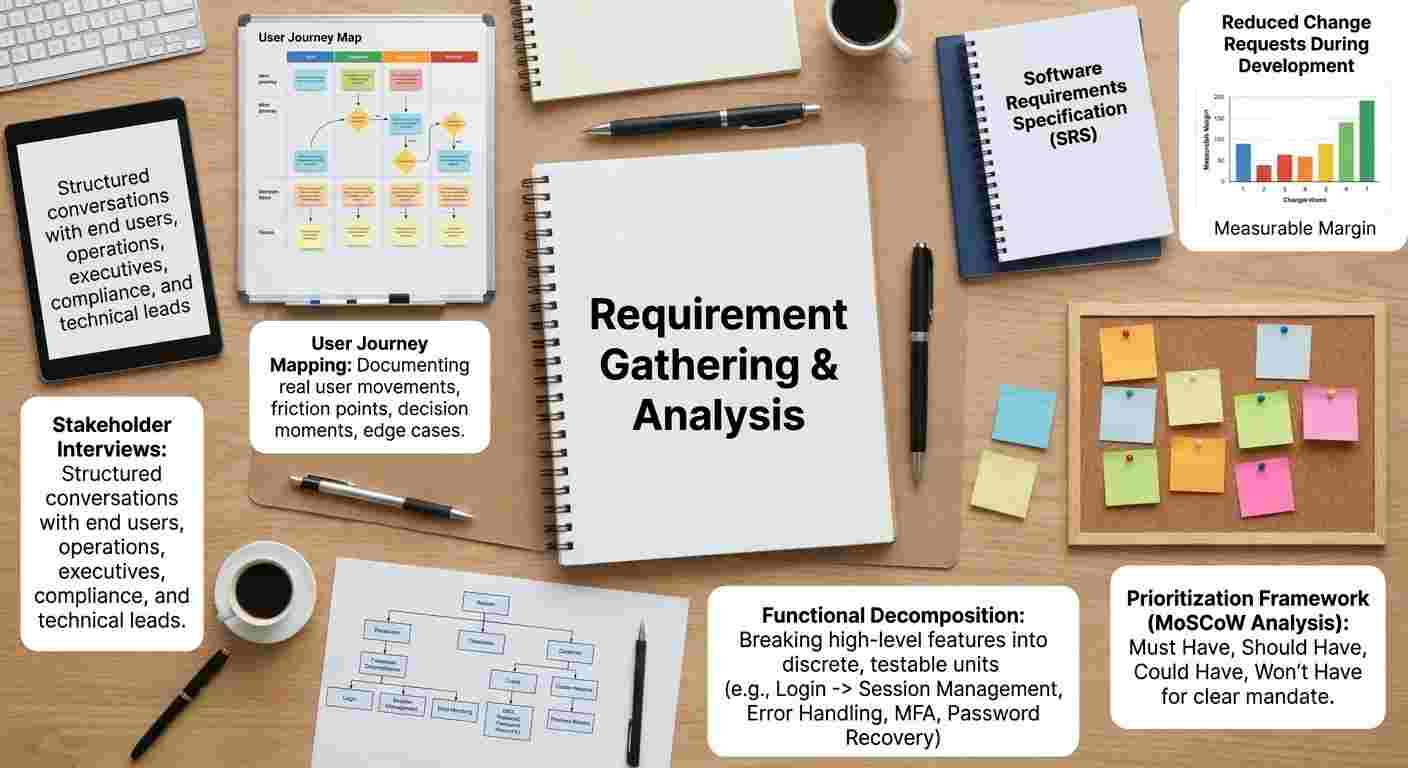
Stakeholder interviews: Structured conversations with every group affected by the software — end users, operations teams, executive sponsors, compliance officers, and technical leads.
User journey mapping: Documenting how real users move through the system to accomplish their goals — identifying friction points, decision moments, and edge cases.
Functional decomposition: Breaking high-level features into discrete, testable units. “The user can log in” becomes a set of defined behaviors: session management, error handling, multi-factor authentication, and password recovery flows.
Prioritization framework: Not every requirement is equal. MoSCoW analysis (Must Have, Should Have, Could Have, Won’t Have) gives teams a clear mandate for phased delivery without scope creep.
Teams that invest thoroughly in requirements gathering reduce change requests during development by a measurable margin. Change orders during coding are consistently the most expensive form of scope adjustment in software project management.
System Design Phase
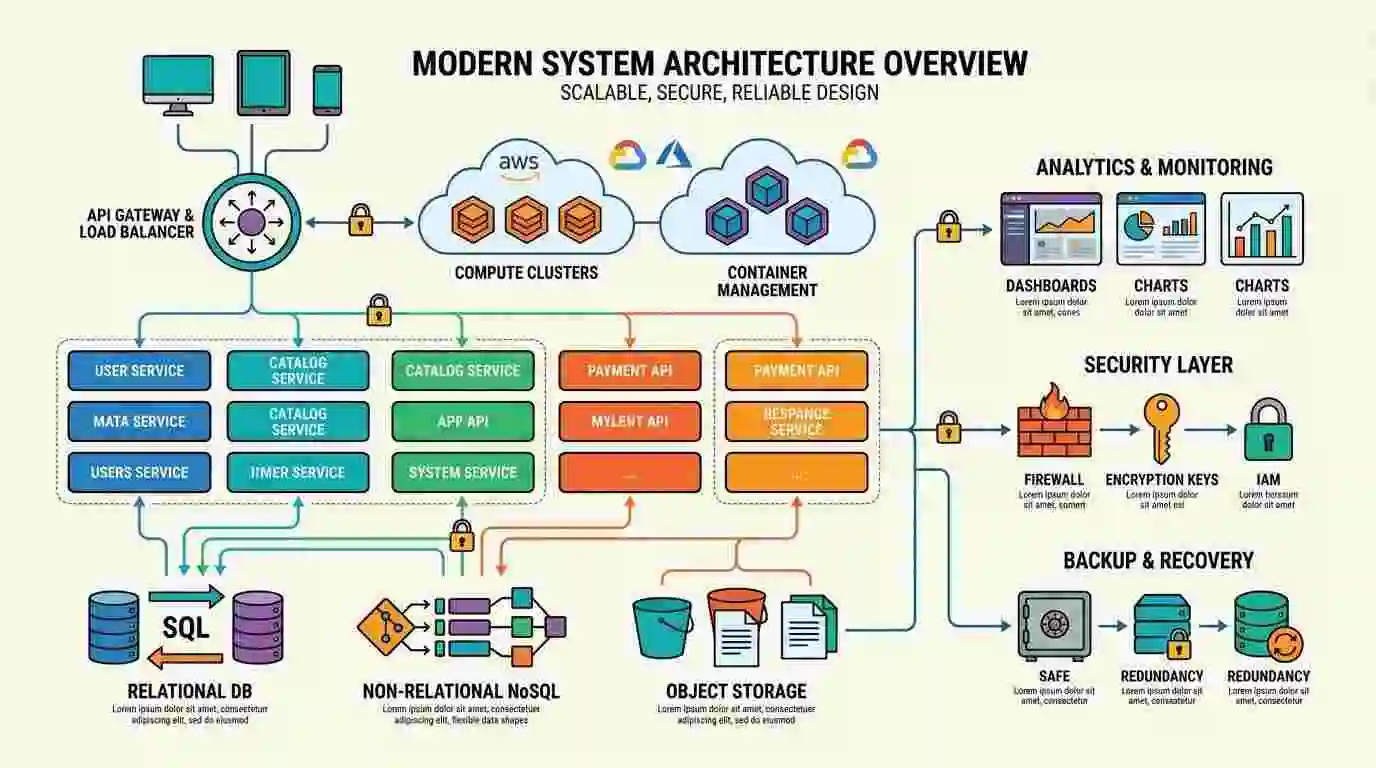
System design is the architectural blueprint phase. It is where the SDLC framework shifts from “what the software must do” to “how the software will be built.”
Architecture Decisions Made During System Design
- Technology stack selection — frontend frameworks, backend languages, database systems
- Infrastructure topology — cloud vs. on-premise, microservices vs. monolith, containerization strategy
- Data architecture — relational vs. NoSQL, schema design, data migration plans
- API design — RESTful vs. GraphQL, endpoint specifications, authentication protocols
- Security architecture — encryption standards, access control models, compliance requirements
- Scalability design — horizontal vs. vertical scaling strategies, load balancing, CDN configuration
System design documentation created here serves a dual purpose: it guides development now, and it becomes the system documentation that new engineers and operations teams depend on later.
Development & Coding Phase
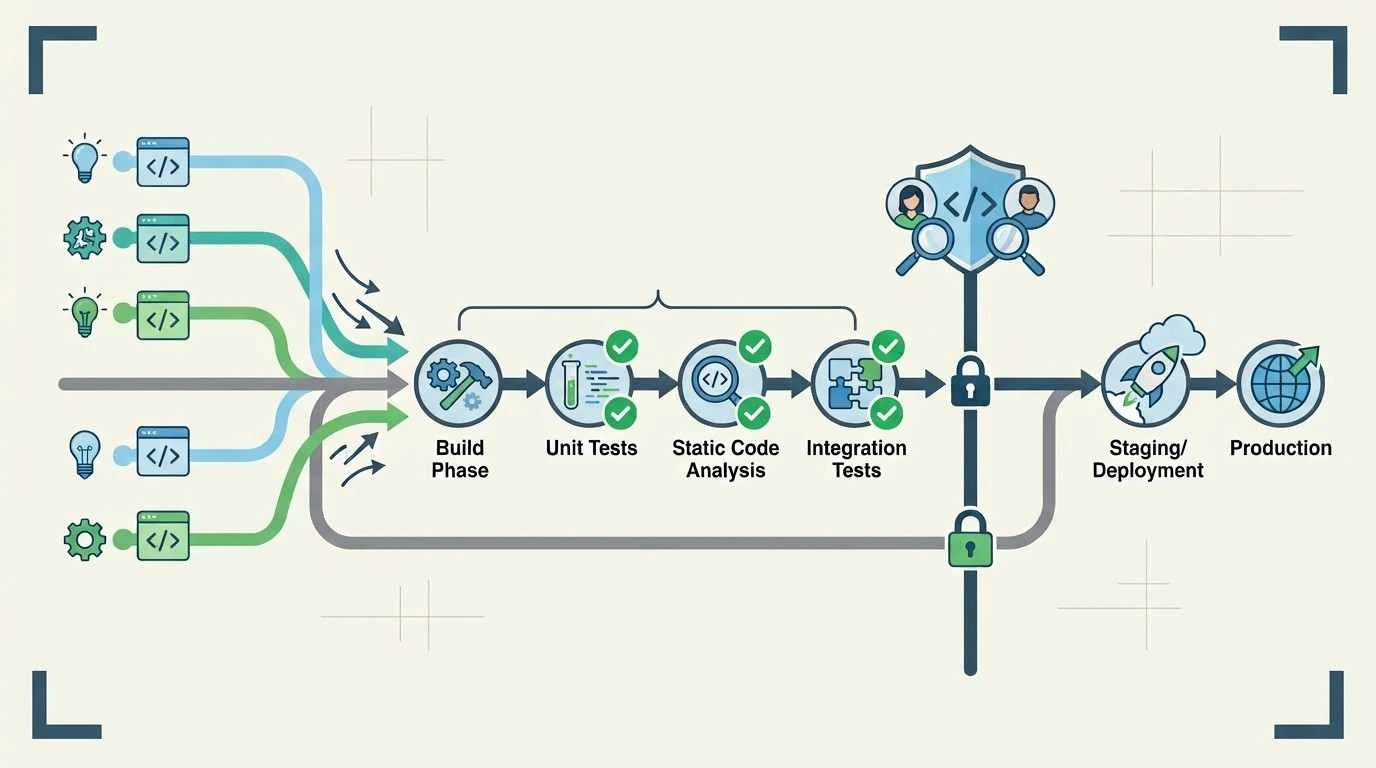
The development phase is where software engineering craft meets SDLC discipline. Developers work within the architecture defined in the design phase, building each component against the specifications from the analysis phase.
Explore Our Web Development Services
Development Best Practices Within the SDLC Framework
Feature branching: Each new feature or bug fix lives in an isolated branch, developed and tested before merging — preventing incomplete work from destabilizing the main codebase.
Continuous integration: Automated builds and tests run with every code commit, catching integration issues as they appear rather than at the end of a sprint.
Documentation-as-code: Code documentation is written alongside the code itself — function-level comments, README files, and API documentation — not after the fact.
Pair programming and code review: Senior engineers review all code before it merges, catching logic errors, security vulnerabilities, and maintainability issues early.
The development phase is not a sprint to the finish line — it is a disciplined, incremental process of building, reviewing, and validating in tight feedback loops.
Testing & Quality Assurance
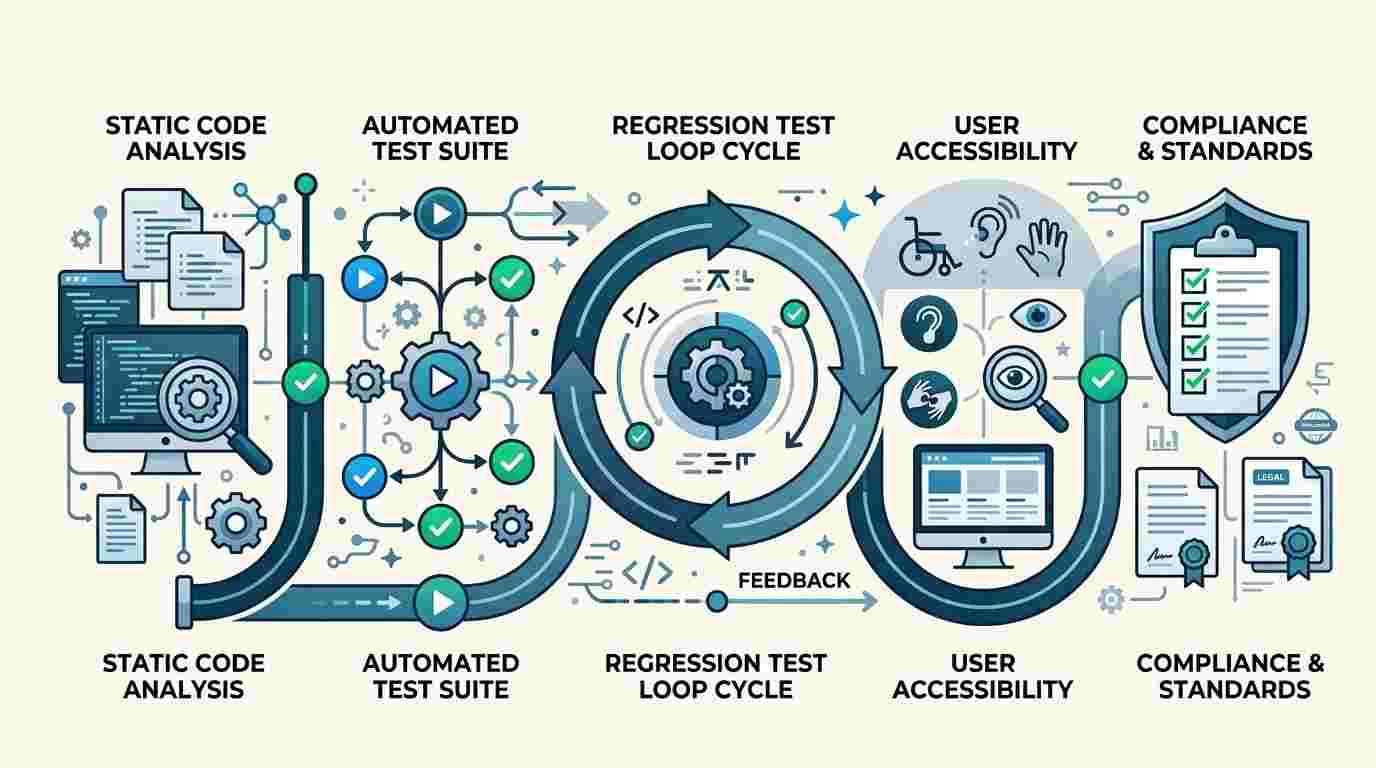
Quality assurance in the software development life cycle is not a final step — it is a continuous discipline that runs parallel to development and deployment.
The Testing Spectrum in Modern SDLC
Static testing: Code analysis and review before execution — catching issues at the source level.
Dynamic testing: Executing the software under real or simulated conditions to observe behavior.
Regression testing: Validating that new changes have not broken previously working functionality — critical in iterative SDLC models.
Exploratory testing: Human testers using the software as real users would, discovering defects that scripted tests miss.
Accessibility testing: Ensuring the software meets WCAG standards — required for any product serving the US market with compliance obligations.
Quality assurance is a professional investment, not an optional step. Studies across the software industry consistently show that defects found and fixed during testing cost a fraction of what defects cost when found in production.
Deployment Process
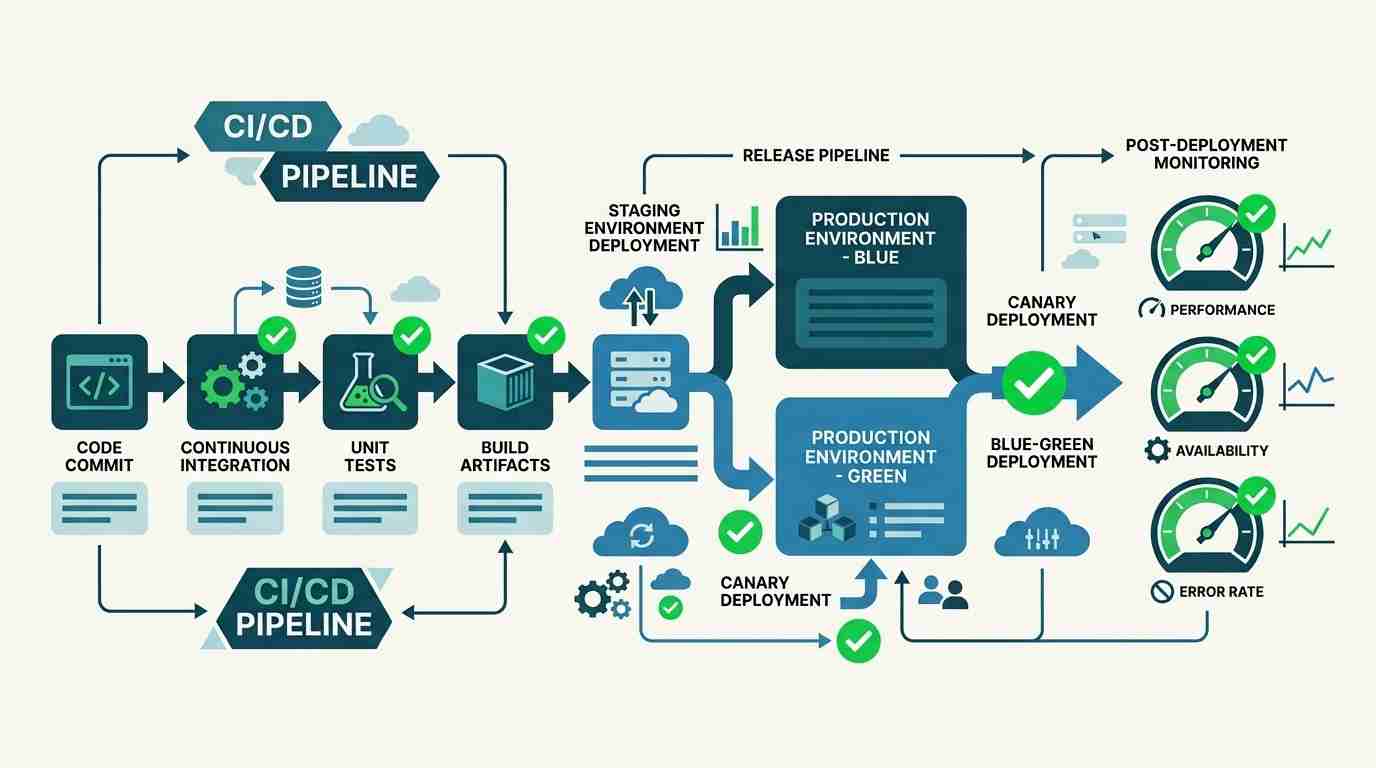
A professional deployment process is a release management system — planned, automated where possible, and designed for repeatable low-risk delivery.
View Our Mobile App Development Services
Modern Deployment Practices in the SDLC Framework
Blue-green deployments: Running two identical production environments allows instant rollback if issues are detected — zero-downtime releases.
Feature flags: Deploying code without activating features, then enabling them incrementally for controlled rollouts.
Canary releases: Routing a small percentage of traffic to the new version before full promotion — real-world validation before full exposure.
Infrastructure as code: Deployment environments are defined in version-controlled configuration files — reproducible and auditable.
Post-deployment monitoring: Error tracking, performance dashboards, and user behavior analytics activated at the moment of release.
Deployment is the handoff from engineering to operations. How it is managed determines whether a release is a controlled event or an unpredictable one.
Maintenance & Updates
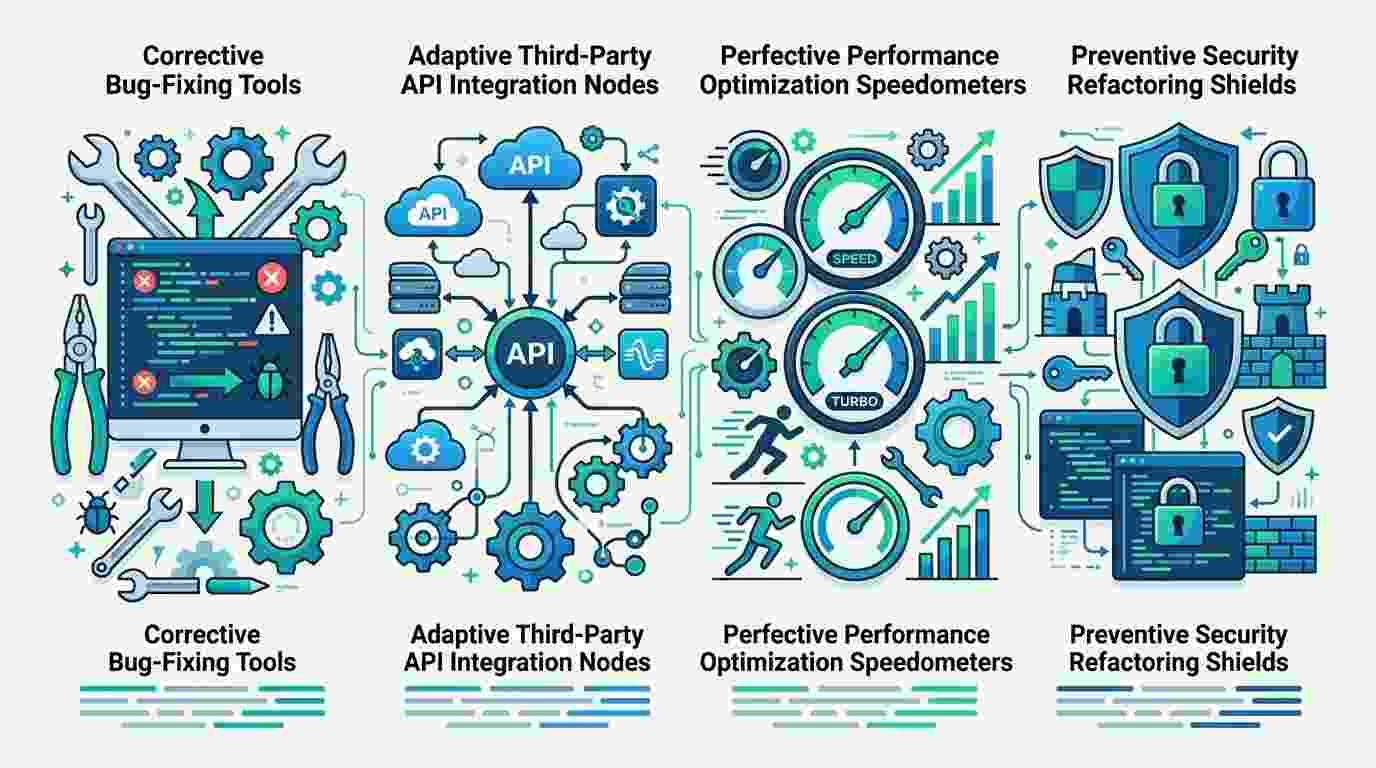
The maintenance phase extends the value of software investment over time. Without it, even well-built software degrades — accumulating technical debt, security exposure, and feature gaps relative to evolving user expectations.
Categories of Software Maintenance
Corrective maintenance: Fixing bugs discovered in production by users or monitoring systems.
Adaptive maintenance: Updating software to remain compatible with changes in operating systems, browsers, third-party APIs, or regulatory requirements.
Perfective maintenance: Improving performance, usability, or code quality without changing core functionality.
Preventive maintenance: Refactoring code and updating dependencies proactively to reduce future failure risk.
Professional software teams budget for maintenance from project inception — typically 15–20% of initial development cost annually. Teams that do not build this into their planning consistently face emergency remediation costs that dwarf what structured maintenance would have cost.
Popular SDLC Models
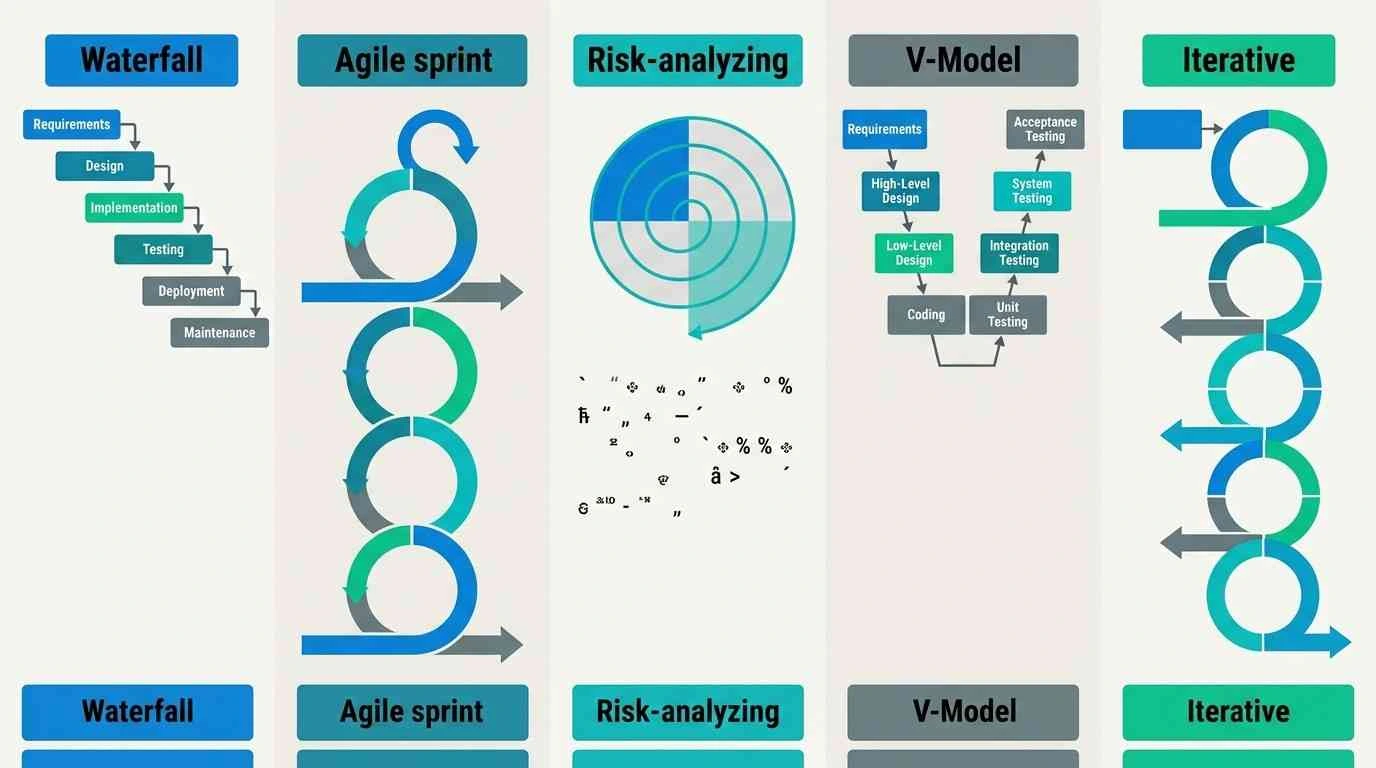
The software development life cycle is a framework, not a single methodology. Several distinct SDLC models have emerged to address different project types, team sizes, and business contexts.
Waterfall
The Waterfall model is the original SDLC methodology — a strictly sequential approach where each phase must be fully completed before the next begins. Requirements are locked at the start; no changes are accommodated mid-project.
Best for: Projects with well-defined, stable requirements — compliance systems, embedded software, government contracts.
Strengths: Clear milestones, comprehensive documentation, predictable timelines.
Limitations: Inflexible to change; defects discovered late are expensive to fix.
Agile
The Agile model organizes development into short, iterative cycles called sprints (typically 2–4 weeks). Each sprint delivers working software, and requirements can evolve between iterations based on stakeholder feedback.
Best for: Products in dynamic markets where requirements are expected to evolve — SaaS platforms, mobile applications, consumer web products.
Strengths: Rapid feedback loops, adaptability, continuous stakeholder engagement.
Limitations: Requires disciplined sprint management; scope can expand without strong governance.
Spiral
The Spiral model combines iterative development with systematic risk analysis. Each cycle (called a spiral) passes through planning, risk analysis, engineering, and evaluation — with increasing product refinement on each pass.
Best for: Large, complex, high-risk projects where risk identification is a primary concern.
Strengths: Risk-driven development, structured evaluation at each spiral.
Limitations: Complex to manage; higher overhead for smaller projects.
V Model
The V Model (Verification and Validation model) mirrors the development phases with corresponding testing phases — each development stage has a directly paired test stage planned simultaneously.
Best for: Safety-critical systems where testing rigor is paramount — medical devices, aerospace, financial systems.
Strengths: Testing is defined before development begins; defects are caught early.
Limitations: Inflexible to requirement changes; documentation-heavy.
Iterative
The Iterative model builds software in repeated cycles, starting with a small initial implementation and adding features with each iteration. Unlike Agile, iterations are longer and less structured around sprint cadences.
Best for: Projects where core requirements are known but features will expand over time.
Strengths: Early working versions, incremental improvement, manageable complexity.
Limitations: Each iteration requires careful scope management to avoid drift.
Agile vs Waterfall
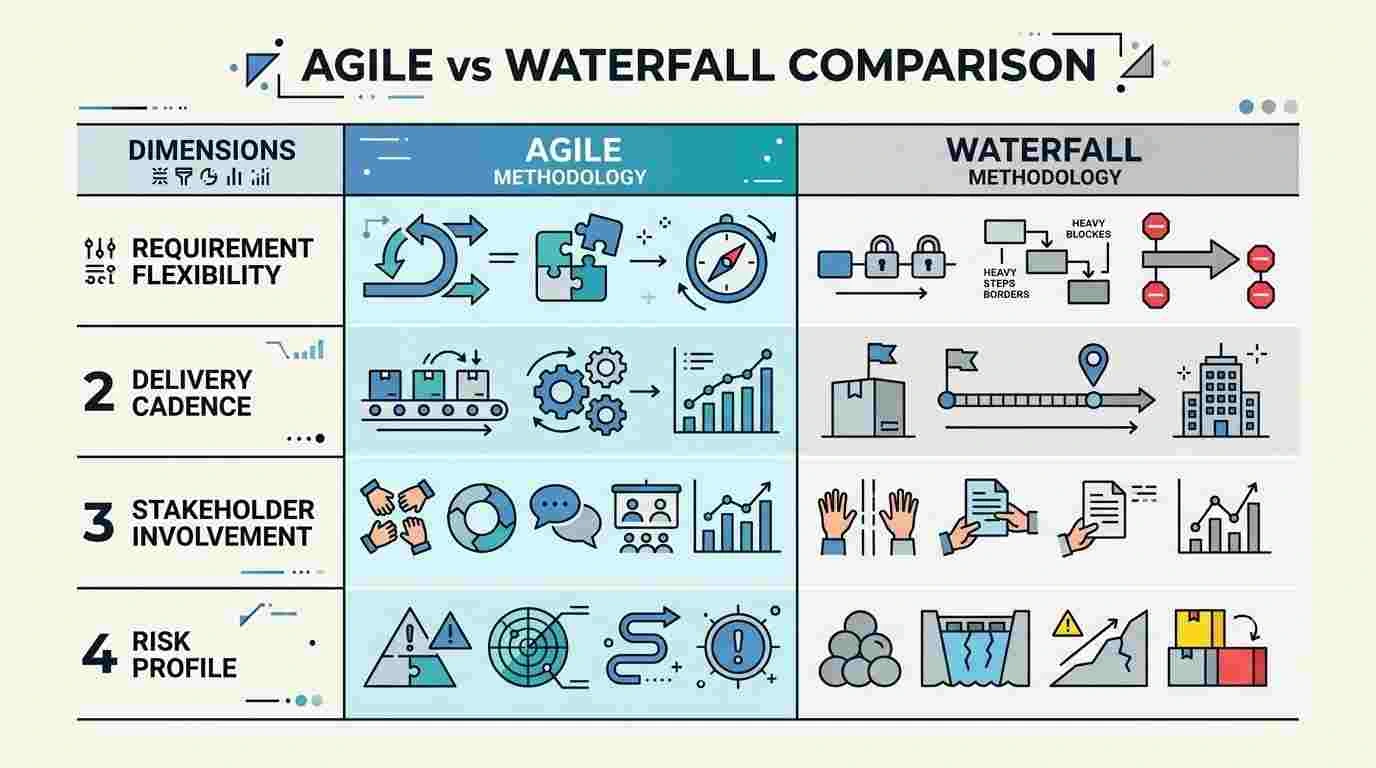
The Agile vs. Waterfall debate is the most common methodology question in software project management — and the answer is always “it depends.”
| Dimension | Agile | Waterfall |
|---|---|---|
| Requirement flexibility | High — evolves each sprint | Low — locked at project start |
| Delivery cadence | Continuous (every 2–4 weeks) | Single delivery at project end |
| Stakeholder involvement | High — continuous feedback required | Low — primarily at start and end |
| Documentation | Lightweight, just-enough | Comprehensive, front-loaded |
| Change cost | Low — changes absorbed into sprints | High — changes require phase re-entry |
| Best project type | Dynamic, evolving products | Stable, well-defined requirements |
| Risk profile | Iterative risk reduction | Risk identified upfront |
Most modern software teams do not choose between Agile and Waterfall exclusively — they adopt hybrid approaches that combine Waterfall-style planning and documentation rigor with Agile’s iterative delivery and feedback mechanisms.
At Top Branding Altimeter, our software engagements use structured SDLC planning with Agile delivery — giving clients the predictability of defined phases and the flexibility of iterative development.
How to Choose the Right SDLC Model
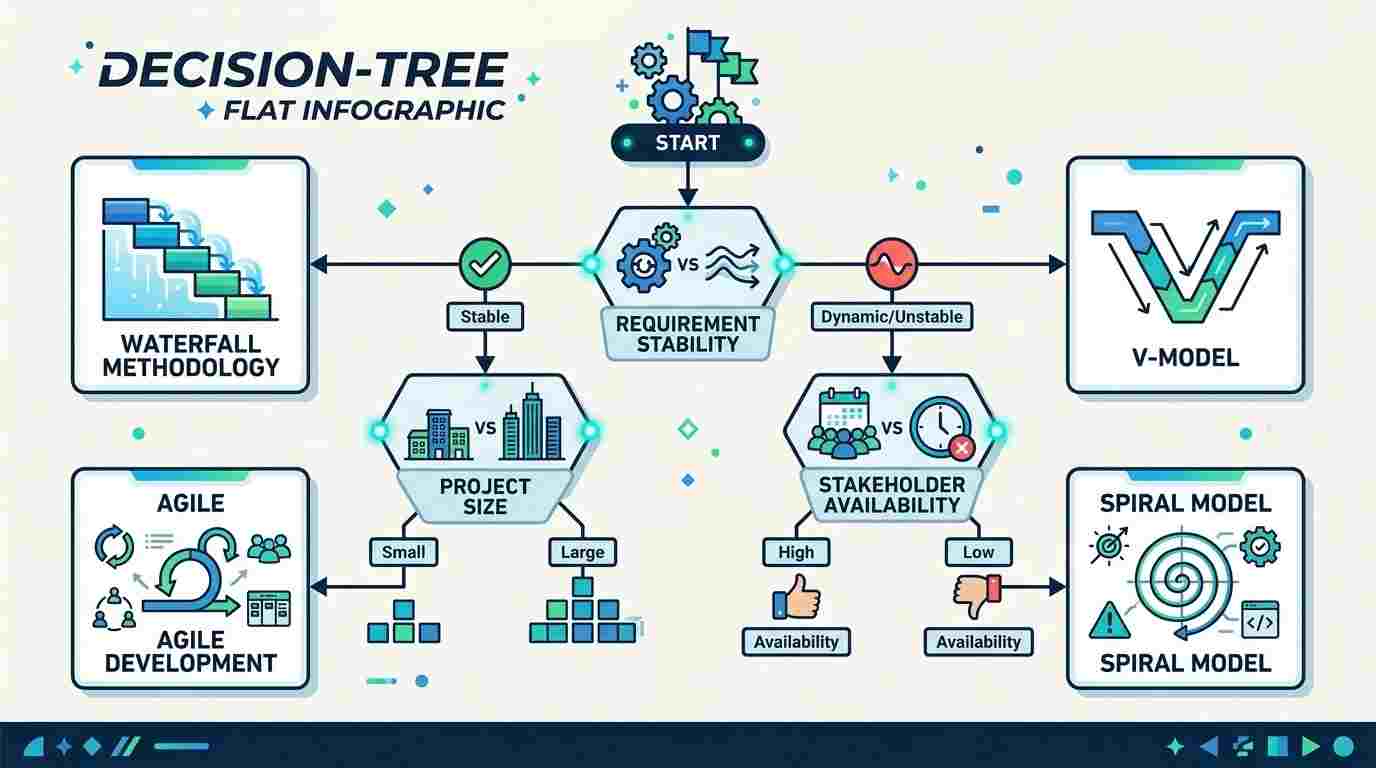
Choosing the right SDLC methodology is a strategic decision. The wrong model creates friction, slows delivery, and adds cost. The right model accelerates your team and aligns delivery with business expectations.
Use these criteria to guide your decision:
Requirement Stability
If you can define complete, stable requirements upfront — Waterfall or V Model. If requirements will evolve — Agile or Iterative.
Project Size and Complexity
Small, well-scoped projects suit Waterfall. Large, multi-year enterprise programs suit Spiral or Iterative with a formal governance layer.
Stakeholder Availability
Agile demands active stakeholder participation in every sprint review. If stakeholders cannot commit to regular engagement, a more documentation-driven approach is more practical.
Risk Tolerance
Risk-averse domains (regulated industries, safety systems) favor risk-gated models like Spiral or V Model. Competitive software markets favor Agile’s faster iteration.
Team Experience
Agile is not a beginner framework — it requires disciplined engineers, effective scrum masters, and experienced product owners. Teams new to structured development often perform better starting with Waterfall before adopting Agile practices.
Not Sure Which SDLC Model Fits?
Get expert guidance to choose the right process for your project.
Benefits of a Structured SDLC Process

Risk Reduction
A defined SDLC surfaces project risks at the earliest possible phase — when they are least expensive to address. Risk identified during planning costs a fraction of risk discovered during testing or production.
Cost Control
SDLC reduces rework — the most expensive form of software development activity. When requirements are defined before development begins and testing criteria exist before code is written, the number of costly late-stage changes drops significantly.
Quality Improvement
Quality assurance embedded throughout the SDLC — rather than bolted on at the end — produces measurably better software. Defect rates, user-reported bugs, and post-launch hotfixes all decrease when testing is a phase discipline rather than a final gate.
Faster Delivery
Counterintuitively, structured SDLC processes accelerate delivery by eliminating the delays caused by unclear requirements, architectural rework, and untestable code. Teams that plan thoroughly build faster — because they are not rebuilding.
Build Software Without the Rework
Start your project with a structured process built for speed and quality.
How Top Branding Altimeter Applies SDLC to Client Projects
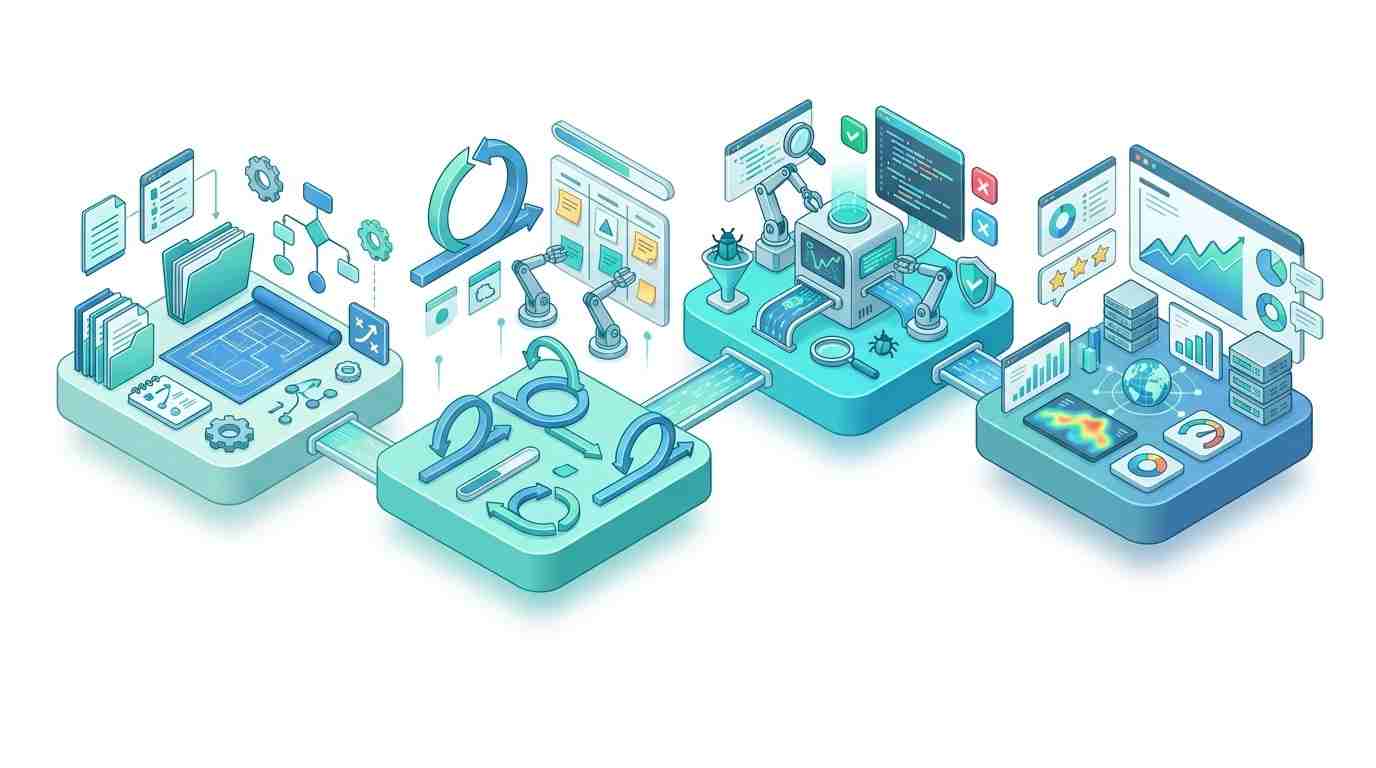
At Top Branding Altimeter, SDLC is not a theoretical framework — it is how we operate. Every client engagement, whether web development, mobile app development, or enterprise software, moves through our structured development lifecycle.
Our process combines the planning discipline of traditional SDLC with the delivery speed of Agile sprints. Clients receive:
- Clear phase documentation before any development begins
- Sprint-based delivery with regular review checkpoints
- Automated testing integrated into every release cycle
- Post-launch monitoring and structured maintenance planning
If your business is evaluating a software project and you want to understand how a structured process protects your investment — contact our team to start the conversation.
Beyond software development, Top Branding Altimeter delivers integrated digital growth services — from Organic SEO and Social Media Services to branding services and Video Animation Services — because great software deserves a strategy that drives users to it.
Get a Software Partner You Can Trust
See how our structured SDLC process protects your investment.
FAQ: Software Development Life Cycle
What is the software development life cycle?
The Software Development Life Cycle (SDLC) is a structured framework that defines the complete process of planning, designing, developing, testing, deploying, and maintaining software systems. It provides a repeatable methodology that helps teams deliver quality software on time and within budget.
What are the phases of SDLC?
The standard SDLC phases are: (1) Planning, (2) Requirements Analysis, (3) System Design, (4) Development & Coding, (5) Testing & Quality Assurance, (6) Deployment, and (7) Maintenance & Updates. Some models combine or expand these phases depending on the methodology used.
Why is SDLC important?
SDLC is important because it introduces structure, documentation, and quality gates into software development — reducing risk, controlling costs, improving quality, and aligning technical deliverables with business requirements. Without SDLC, projects are prone to scope creep, budget overruns, and quality failures.
What is the first phase of SDLC?
The first phase of SDLC is Planning. During planning, the project team defines scope, assesses feasibility, estimates resources and costs, identifies risks, and establishes the project roadmap. All subsequent phases build on decisions made during planning.
What is the difference between Agile and Waterfall?
Agile is an iterative SDLC model that delivers software in short sprints with continuous stakeholder feedback and flexible requirements. Waterfall is a sequential SDLC model where all requirements are defined upfront and each phase is completed before the next begins. Agile suits dynamic products; Waterfall suits stable, well-defined projects.
Which SDLC model is best?
No single SDLC model is best for all projects. The right model depends on requirement stability, team size, stakeholder availability, risk tolerance, and project complexity. Many modern teams use hybrid approaches that combine Waterfall’s planning rigor with Agile’s iterative delivery.
How long does the SDLC process take?
SDLC duration varies based on project complexity. Small web applications may complete a full lifecycle in 3–4 months. Enterprise software systems can span 12–36 months. Agile-based projects deliver working software incrementally throughout the lifecycle rather than at a single endpoint.
What are common SDLC challenges?
Common SDLC challenges include poorly defined requirements, inadequate stakeholder engagement, scope creep, under-resourced testing phases, communication gaps between business and technical teams, and insufficient post-launch maintenance planning. All of these are addressable with structured SDLC processes.
Can small businesses benefit from SDLC?
Absolutely. SDLC scales to any project size. For small businesses, SDLC provides clarity on what is being built, predictable delivery timelines, and quality assurance — protecting their investment and reducing the risk of building software that does not solve their actual problem.
How does SDLC improve software quality?
SDLC improves software quality by embedding testing and quality gates throughout the development process — not just at the end. Requirements are validated before development, design is reviewed before coding, and code is tested before deployment. Each phase acts as a quality checkpoint that prevents defects from cascading forward.
Is SDLC used in Agile development?
Yes. Agile is itself an SDLC model. Agile development follows SDLC phases — planning, analysis, design, development, testing, and deployment — but organizes them into iterative sprints rather than sequential phases. The SDLC framework is the foundation; Agile is a methodology for how to move through it.
How do software companies use SDLC?
Professional software companies use SDLC as the operational foundation for every project — defining process standards, documentation requirements, testing protocols, and handoff procedures. It enables consistent quality delivery across multiple concurrent projects and provides clients with transparent, phase-by-phase progress visibility.
See How We Build — View Our Portfolio
Ready to Grow Your Business?
Get expert guidance tailored to your brand — completely free consultation
Get Free Consultation