- Ready to Grow Your Business?
- Setting the Foundation: Event Planning vs. Event Marketing Services
- Tailoring Strategies to Different Event Frameworks
- Maximizing the Event Funnel: Attendance, Engagement, and Leads
- The Value of Professional Event Campaign Management
- A Quick Roadmap for Your Next Event Marketing Campaign
- Events Are Your Most Powerful Asset
- Frequently Asked Questions (FAQs)
Ready to Grow Your Business?
Get expert guidance tailored to your brand — completely free consultation
Setting the Foundation: Event Planning vs. Event Marketing Services
Before we look at the specific strategies that move the needle, it is critical to clear up a common point of confusion: the difference between Event Planning and event marketing. They are often treated as the same thing, but confusing them can ruin your budget.
Event Planning is all about the logistics. It is the art of securing the venue, organizing delicious catering, managing complex audio/visual setups, and building out the daily agenda. It ensures the event physically functions without a hitch.
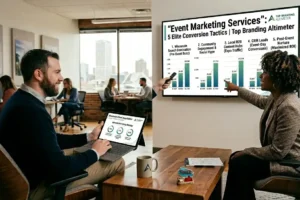
Event Marketing is entirely about the audience. It is the strategic engine that handles Event Promotion, fills the empty seats, designs the Audience Engagement framework, and ensures the gathering achieves its ultimate business goals.
Simply put, planning builds the stage, but marketing brings the crowd and secures the profit.
Tailoring Strategies to Different Event Frameworks
Every corporate gathering has a unique purpose and a very specific audience. A strategy designed to pack a massive convention hall for a public expo will completely fall flat when you are trying to launch a niche enterprise software tool.
To get the best possible results, your marketing approach must be meticulously tailored to the exact format of your gathering.
B2B Event Marketing
In the corporate world, decision-makers are incredibly protective of their time. B2B event marketing services isn’t about flashy gimmicks or loud music; it is about clearly communicating intellectual value and high-level networking opportunities.
Your marketing campaign must prove to busy executives that spending a day away from their desks at your event will directly solve a pressing business problem or help them scale their operations. This ties directly into a broader digital marketing funnel that nurtures leads long before they ever register.
Trade Show Marketing Services
If you are exhibiting at a massive industry expo, you are competing shoulder-to-shoulder with hundreds of other brands trying to do the exact same thing.
Professional Trade Show Marketing Services focus entirely on breaking through that chaotic noise.
The strategy involves proactive, pre-show outreach to secure private meeting slots before attendees even arrive on the floor, eye-catching booth design, and interactive, on-site Trade Show Marketing tactics that draw heavy foot traffic directly to your team.
Stand Out at Your Next Trade Show
Draw more foot traffic with a booth and pre-show strategy that converts.
Conference Marketing Services
Hosting a multi-day convention requires a sustained, multi-phased marketing engine that keeps people excited over a long period.
Utilizing dedicated Conference Marketing Services ensures that your event maintains its momentum over several months.
This involves tiered early-bird ticket pricing, exciting speaker reveal campaigns, and hyper-targeted Conference Marketing workflows designed to turn past attendees into passionate brand advocates who actively recruit their peers to join them.
Product Launch Marketing
When introducing a new product or service to the market, your event needs to feel like an unmissable, historic cultural moment. Effective Product Launch Marketing relies heavily on suspense, storytelling, and exclusivity.
The marketing campaign should feature countdowns, high-production teaser trailers, and exclusive VIP media invitations to maximize Brand Awareness and build massive anticipation ahead of your Product Launch Campaigns.
Maximizing the Event Funnel: Attendance, Engagement, and Leads
A truly successful marketing strategy approaches an event as a continuous, three-part funnel. It isn’t just about what happens on the day of the event; it’s about the entire journey before, during, and after.
Before the Event (Pack the Room): This initial phase relies heavily on targeted Event Advertising and a strong promotional push to get tickets in hands.
During the Event (Captivate the Crowd): This phase shifts entirely toward maximizing interactive Event Audience Engagement to keep people from tuning out.
After the Event (Convert the Interest): This final phase focuses on relationship building, data capture, and long-term Event Lead Generation.
1. Before the Event: Driving Attendance and Buzz
To fill your registration pipeline with qualified attendees, you need a balanced, multi-channel approach to advertising. This means moving past standard social media posts and embracing:
Segmented Email Workflows: Don’t send the same generic invite to everyone on your list. Tailor your messaging based on industry, job title, or past interactions with your brand to make the invite feel deeply personal.
Paid Social Proof: Leverage hyper-targeted LinkedIn and Meta ads through a skilled paid media agency to place your event details directly in front of the exact decision-makers you want in attendance.
Sponsorship Marketing: Partner with industry influencers, media outlets, or complementary brands. Effective Sponsorship Marketing allows you to tap into your partners’ established, trusted audiences, instantly expanding your marketing reach.
Fill Every Seat at Your Event
Boost registrations with targeted ads, email, and sponsorship campaigns.
2. During the Event: Driving Audience Engagement
Once people arrive, your marketing job isn’t over—it simply changes form. To build lasting brand loyalty, you must focus heavily on community connection and Audience Engagement.
This means moving away from passive, dry presentations where attendees stare at PowerPoint slides in a dark room for hours. Instead, integrate live polling, interactive Q&A sessions, gamified challenges, and dedicated, structured networking spaces.
When attendees are actively participating and having fun, they are far more receptive to your brand’s core messaging.
3. After the Event: High-Impact Event Lead Generation
The ultimate metric of success for most corporate events is Lead Generation. An event provides an absolute goldmine of consumer data, but those insights are only valuable if you act on them quickly before the excitement fades.
A comprehensive Event Lead Generation strategy ensures that every badge scan, question asked, and breakout session attended is tracked seamlessly within your CRM.
Within 48 hours of the closing remarks, your sales team should receive highly personalized follow-up templates tailored to the specific topics each attendee engaged with during the event, turning warm handshakes into real business opportunities.
Turn Event Leads Into Clients
Capture and convert attendee data before the excitement fades.
The Value of Professional Event Campaign Management
Trying to coordinate a complex marketing timeline while simultaneously managing event logistics, caterers, and speakers is a recipe for immense stress, burnout, and missed opportunities.
That is why growing brands partner with specialized Event Marketing Experts to oversee the entire lifecycle of their gatherings.
Comprehensive Event Campaign Management gives you access to data-driven insights, automated marketing tech stacks, and a dedicated team focused exclusively on optimizing your attendance and revenue numbers.
From the initial digital teaser to the final post-event ROI report, an expert team — backed by the right social media marketing services — ensures that every single dollar spent on your event delivers maximum value back to your bottom line.
A Quick Roadmap for Your Next Event Marketing Campaign
If you are beginning to plan your company’s next major gathering, use this simple, practical checklist to keep your marketing efforts perfectly aligned:
Define Your Key Performance Indicators (KPIs): Are you looking for pure brand awareness, direct product sales, or high-value enterprise leads? Clear goals dictate your marketing channels, and tracking the right digital marketing KPIs keeps your team accountable.
Launch Early: Build your digital event landing page and initial promotional assets at least 3 to 6 months before the event date to maximize search visibility and early-bird signups. A well-built web design and development foundation makes this process far smoother.
Equip Your Speakers and Sponsors: Provide your event partners with ready-to-share social media graphics, pre-written captions, and custom discount codes to make it incredibly easy for them to promote your event to their own followers.
Have a Plan for the Non-Attendees: Not everyone who is interested can make it physically. Record your sessions, offer virtual attendance options, or package the event content into post-event digital assets to continue generating leads long after the physical stage is dismantled.
Events Are Your Most Powerful Asset
In a world increasingly dominated by quick, automated digital interactions, face-to-face (and high-quality virtual) corporate events remain the single most powerful way to build genuine human trust and accelerate sales cycles.
When you treat event marketing services for businesses as a core strategic priority rather than an afterthought, you turn your corporate gatherings into incredibly powerful revenue engines.
By investing in professional marketing strategies today, you ensure that your next event isn’t just an empty room—but a packed house full of your ideal future clients. If you’re ready to build a complete strategy, explore our full range of digital marketing services to get started.
Frequently Asked Questions (FAQs)
1. What is the difference between event planning and event marketing?
Event planning handles the logistics — venue, catering, AV setup, and agenda. Event marketing handles the audience — promotion, engagement, and lead generation. Both are essential, but marketing is what fills the room and drives ROI.
2. How early should I start marketing my corporate event?
Ideally, 3 to 6 months before the event date. This gives enough time for SEO visibility, early-bird campaigns, and segmented email outreach to build momentum.
3. What is event lead generation and why does it matter?
Event lead generation is the process of capturing attendee data (badge scans, Q&A interactions, session attendance) and feeding it into your CRM for fast, personalized follow-up — ideally within 48 hours of the event ending.
4. How can AI and search tools help promote my event in 2026?
With the rise of AI-driven search (AEO and GEO), event content should be structured with clear headings, FAQs, and conversational language so AI assistants like ChatGPT, Gemini, and Google’s AI Overviews can easily surface your event details to relevant searchers.
5. Should I hire an agency for event marketing services?
Yes, especially for mid-to-large events. A dedicated team manages promotion, engagement, and lead capture while you focus on logistics — ensuring nothing falls through the cracks and ROI is properly tracked.
Ready to Grow Your Business?
Get expert guidance tailored to your brand — completely free consultation
Get Free Consultation