
- App Development for Startups: How to Build It Right
- Validate Your App Idea Before You Build
- MVP vs. Full App: What Should Startups Build First
- Want to Know What Your App Will Cost?
- Choosing the Right Features for Your Launch Version
- Budgeting for Your Startup's First App
- Ready for a Custom Mobile App??
- Funding Your App: What are Your Options?
- Hiring the Right Team: In-House, Freelancer, or Agency
- Ready to Turn Your Startup Idea Into Reality?
- Reducing Risk During Development
- Common Startup App Development Mistakes to Avoid
- Launch Strategy: Getting Your App to Real Users
- Planning for Growth: Scaling After Launch
- Want to See What We Can Build for You?
- FAQs – App Development For Startups
- Build Your Startup App with Top Branding Altimeter
App Development for Startups: How to Build It Right
Master custom mobile app development for startups from idea to launch. Learn how to validate your concept, manage MVP costs, and build the right mobile app.
App development can be a little scary when you’re a beginner. But it doesn’t have to if you know the right steps. Most startups fail not because of bad ideas; they fail because they base their ideas on assumptions instead of real feedback.
Mobile App development works differently for startups than for well-established businesses. It can be trickier in comparison.
This is because, as startups, you don’t have any past data to lean on or compare your project to, which leaves you little to no room for errors – what you build first, how much you spend, and who you build it with all carry more weight than they would for a company with a proven customer base already in place.

This guide takes you through the practical side of building an app. From validating the idea before you write a single line of code to launching, learning, and scaling from real user feedback – let’s get into it.
Validate Your App Idea Before You Build
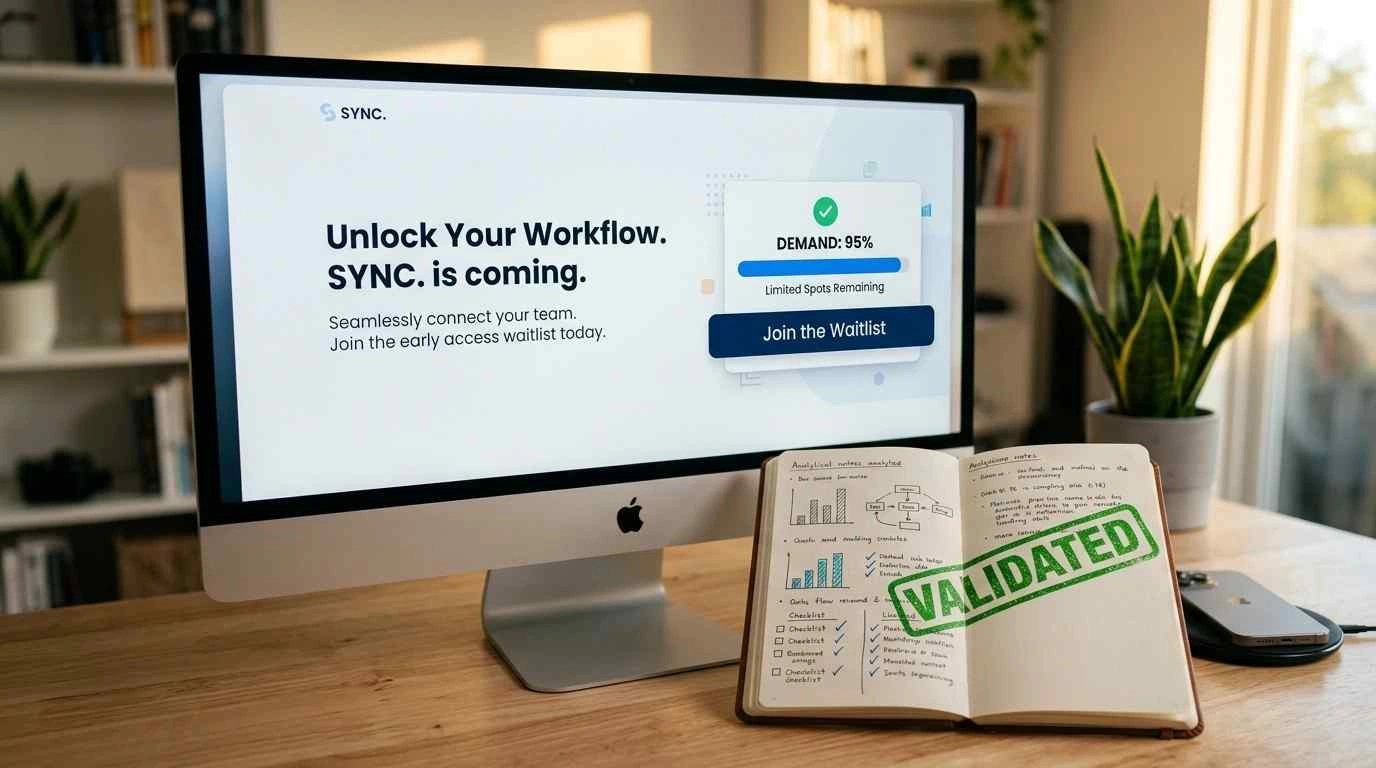
Building something nobody needed in the first place is one of the biggest mistakes a beginner app developer can make.
Validation is how you can find out what’s actually needed and what isn’t before it costs you time and money. Here’s a brief of the full process:
- Talk to potential users before writing any code: Customer interviews are the cheapest, fastest way to test an idea. Ask about their current problem and how they solve it today.
- Test demand with a landing page: Build a simple page describing the app and its core value, then drive a small amount of traffic to it. A waitlist signup rate, email opt-ins, or even a “notify me” click-through rate gives you real demand data before you’ve built anything.
- Look at what’s already working and what’s missing: Study competitor apps and their reviews. Complaints and feature requests in 1- and 2-star reviews often reveal exactly the gap your app could fill.
- Watch for the difference between interest and intent: “That sounds cool” isn’t validation. People pre-ordering, joining a waitlist, or paying a small deposit is. If you can get any form of commitment before building, you’ve validated something real.
MVP vs. Full App: What Should Startups Build First
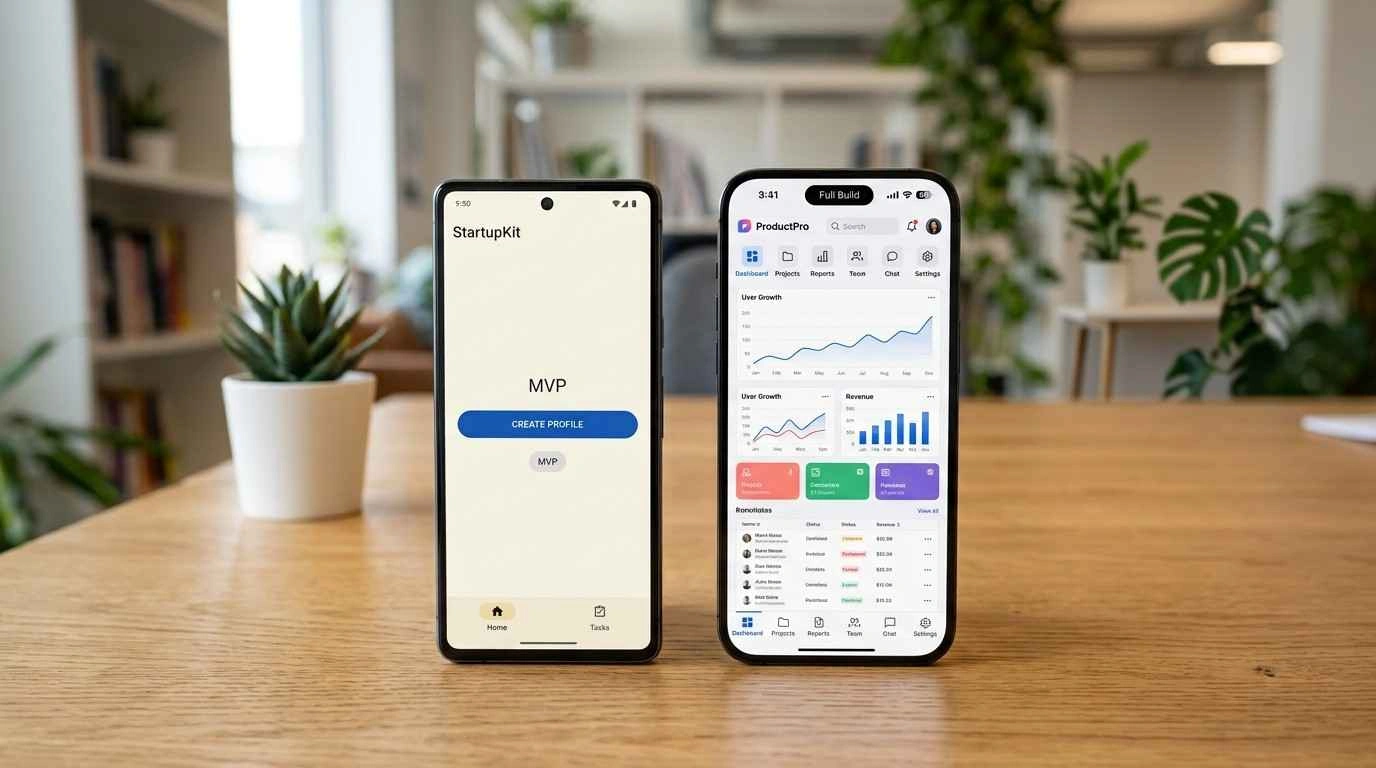
For startups, this decision comes down to having enough runway to find product-market fit and running out before you get the chance.
Why MVP-first makes sense
Unlike an established business adding a new app to a proven product line, a startup is testing an unproven idea with limited time and money.
An MVP lets you get in front of real users fast, see what actually gets used, and adjust before committing your full budget to features nobody asked for.
What “minimum viable” actually means
It’s a real, functioning app focused on solving one core problem well. The goal is a product people can genuinely use and give feedback on, not a placeholder.
What building the full version first risks
Skipping straight to a full-featured app means committing your entire budget before you know which features matter. Startups that do this often end up rebuilding core parts anyway, once real usage shows what users actually needed — which costs more than starting lean would have.
When a full build might make sense instead
If you already have strong signal from an existing audience asking for the app, a business model you’re digitizing rather than inventing, or investors expecting a complete product for a specific launch, starting closer to a full build can be justified.
For most first-time founders, though, MVP-first is the safer default.
Want to Know What Your App Will Cost?
Get expert guidance tailored to your brand — a completely free consultation
Choosing the Right Features for Your Launch Version
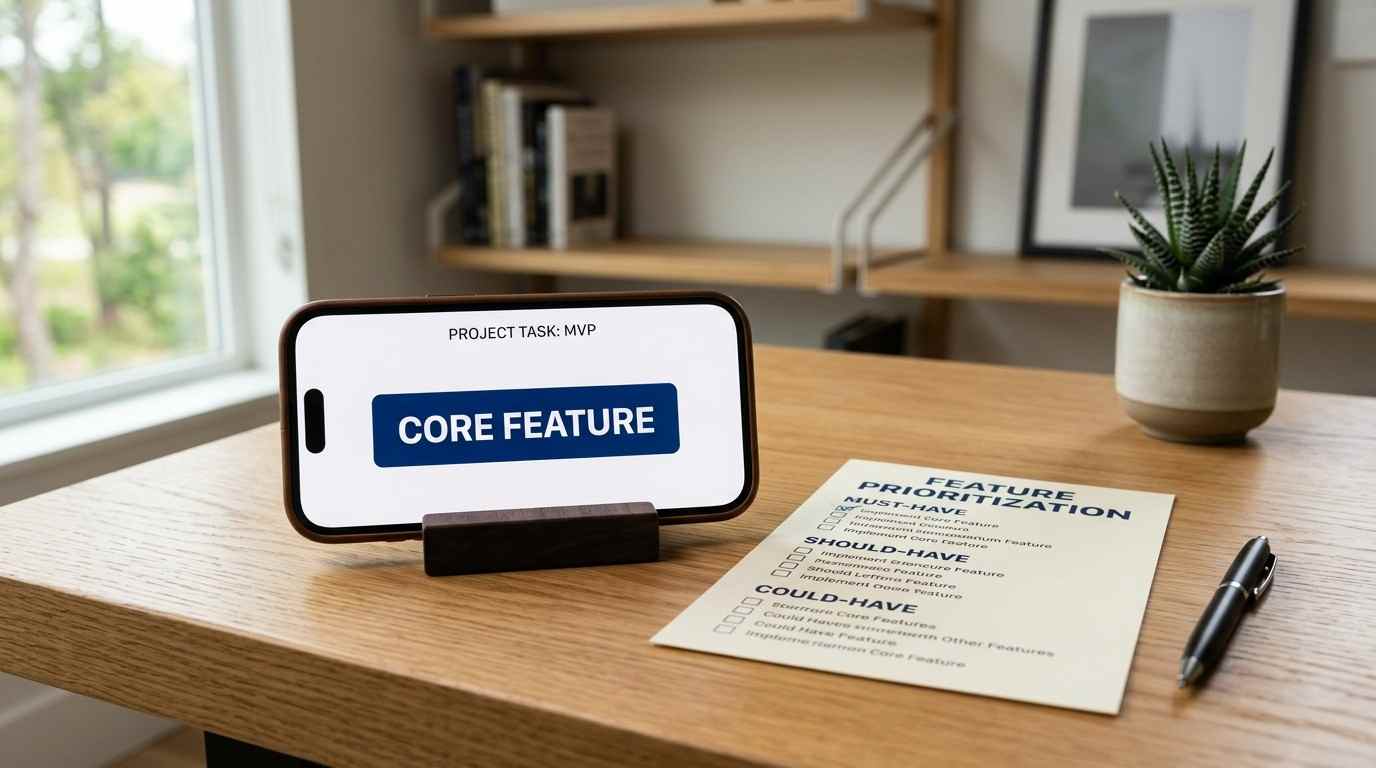
Once you know what problem your app is solving, the next challenge is deciding what actually belongs in version one and what can wait.
Start with the core problem, not the full vision
Every founder has a long list of features they eventually want. The launch version should include only what’s needed to solve the primary problem for your first users. Everything else is a distraction from proving the core idea works.
Use a simple prioritization framework
A basic must-have / should-have / could-have split keeps feature decisions grounded:
- Must-have: the app doesn’t work without it
- Should-have: adds real value, but the app functions without it at launch
- Could-have: nice additions to plan for once you have user feedback
Anything that doesn’t clearly fall into “must-have” should be cut from the first version, not squeezed in.
Build for your first 100 users, not your imagined 100,000
It’s tempting to design for scale and every future use case before you have a single real user. That instinct usually adds cost and complexity the app doesn’t need yet.
Build for the people who’ll actually use it first; you’ll learn more from their behavior than from any amount of upfront planning.
Watch for scope creep during this stage
This is where startup apps quietly grow expensive. A “quick addition” here and there adds up fast, and each one delays launch.
If a feature request comes up mid-planning, ask whether it solves the core problem or just sounds useful; most aren’t essential yet.
Budgeting for Your Startup’s First App
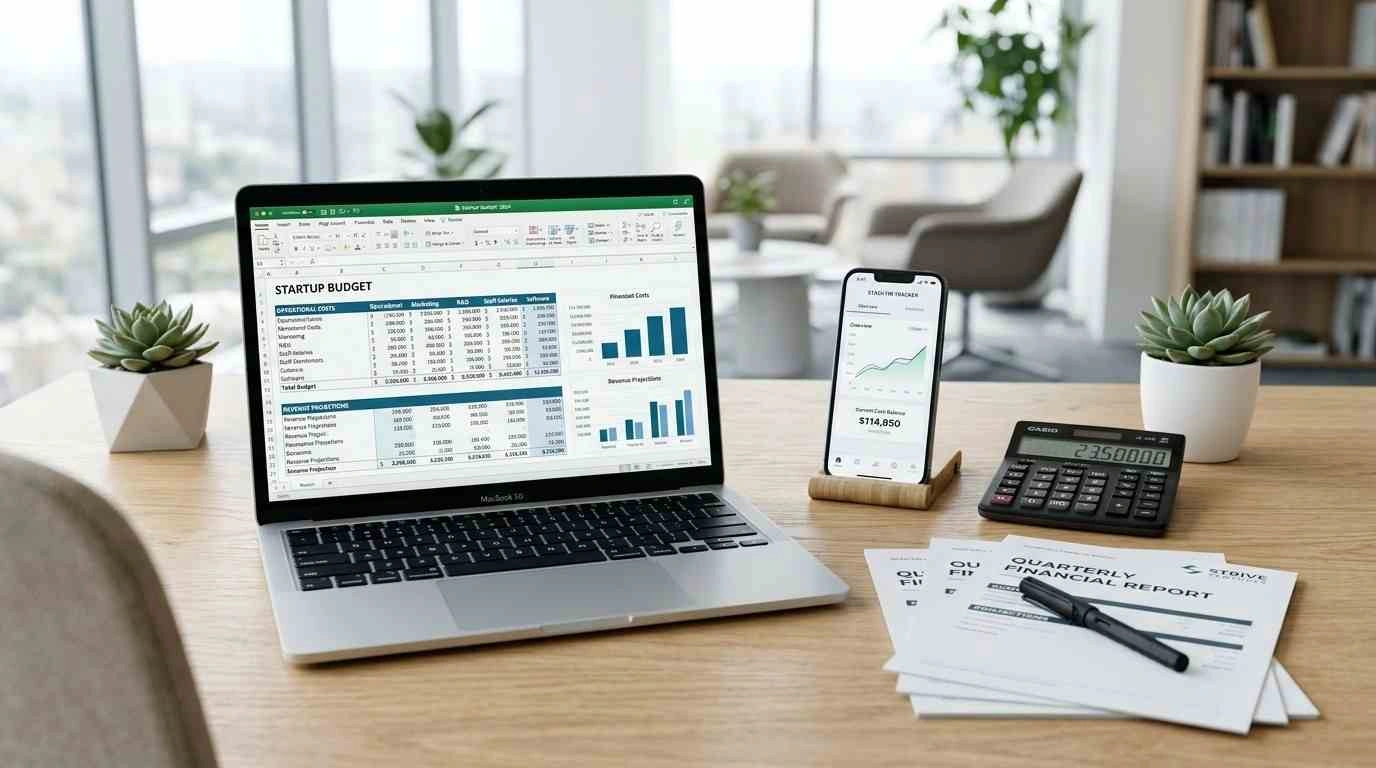
A startup MVP typically costs $2,000–$60,000, depending on complexity and platform. Most lean, well-scoped first versions land closer to the $25,000–$40,000 range.
Where to spend:
- Core feature development and backend that actually needs to work reliably
- Basic but clean UI/UX — this affects first impressions and retention more than most founders expect
Where you can cut without hurting quality:
- Advanced animations or polish that don’t affect functionality
- Features outside your “must-have” list
- Custom infrastructure you don’t need until you have real usage to justify it
Budget an additional 15–20% on top of your build cost for post-launch fixes and adjustments. First versions almost always need a few rounds of changes once real users start interacting with the app.
Ready for a Custom Mobile App??
Get expert guidance tailored to your brand — a completely free consultation
Funding Your App: What are Your Options?
- Bootstrapping: Self-funding gives you full control and equity, but limits budgets to what you can cover on your own.
- Angel or Seed Funding: Brings in real capital and often mentorship, but means giving up equity.
- Revenue First Approach: Pre-selling, charging early adopters, or launching a paid MVP validates demand and also funds development simultaneously,
- Grants and Startup Programs: industry-specific or regional grants can offer non-dilutive funding, though they’re competitive and often slower to secure.
Most first-time founders do best combining a small amount of personal investment with early revenue or pre-orders, as it keeps the pressure on validating demand rather than just spending capital.
Hiring the Right Team: In-House, Freelancer, or Agency
- In-house developer: Best once you know the app is core to your long-term product, not for a first MVP. High fixed cost and slow to get moving for a one-off build.
- Freelancer: Fastest, cheapest way to get an MVP built. Works well when your scope is clear and tightly defined. Risk: less continuity if they become unavailable mid-project.
- Agency: Costs more, but brings a full team (design, dev, QA) and structured process. Worth it if your app is more complex or you need reliable delivery on a deadline.
What matters most at MVP stage: if you’re looking for speed and cost efficiency, a freelancer or small agency is usually the right fit.
What matters most post-launch: however, for reliability and continuity, moving toward an agency or in-house hire often makes more sense once the app is core to the business.
Ready to Turn Your Startup Idea Into Reality?
Get expert guidance tailored to your brand — completely free consultation
Reducing Risk During Development
- Define scope in writing before development starts: a clear spec prevent mid project changes that blow the budget and timeline.
- Break the project into phased milestones: Smaller checkpoints catch problems early instead of at the end, when they’re expensive to fix.
- Set up weekly check-ins with your developer or team: Regular visibility keeps the project aligned with what you actually need, not what got lost in translation.
- Don’t skip user testing before launch: Even a small group of test users can catch usability issues that are far cheaper to fix pre-launch than after.
- Keep a change log for scope adjustments: Anything added mid-project should be documented and weighed against cost and timeline impact, not just approved on the spot.
Common Startup App Development Mistakes to Avoid
- Building too much too soon: Trying to launch with every feature in mind delays release and burns budget before you know what users actually want.
- Skipping validation: Moving straight to development without testing the idea first is the most expensive mistake on this list, since it risks the entire build.
- Ignoring post-launch costs: Budgeting only for the build and not for maintenance, fixes, and iteration leaves startups scrambling right after launch.
- Choosing the cheapest option over the right fit: The lowest quote often means cut corners in QA or support, which costs more to fix later than it saved upfront.
- Designing for scale before proving demand: Building infrastructure for 100,000 users before you have 100 wastes budget that could go toward getting the product right first.
- Treating launch as the finish line: The real work that’s learning from users and iterating starts after launch, not before it.
Launch Strategy: Getting Your App to Real Users
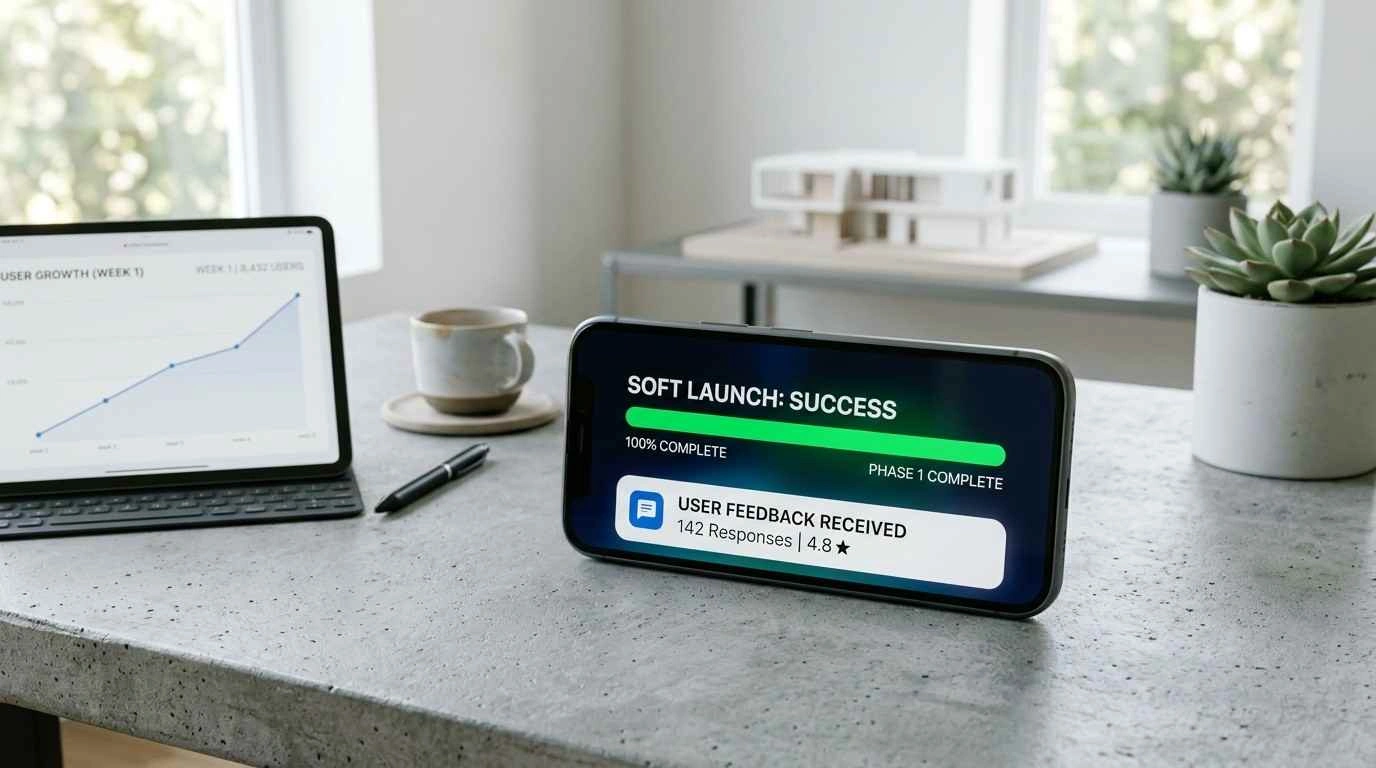
- Consider a soft launch first: Release to a small, targeted group before going wide. It surfaces bugs and usability issues while the stakes are still low.
- Target your first users deliberately: Early adopters from your validation stage (waitlist signups, interview participants) are more likely to give honest, useful feedback than a broad audience.
- Build a simple feedback loop from day one: In-app prompts, quick surveys, or direct outreach make it easy for early users to tell you what’s working and what isn’t.
- Don’t wait for perfect before launching wide: A soft launch with real feedback beats months of polish based on assumptions.
- Plan your first update before you even launch: Knowing you’ll ship fixes and small improvements quickly makes it easier to launch confidently instead of waiting for a “final” version.
Planning for Growth: Scaling After Launch
- Scale infrastructure only when usage demands it: Add server capacity, database scaling, and performance optimization based on real growth, not projected growth.
- Build your feature roadmap from user data, not guesswork: Post-launch feedback and usage patterns should drive what gets built next, not the original wish list from before launch.
- Revisit your team as needs grow: A freelancer or small agency that got you to launch may not be the right fit for ongoing development at scale; reassess as the product grows.
- Budget for scaling separately from your initial build: Growth-stage costs (infrastructure, new features, larger team) are a different budget conversation than your MVP was.
Want to See What We Can Build for You?
Get expert guidance tailored to your brand — completely free consultation
FAQs – App Development For Startups
Should a startup build an MVP before a full mobile app?
Yes, for most startups an MVP is the safer starting point. It lets you validate demand and gather real user feedback before committing your full budget to features that may not be needed.
How much should a startup budget for its first app?
A startup MVP typically costs $2,000–$60,000, with most lean, well-scoped builds landing closer to $25,000–$40,000. Budget an additional 15–20% beyond that for post-launch fixes and adjustments.
How do I validate my app idea before development starts?
Talk to potential users about their current problem, test demand with a simple landing page, and look for commitment signals like waitlist signups or pre-orders. Interest alone isn’t validation; some form of action is.
What features should a startup include in its first app version?
Only what’s needed to solve the core problem for your first users; everything else can wait. A must-have/should-have/could-have framework helps keep the launch version focused.
How long does it take a startup to launch its first app?
A well-scoped MVP typically takes 6–10 weeks to build, depending on complexity and platform. Clear scope and a focused feature list are the biggest factors in staying on that timeline.
Should a startup hire an in-house developer or an agency?
For a first MVP, a freelancer or small agency is usually faster and more cost-effective than hiring in-house. In-house hiring tends to make more sense once the app is core to the long-term business.
What are the biggest mistakes startups make with app development?
The most common mistakes are skipping validation, building too many features too soon, and ignoring post-launch maintenance costs. Choosing the cheapest team over the right fit is also a frequent, costly mistake.
How do I plan for scaling the app after the initial launch?
Scale infrastructure and features based on real usage data, not projections made before launch. Budget for growth-stage costs separately from your original MVP build.
Building your first app starts with validating your idea, learning with an MVP, and learning from user feedback – not assumptions.
Get the team and budget right for where your startup actually is, and you’ll have both a working product and the runway to keep improving it.
Build Your Startup App with Top Branding Altimeter
With over 700 five-star Google reviews and a proven track record of fast delivery, Top Branding Altimeter (+1 800-123-4567) helps founders turn early ideas into high-performing mobile products. Read our client reviews to see how we work, then reach out for a free consultation to map out your project.
Ready to Grow Your Business?
Get expert guidance tailored to your brand — completely free consultation
Get Free Consultation