- Voice Search SEO: Best Guide for Hey Google & Alexa 2026-27
- How Voice Search Differs: Why Conversational Keywords Matter
- What Content Ranks Best for Voice Search Optimization Agency
- Is Your Content Ready for Voice Search?
- Structured Data & Technical Ranking Factors
- Not Sure If Your Schema Markup Is Set Up Right?
- Who's Actually Using Voice Search
- Ready to Capture Voice Search Traffic?
- FAQ – Voice Search SEO
- What kind of content ranks best for voice search queries?
Voice Search SEO: Best Guide for Hey Google & Alexa 2026-27
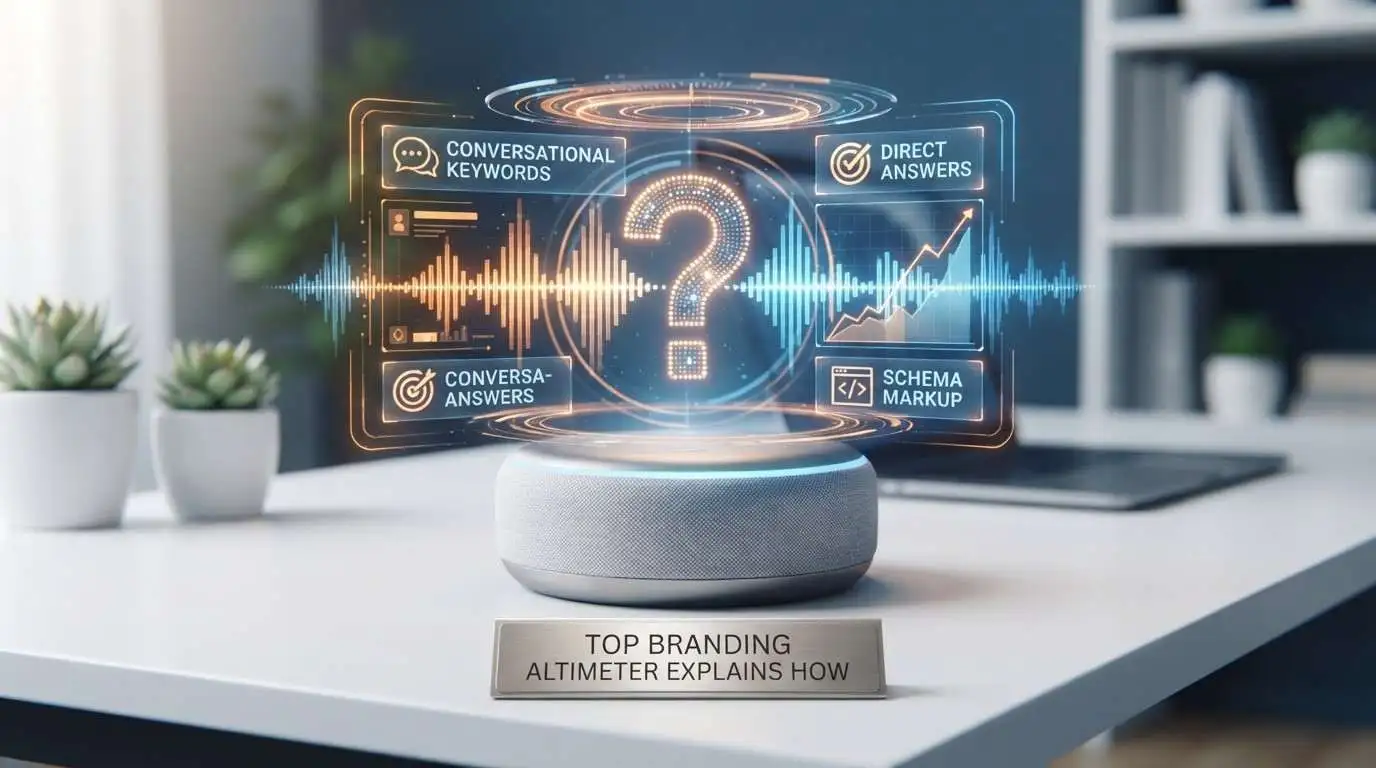
Voice Search SEO means optimizing content with conversational keywords, direct answers, and schema markup so assistants like Google and Alexa read it aloud — Top Branding Altimeter explains how.
Voice search has quietly changed how people find businesses – “Hey Google, find a dentist near me.” “Alexa, what’s the best plumber in town?
For businesses, this shift matters more than it might seem. Voice search SEO requires rethinking how content is structured, phrased, and formatted so it’s the answer an assistant actually reads back.
This guide breaks down what’s different about optimizing for voice, from conversational keywords and featured snippets to structured data, local search, and a practical checklist to get started.
How Voice Search Differs: Why Conversational Keywords Matter

Typed searches tend to be short and fragmented — “best CPA Chicago.” Voice searches are longer and phrased like natural speech — “who’s the best CPA near me for small business taxes.” That difference changes everything about keyword strategy.
SEO voice search seo skews heavily toward question-based, long-tail phrasing: who, what, where, how. A business optimizing only for short “head” keywords misses most of what voice assistants are actually being asked.
| Typed Query | Voice Query |
| “tax preparer Chicago” | “who’s a good tax preparer near me” |
| “best pizza NYC” | “what’s the best pizza place near me” |
| “plumber cost” | “how much does a plumber cost” |
The fix is layering conversational and question-based keywords into existing content.
What Content Ranks Best for Voice Search Optimization Agency
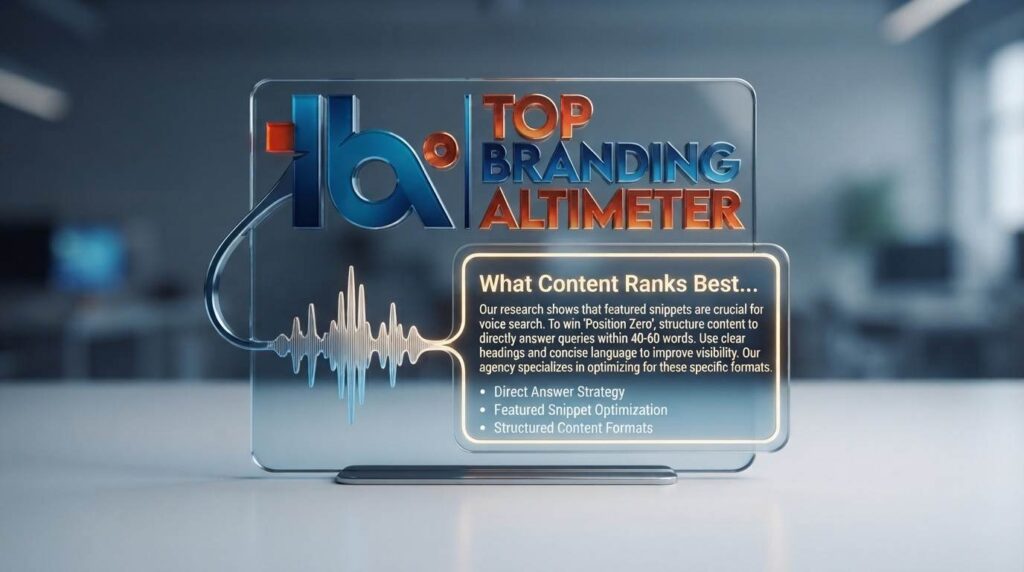
Voice assistants don’t browse a page; they read back one answer, usually pulled from the featured snippet (position zero). That makes snippet-worthy formatting essential, not optional.
The content that wins here shares a pattern: a clear question as a header, followed immediately by a direct, concise answer that is typically 40-60 words, matching how assistants speak results aloud. Lists, tables, and numbered steps also perform well, since assistants can read them sequentially.
What this looks like in practice:
- Lead with the answer, then expand with supporting detail
- Use the exact question as an H2 or H3 (“How much does X cost?” rather than a vague header)
- Keep answers scannable. Short sentences, no buried key information
- Structure comparisons and steps as lists, not dense paragraphs
Content built this way tends to win featured snippets and read naturally when an assistant speaks it aloud; the two go hand in hand.
Is Your Content Ready for Voice Search?
Is Your Content Ready for Voice Search?
Structured Data & Technical Ranking Factors

Aside from content formatting, seo for voice search rewards technical signals that help search engines understand a page quickly and confidently.
Structured data (schema markup) is the biggest lever here. FAQ schema, HowTo schema, and LocalBusiness schema all give search engines explicit, machine-readable answers to pull from, increasing the odds a page becomes the source an assistant reads aloud.
Supporting technical factors matter too:
- Site speed: voice results favor fast-loading pages, since assistants pull answers in real time
- Mobile-friendliness: most voice queries originate from mobile devices
- HTTPS and crawlability: baseline trust signals search engines already weigh heavily
None of these guarantee a voice result on their own, but skipping them makes it harder for even well-written, snippet-ready content to get picked up at all.
Not Sure If Your Schema Markup Is Set Up Right?
Get a free brand audit — no credit card required
Who’s Actually Using Voice Search

Voice search adoption has grown steadily, driven by smart speakers, mobile assistants, and in-car voice systems.
Even businesses that assume their audience “doesn’t use voice search” are often wrong; many voice queries happen casually, without the searcher even thinking of it as a distinct behavior. That makes it an easy opportunity to miss, since few competitors are optimizing for it directly.
A simple starting checklist:
- Add FAQ content using natural, question-based phrasing
- Format answers to be direct and snippet-ready (40-60 words)
- Implement FAQ, HowTo, and LocalBusiness schema where relevant
- Keep Google Business Profile complete and current
- Prioritize site speed and mobile experience
- Build long-tail, conversational keywords into existing pages rather than starting from scratch
None of these require a full rebuild; most are additions to content and structure that’s already in place.
Ready to Capture Voice Search Traffic?
Get a free brand audit — no credit card required
FAQ – Voice Search SEO
How is voice search SEO different from traditional SEO?
Voice queries are longer and more conversational than typed searches. Voice SEO focuses on question-based keywords, direct answer formatting, and featured snippets layered onto existing SEO rather than replacing it.
What kind of content ranks best for voice search queries?
Content with a clear question as a header followed by a concise, direct answer (40-60 words) performs best, since assistants read responses aloud from featured snippets or structured data.
Do featured snippets matter more for voice search results?
Yes, voice assistants pull most spoken answers directly from the featured snippet, or position zero. Structuring content to win that spot significantly increases voice search visibility.
Should businesses target long-tail, question-based keywords for voice search?
Yes. Voice queries mirror natural speech, “who’s the best CPA near me” rather than “CPA Chicago.” Long-tail, conversational keywords match how people actually phrase spoken searches.
How does voice search affect local businesses specifically?
Many voice queries include voice search local seo intent (“near me,” “open now”). Google Business Profile data hours, reviews, categories— heavily influences which business an assistant recommends.
Does structured data help a page rank for voice search?
Yes. FAQ, HowTo, and LocalBusiness schema give search engines clear, machine-readable answers, increasing the likelihood a page is selected as the source for a spoken response.
How many people actually use voice search to find businesses?
Adoption has grown steadily through smart speakers and mobile assistants. Many voice searches happen casually, meaning usage is often higher than businesses assume, and less competitive to target.
What’s a simple checklist to start optimizing for voice search?
Add question-based FAQ content, format answers concisely, implement relevant schema, keep Google Business Profile updated, and prioritize site speed and mobile experience.
Ready to Grow Your Business?
Get expert guidance tailored to your brand — completely free consultation
Get Free Consultation