
- Best SEO for Chiropractors, Local SEO & Patient Growth 2026-27
- Why SEO Matters for Chiropractic Practices
- Chiropractor SEO Keywords: What Actually Works
- Ranking for the Wrong Keywords?
- Google Business Profile: The Chiropractor's Front Door
- Is Your Google Business Profile Losing You, Patients?
- Ongoing Management
- On-Site SEO for Chiropractic Clinics
- Reviews, Reputation, and Local Trust Signals
- Content Strategy: Blogging for Chiropractic SEO
- SEO vs. Paid Ads for Chiropractors
- Setting Realistic Expectations
- Frequently Asked Questions
- Conclusion
Best SEO for Chiropractors, Local SEO & Patient Growth 2026-27
SEO for Chiropractors is the process of ranking in Google’s map pack for searches like “chiropractor near me” — Top Branding Altimeter breaks down best keywords for chiropractors, GBP, and reviews strategy here.
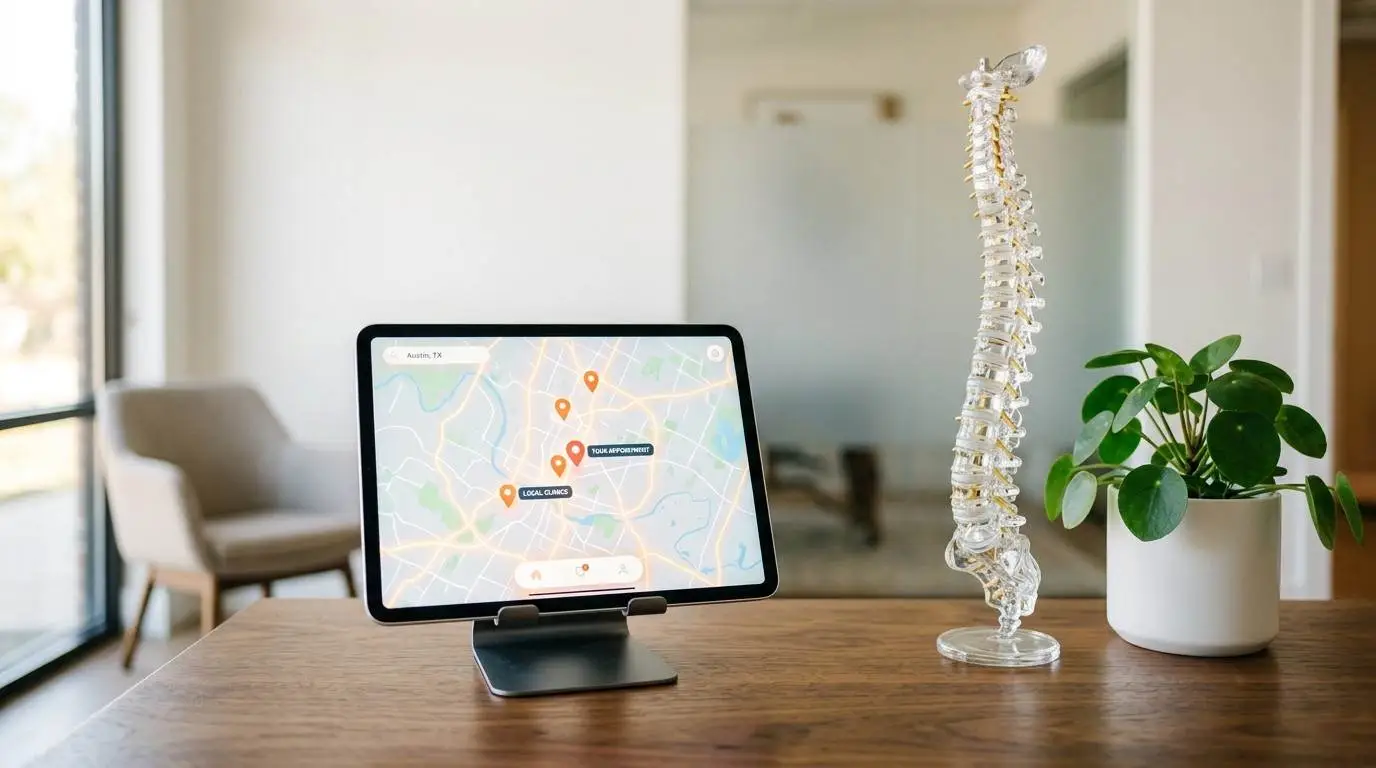
As a patient experiencing chronic back pain, their initial reaction isn’t to reach for the phone book – they reach for your phone. They type “chiropractor near me” or “chiropractor for lower back pain,” and within seconds, Google hands them three options in the map pack.
If your practice isn’t one of them, that patient books with someone else, often without ever seeing your website at all. This is the reality most chiropractic clinics end up up against. It’s more about visibility than quality of care.
Competing practices, sometimes with less experience but stronger online presence, are simply easier to find. That gap is exactly what a focused SEO for chiropractors strategy is built to close.
The good news: chiropractic SEO follows a repeatable process – the right chiropractic keywords, a fully optimized Google Business Profile, a website built to convert visitors into bookings, and a steady stream of reviews and content that build trust over time.
This guide walks through each piece, plus a realistic chiropractic SEO marketing timeline so you know what to expect and when.
Why SEO Matters for Chiropractic Practices
How Chiropractors Rank on Google
- Relevance: How well your profile and content match the search
- Prominence: Trust that’s built through reviews, citations, and reputation
- Proximity: Physical distance between your clinic and the searcher.
Chiropractic Patient Acquisition SEO
- Paid ad clicks often come from people still browsing
- Organic/map pack clicks come from people who already know what they need — “chiropractor for sciatica near me” is a near-booking search
- SEO targets patients with intent already; paid ads interrupt mid-scroll
The Local Pack’s Role in New Patient Discovery
- The local 3-pack, not blue-link organic results, is where most chiropractic searches convert.
- It appears first, shows ratings/photos, and lets patients call or get directions in one tap.
- Skipping GBP optimization means opting out of the space where most new patients actually look.
Chiropractor SEO Keywords: What Actually Works

Primary vs. Long-Tail Intent
Broad terms like “chiropractor” are high-volume but low-precision. This means they attract clicks from people who may not be close to booking, and they’re brutally competitive to rank for.
Long-tail, condition-specific searches like “chiropractor for lower back pain near me” or “prenatal chiropractor [city]” carry far less competition and much higher booking intent. For most practices, long-tail terms deliver better ROI faster than chasing broad keywords alone.
Chiropractor SEO Keywords by Patient Stage
- Awareness stage: symptom-based searches (“why does my neck hurt when I turn it,” “lower back pain after sitting”)
- Consideration stage: comparison and research searches (“chiropractor keywords vs physical therapy,” “best chiropractor near me reviews”)
- Decision stage: booking-intent searches (“chiropractor accepting new patients [city],” “same day chiropractor appointment”)
Each stage needs different content. Awareness-stage searches are best served by blog content, while decision-stage searches should land directly on a service page with a clear way to book.
Ranking for the Wrong Keywords?
Get expert guidance tailored to your brand — a completely free consultation
Google Business Profile: The Chiropractor’s Front Door

Why GBP Optimization Matters Most
For a chiropractic practice, the Google Business Profile often does more heavy lifting than the website itself.
It’s what shows up in the map pack; it’s what patients see first, and it’s frequently the deciding factor between a phone call and a scroll past to the next listing.
Setup Essentials
- Choose the correct primary category: “Chiropractor” should be primary, with relevant secondary categories (e.g., “Sports Medicine Clinic,” “Physical Therapist”) added only if genuinely applicable.
- List every service offered: spinal adjustments, sports injury treatment, prenatal care, etc., so the profile matches a wider range of searches.
- Keep hours accurate: this includes holiday exceptions, so patients don’t show up to a locked door.
- Upload high-quality photos: clinic exterior/interior, treatment rooms, and team photos build trust before a patient ever calls.
Is Your Google Business Profile Losing You, Patients?
Get chiropractor seo agency expert guidance tailored to your brand — a completely free consultation
Ongoing Management
- Post regular updates: new services, patient education tips, or clinic news signal an active, well-run practice.
- Answer the Q&A section proactively: seed it with common questions (insurance accepted, walk-ins welcome, etc.) rather than leaving it blank.
- Monitor and update information: Do this whenever hours, staff, or chiropractor seo services change.
On-Site SEO for Chiropractic Clinics

Chiropractor Website SEO Fundamentals
- Localized title tags: work city and core service into every page title (e.g., “Chiropractic Care for Back Pain in [City] | [Practice Name]”).
- Dedicated service and condition pages: rather than one generic “Services” page, build separate pages for each major treatment area.
- Clear, visible calls to book: “Book an Appointment” or “Schedule Your Visit” should appear above the fold on every page, not buried in a footer.
Chiropractic Website Conversion Rate Factors
Ranking well is only half the job; the site still has to turn visitors into booked patients. The factors that most affect conversion:
- Site speed: slow-loading pages lose visitors before they ever see your services.
- Online booking integration: a direct scheduling tool removes the friction of a phone call, especially for younger patients.
- Trust signals: credentials, years in practice, and patient testimonials reassure a first-time visitor before they commit.
- Mobile-first design: most local seo searches happen on a phone, so a clunky mobile experience directly costs bookings.
Technical Basics
- Schema markup: implement both local SEO for chiropractors business and Medical Business schema so search engines can clearly parse your practice details.
- NAP consistency: name, address, and phone number should match exactly across your website, GBP, and citations.
- Mobile optimization: fast load times and easy tap-to-call functionality are non-negotiable for a chiropractic site.
Reviews, Reputation, and Local Trust Signals

Chiropractor Online Marketing Reviews Strategy
Build a review-request step: a follow-up text or email after a patient’s first adjustment, rather than hoping they remember on their own.
Make it user-friendly: a direct link to your GBP review form removes the biggest barrier to a completed review.
Ask consistently, not just occasionally: steady review volume matters more than a short burst followed by silence.
Chiropractic Local Pack Ranking Impact
Reviews are one of the strongest prominence signals Google uses for local rankings. Volume, recency, and your average rating all factor in, but so does how you respond.
Practices that reply to reviews regularly signal an actively managed, patient-focused medium, whether for large or small businesses, which reinforces prominence over time.
Handling Sensitive Feedback
Healthcare reviews require extra care. When responding to negative feedback:
- Never confirm or discuss patient details: doing so risks a HIPAA violation, even in an attempt to defend the practice.
- Keep responses brief and professional: acknowledge the concern and invite them to reach out directly.
- Move the conversation offline: provide a phone number or email rather than debating specifics publicly.
Content Strategy: Blogging for Chiropractic SEO

Chiropractic Blog Content Strategy
A consistent blog gives a chiropractic site more pages to rank, more opportunities to answer real patient questions, and more chances to build authority in the eyes of both Google and prospective patients. Effective content generally falls into four pillars:
- Condition education: “What causes sciatica” or “Signs you need to see a chiropractor for neck pain”
- Treatment explainers: “What to expect during your first adjustment” or “How spinal decompression works”
- Patient success stories: real (with permission) or composite examples showing outcomes for common conditions
- Local community content: involvement in local events, partnerships with nearby gyms or physical therapists, or area-specific health tips
Balancing SEO and Trust-Building Content
Not every post needs to chase a keyword directly. A mix works best.
Some posts target specific search terms patients are actively typing, and others focus purely on demonstrating expertise and care, the kind of content that builds long-term trust even if it doesn’t rank on page one.
Over time, this combination compounds: more indexed pages, more internal linking opportunities, and more chances for a prospective patient to land on your site before they’ve even searched for a chiropractor by name.
SEO vs. Paid Ads for Chiropractors
- Cost over time: paid ads cost per click indefinitely; SEO requires upfront effort but keeps generating traffic without ongoing per-click spend
- Timeline: ads deliver visibility immediately; SEO builds gradually over months
- Sustainability: turn off ad spend and visibility disappears instantly; SEO rankings persist with regular maintenance
- When ads make sense: filling a slow season, launching a new location, or promoting a limited-time offer
- Best approach: use paid ads for short-term gaps while SEO compounds in the background, rather than treating them as competing budgets.
| Factor | SEO | Paid Ads |
| Speed | Slower (3–6 months) | Immediate |
| Long-term cost | Lower over time | Ongoing per-click spend |
| Sustainability | Persists with upkeep | Stops when spend stops |
Setting Realistic Expectations

Chiropractic SEO Timeline
- Months 1–2: GBP optimization, technical fixes, keyword mapping; minimal ranking movement yet
- Months 3–4: early local pack visibility for less competitive terms, first uptick in calls/bookings
- Months 5–6: stronger rankings across mapped keywords, consistent new-patient inquiries from organic/local search.
What Makes Chiropractic SEO Different from General Healthcare SEO
- Local-first intent: most searches are hyper-local (“near me,” specific neighborhoods), more than broader healthcare specialties.
- Condition-specific search behavior: patients search by symptom (“stiff neck,” “sciatica”) more than by provider type.
- Outsized role of trust signals: choosing a hands-on provider relies heavily on reviews and reputation, more than many other healthcare decisions.
Frequently Asked Questions
How does SEO help a chiropractic practice attract new patients?
It puts your practice in front of people actively searching for chiropractic care nearby, capturing high-intent traffic instead of relying on referrals alone.
What SEO keywords work best for chiropractors?
Long-tail, condition- and location-specific terms, like “chiropractor for lower back pain near me,” tend to convert better than broad terms.
How important is Google Business Profile for a chiropractic clinic?
Critical. It’s the primary driver of local pack visibility and often the first thing prospective patients see.
Do patient reviews really impact a chiropractor’s local rankings?
Yes. Review volume, recency, and response rate are strong prominence signals in local search.
Should a chiropractor blog regularly to support SEO?
Yes, consistent blogging builds more indexed pages, answers patient questions, and reinforces topical authority over time.
How does chiropractic SEO compare with running paid ads?
SEO builds sustainable, compounding visibility; paid ads deliver immediate but temporary results tied to ongoing spend.
How long does it take for a chiropractic practice to rank locally?
Most practices see meaningful movement within 3–6 months of consistent effort.
What makes chiropractic SEO different from general healthcare SEO?
Heavier reliance on local, symptom-based search intent and trust signals, given the hands-on nature of chiropractic care.
Conclusion
Ranking locally isn’t about outspending competitors – it’s about being genuinely easier to find, trust, and book.
A focused chiropractic search engine optimization strategy, built on a strong GBP, the right keywords, and consistent reviews, turns local search into a steady stream of new patients.
Ready to see where your practice stands? Request a free SEO audit or partner with Top Branding Altimeter as your chiropractor SEO company.
Ready to Grow Your Business?
Get expert guidance tailored to your brand — completely free consultation
Get Free Consultation