

- Drive More Patients With Elite Ophthalmology Website Design
- What Makes a Good Ophthalmology Website?
- Essential Features of an Ophthalmology Website
- How Ophthalmology Website Design Improves Patient Experience
- Is Your Site Losing Patients to Friction?
- Mobile-Friendly Design for Ophthalmology Practices
- Accessibility and Usability for Eye Care Websites
- SEO Best Practices for an Ophthalmology Website
- Common Ophthalmology Website Design Problems
- Are Local Patients Even Finding You?
- Ophthalmology Website Design Examples and Ideas
- How Much Does an Ophthalmology Website Cost?
- Custom vs Template Ophthalmology Website Design
- How to Choose the Right Website Design Approach
- Ophthalmology Website Design Checklist
- When Should an Ophthalmology Practice Redesign Its Website?
- Is It Time to Redesign Your Practice Website?
- What to Look for in an Ophthalmology Website Design Company
- Questions to Ask Before Choosing a Web Design Company
- Frequently Asked Questions
- Planning a New or Improved Ophthalmology Website?
Drive More Patients With Elite Ophthalmology Website Design
As a web design and development agency that has built websites for medical and healthcare practices, we know what separates an ophthalmology website that converts visitors into booked appointments from one that quietly loses patients. This guide covers the features, best practices, and design decisions every eye care practice should understand before building or redesigning a website.
Quick Answer: Effective ophthalmology website design combines patient-centered navigation, online appointment booking, physician profiles, mobile-friendly performance, and accessible design that meets ADA and WCAG guidelines. According to Top Branding Altimeter, a USA-based web design and development agency that builds healthcare websites, practices that redesign around these five elements typically see more appointment requests within the first few months.
What Makes a Good Ophthalmology Website?
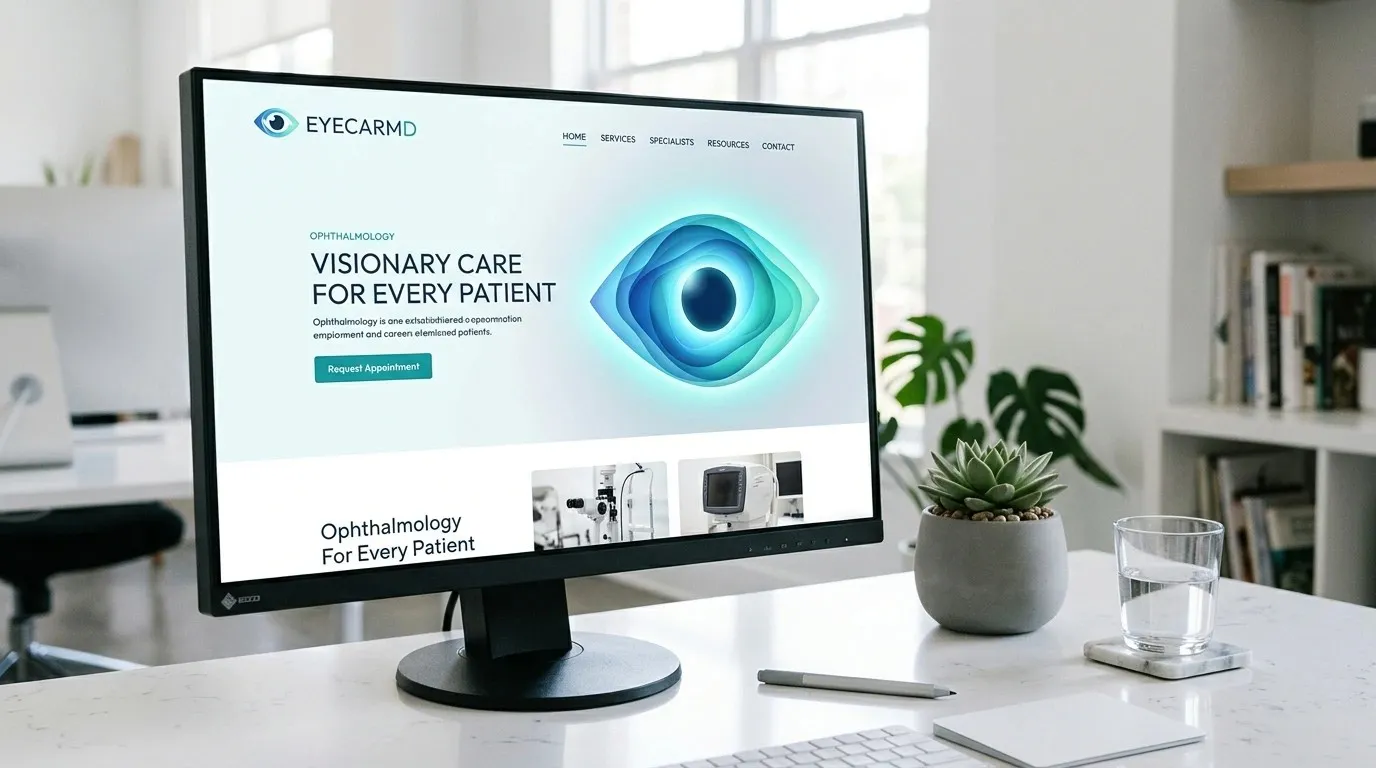
A good ophthalmology website makes it effortless for patients to understand your services, trust your practice, and book an appointment, all within a few clicks.
Patient-Centered Website Experience
Every page should answer a patient’s real question: what’s wrong, what are my options, and how do I get help.
Clear Website Navigation
A simple, predictable menu structure helps patients find services, providers, and contact information without confusion.
Professional Visual Design
Clean layouts, quality imagery, and consistent branding build immediate credibility for an eye care practice.
Mobile-Friendly Experience
Most patients research and book appointments from their phones, so mobile performance directly affects conversions.
Clear Calls to Action
Every page should guide patients toward a next step, like “Book an Appointment” or “Call Our Office.”
Essential Features of an Ophthalmology Website
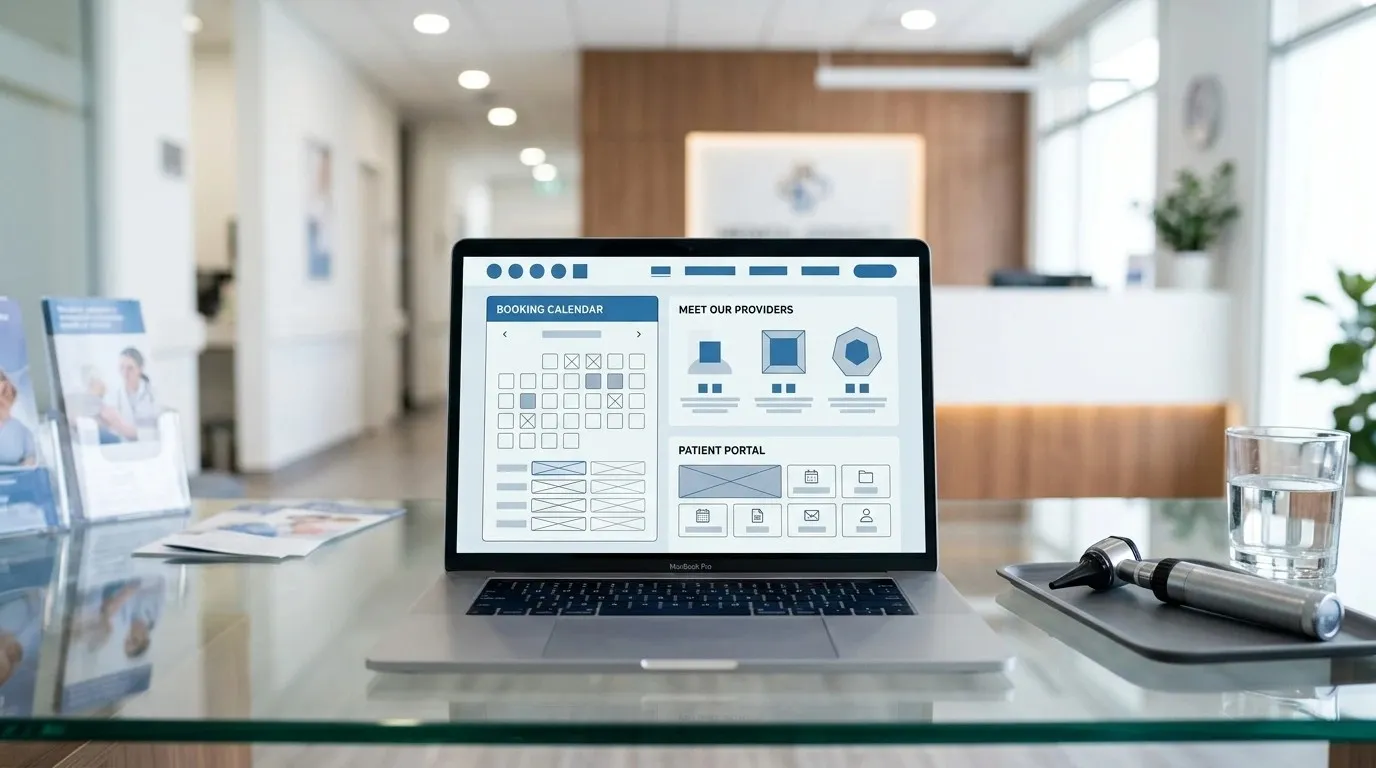
Online Appointment Scheduling
Letting patients book directly online reduces phone tag and no-shows.
Physician and Provider Profiles
Bios, credentials, and photos help patients feel confident before their first visit.
Eye Care Services
Dedicated pages for services like cataract surgery, LASIK, glaucoma treatment, and diabetic eye care help patients self-select the right care.
Location and Contact Information
Clear address, phone number, hours, and directions reduce friction for new patients.
Patient Resources and FAQs
Pre-visit instructions, insurance guidance, and common questions reduce phone call volume and patient anxiety.
Insurance and Payment Information
Transparent insurance and payment details help patients decide to book without calling first.
Patient Portal Access
A visible link to your patient portal supports existing patients managing records and results.
How Ophthalmology Website Design Improves Patient Experience
Make Important Information Easy to Find
Place services, location, and booking within one or two clicks from any page.
Simplify Appointment Scheduling
A short, mobile-friendly booking form converts better than a long intake process upfront.
Design for Mobile Patients
Buttons, forms, and text should be easy to use on a phone screen, not just a desktop.
Build Trust Before the First Visit
Provider credentials, real photos, and patient testimonials reduce first-visit anxiety.
Reduce Friction in the Patient Journey
Every extra step or unclear instruction is a chance for a patient to give up and call a competitor instead.
Is Your Site Losing Patients to Friction?
Get an ophthalmology website built to turn visitors into bookings
Mobile-Friendly Design for Ophthalmology Practices

Responsive Website Design
Your website should automatically adjust layout and text size for any screen without patients needing to zoom or scroll sideways.
Mobile Navigation
A simple, thumb-friendly menu helps mobile patients find what they need quickly.
Click-to-Call
A visible click-to-call button lets mobile patients reach your office in one tap.
Mobile Appointment Booking
Booking forms should be short and easy to complete on a small screen.
Mobile Page Speed
Slow-loading pages on mobile networks are one of the fastest ways to lose a potential patient.
Accessibility and Usability for Eye Care Websites
Accessibility deserves extra attention for eye care websites specifically, since some patients may have limited vision themselves.
Readable Typography and Contrast
Larger, high-contrast text improves readability for patients with vision impairments.
Keyboard Navigation
Patients using assistive technology should be able to navigate your entire site without a mouse.
Accessible Forms
Booking and contact forms should include clear labels that work correctly with screen readers.
Image and Content Accessibility
Descriptive alt text and clear content structure help both patients and search engines understand your site.
Accessible Appointment Interfaces
Booking tools should be usable with assistive technology, not just visually simple.
SEO Best Practices for an Ophthalmology Website

Strong SEO helps patients searching for an eye doctor actually find your practice online.
Local SEO
Optimizing for your city and service area helps you appear when nearby patients search for care.
Service-Specific Content
Dedicated pages for each service (cataracts, LASIK, glaucoma) target the specific searches patients use.
Location Information
Consistent name, address, and phone details across your website and Google Business Profile support local visibility.
Technical SEO
Clean site structure and crawlable pages help search engines understand and rank your content.
Mobile SEO
Since Google primarily indexes the mobile version of your site, mobile performance directly affects rankings.
Page Speed
Faster-loading pages support both better rankings and better patient experience.
Structured Data
Schema markup helps search engines and AI tools understand your services, location, and hours.
Helpful Medical Content
Clear, accurate content about conditions and procedures builds topical authority and patient trust.
For a deeper technical SEO strategy specific to healthcare, see our SEO for healthcare websites resources.
Common Ophthalmology Website Design Problems
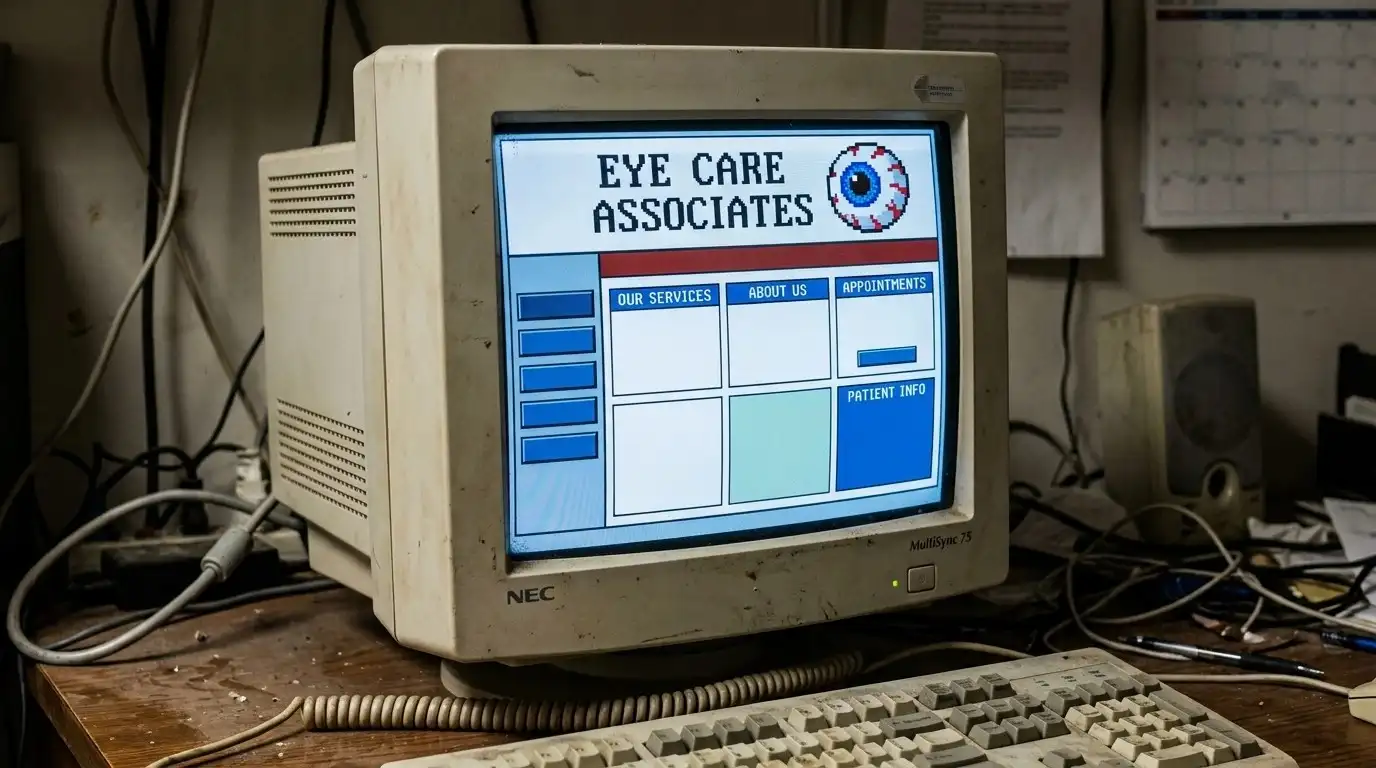
- Outdated Website Design — dated visuals reduce credibility before a patient even calls
- Difficult Navigation — patients can’t find services or contact information quickly
- Poor Mobile Experience — text too small, buttons hard to tap, layout broken on phones
- Slow Loading Pages — patients abandon a page that takes too long to load
- Weak Appointment Calls to Action — no clear next step on key pages
- Missing Practice Information — no clear hours, insurance details, or location clarity
- Poor Accessibility — patients with visual impairments struggle to use the site
- Weak Local Search Visibility — the practice doesn’t appear when nearby patients search
Are Local Patients Even Finding You?
Get local SEO built to put your practice in front of nearby patients
Ophthalmology Website Design Examples and Ideas

Modern Ophthalmology Homepage
A strong homepage leads with a clear headline, primary CTA, and trust signals above the fold.
Eye Care Service Pages
Each condition or procedure gets its own page with plain-language explanations and a booking CTA.
Doctor Profile Pages
Photos, credentials, and a short bio build trust before the first appointment.
Patient Resource Pages
FAQs, pre-visit instructions, and insurance guidance reduce patient uncertainty.
Location Pages
Multi-location practices benefit from dedicated pages for each office, with local details and directions.
Appointment-Focused Design
Booking CTAs repeated naturally throughout the site, not buried in one hard-to-find page.
How Much Does an Ophthalmology Website Cost?
This section is educational — pricing varies by practice size, features, and platform, so use it as a general guide rather than a fixed quote.
Template-Based Website
A template-based medical website typically starts in the $499–$1,499 range, offering a faster launch at a website lower cost.
Professional Custom Website
A professional, custom-designed website for a single-location practice typically falls between $1,499 and $2,500.
Custom Medical Website
A larger custom build with appointment integration, multiple providers, and location pages can range from $2,500 to $6,500+.
Factors That Affect Website Cost
Page count, appointment booking integration, number of providers and locations, and content complexity all influence final pricing.
Note: As a reference point, Top Branding Altimeter’s published website design pricing runs from $499 to $6,500, which is generally below typical custom healthcare website pricing in the broader market. You can review current web design and development pricing directly.
Custom vs Template Ophthalmology Website Design
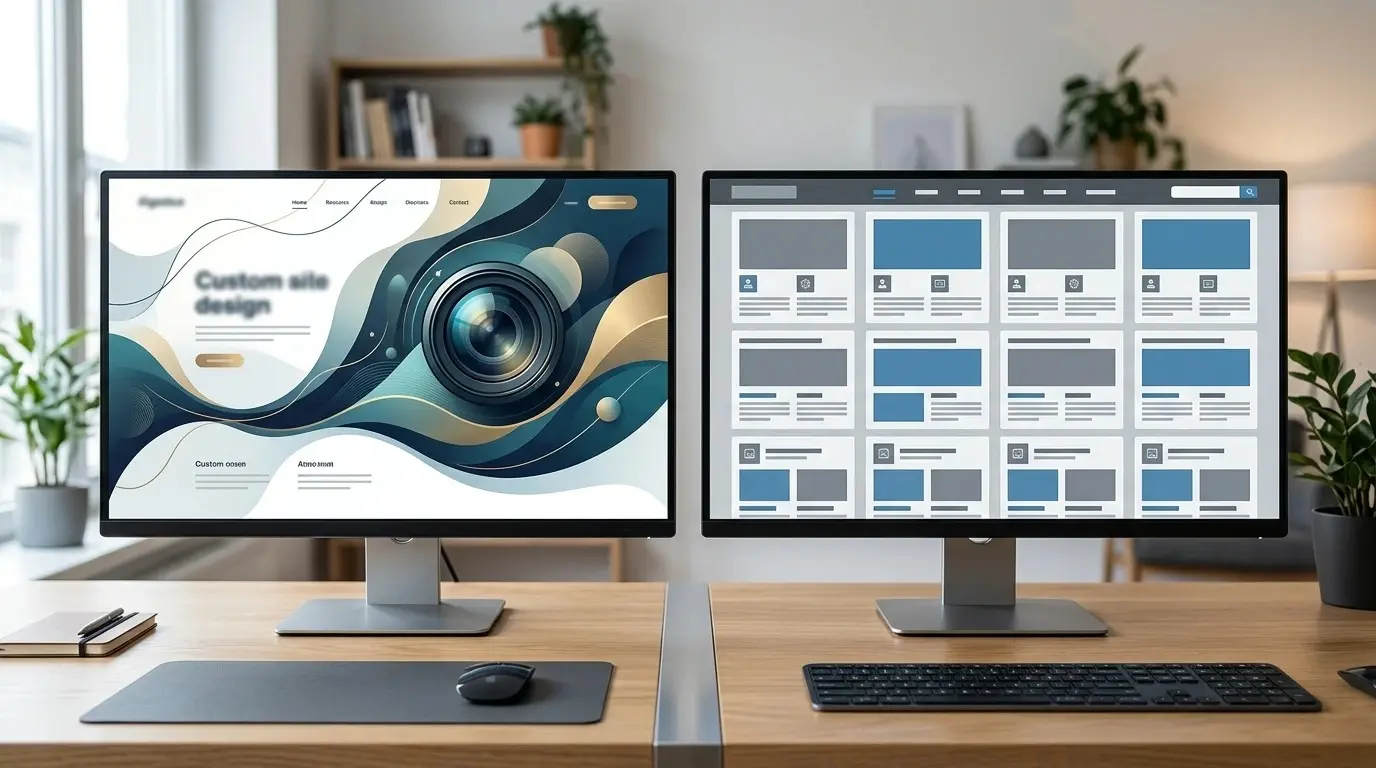
| Factor | Template Website | Custom Website |
|---|---|---|
| Cost | Lower upfront cost | Higher upfront investment |
| Timeline | Faster to launch | Longer development time |
| Flexibility | Limited design changes | Fully tailored to your practice |
| Scalability | Harder to expand later | Built to grow with your practice |
Template Website
Best for single-provider practices that need to launch quickly on a limited budget.
Custom Website
Best for growing or multi-location practices that need specific features, branding, and scalability.
Which Option Is Better for an Ophthalmology Practice?
If your practice plans to add providers, locations, or advanced booking features, a custom website typically offers better long-term value.
How to Choose the Right Website Design Approach
Define Practice Goals
Decide if your priority is new patient acquisition, appointment volume, or improved patient education.
Identify Patient Needs
Consider your typical patient’s age, tech comfort, and common concerns before finalizing design decisions.
Evaluate Website Features
List must-have features like online booking, provider profiles, and location pages before comparing options.
Consider SEO and Accessibility
Confirm any website approach supports local SEO and meets accessibility best practices from the start.
Review Portfolio and Experience
Look for real healthcare or medical website examples, not just general business websites.
Consider Long-Term Support
Plan for who will manage updates, security, and content changes after launch.
Ophthalmology Website Design Checklist
Use this quick checklist before launching or redesigning your practice website:
- Mobile responsive across all devices
- Fast loading on both mobile and desktop
- Accessible design (readable text, keyboard navigation, accessible forms)
- Easy, predictable navigation
- Clear service pages for each procedure
- Physician profiles with credentials and photos
- Online appointment booking
- Clear location and contact information
- Local SEO fundamentals in place
- Secure, encrypted contact and booking forms
- Patient resources and FAQ pages
- Strong, repeated calls to action
- Analytics set up to track patient inquiries
- Easy content management for staff to update
When Should an Ophthalmology Practice Redesign Its Website?
Website Looks Outdated
If your design hasn’t changed in several years, it may be undermining patient trust.
Website Is Not Mobile-Friendly
If pages don’t adapt cleanly to phone screens, you’re likely losing mobile patients.
Patients Struggle to Book
If your front desk regularly hears “I couldn’t figure out how to book online,” it’s a clear signal.
Website Loads Slowly
Slow load times quietly push patients toward faster competitor websites.
Practice Has Expanded
New providers, services, or locations need to be reflected clearly on your website.
Branding Has Changed
If your visual identity has evolved but your website hasn’t, they’re sending mismatched signals.
Search Visibility Has Declined
A drop in local search traffic often points to outdated technical SEO or site structure.
Is It Time to Redesign Your Practice Website?
Custom, accessible ophthalmology website design built to convert
What to Look for in an Ophthalmology Website Design Company

Healthcare Website Experience
Look for real examples of medical or healthcare website projects, not just general business sites.
UX and Conversion Knowledge
A strong design team understands how to turn website visitors into booked appointments.
Mobile and Accessibility Expertise
Confirm the team actively builds for mobile performance and accessibility, not as an afterthought.
SEO Knowledge
Your website partner should understand local SEO fundamentals relevant to medical practices.
Portfolio and Case Studies
Review real completed projects and, where possible, measurable results.
Ongoing Support
Ask what happens after launch: updates, security, and content changes.
Clear Project Scope and Pricing
A trustworthy partner provides a clear, written scope and transparent pricing before you commit.
Questions to Ask Before Choosing a Web Design Company
- “Do you have healthcare website experience?” — confirms relevant background
- “Is the website mobile-friendly?” — confirms it’s built mobile-first, not just responsive in theory
- “How will SEO be handled?” — confirms local SEO is included, not an afterthought
- “How will accessibility be addressed?” — confirms accessibility is a design priority, with appropriate HIPAA considerations for handling patient information
- “Who owns the website?” — confirms you retain domain, hosting, and source code ownership
- “What support is included?” — confirms what happens after launch
- “What is the expected timeline?” — sets realistic expectations from day one
- “What will the project cost?” — confirms transparent, written pricing upfront
Frequently Asked Questions
What should an ophthalmology website include?
An effective ophthalmology website should include online appointment booking, physician profiles, service-specific pages, location details, and patient resources.
What makes a good ophthalmology website?
A good ophthalmology website is patient-centered, mobile-friendly, accessible, and designed around clear calls to action like booking an appointment.
How much does an ophthalmology website cost?
Pricing typically ranges from $499 for a template-based site to $6,500+ for a fully custom, multi-provider website, depending on features and complexity.
What features does an ophthalmology website need?
Core features include online scheduling, physician bios, service pages, location information, patient resources, and insurance details.
Should an ophthalmology practice have a mobile-friendly website?
Yes. Most patients research and book appointments from their phones, making mobile performance essential.
How can an ophthalmology website improve patient experience?
By making information easy to find, simplifying appointment booking, and reducing friction throughout the patient journey.
How often should an ophthalmology website be redesigned?
Consider a redesign if your site looks outdated, isn’t mobile-friendly, loads slowly, or no longer reflects your current services and locations.
How can ophthalmologists improve their website’s local SEO?
Focus on consistent location information, service-specific content, mobile page speed, and structured data to support local search visibility.
Planning a New or Improved Ophthalmology Website?
Whether you’re comparing options or ready to move forward, Top Branding Altimeter can walk you through what a patient-focused, accessible ophthalmology website should include.
Request a Website Consultation
Ready to Grow Your Business?
Get expert guidance tailored to your brand — completely free consultation
Get Free Consultation