B2B Ecommerce Website Design: Best Guide for Buyers 2027
B2B ecommerce website design must support bulk orders, account-based pricing, and self-service ordering, not just a product catalog. Top Branding Altimeter explains what business buyers expect.
B2B buyers are used to fast checkouts, clear pricing, and self-service on platforms like Amazon, and increasingly, they don’t leave their consumer habits at the office door.
They expect that same experience when buying from suppliers, distributors, and manufacturers. Yet many B2B ecommerce sites still feel like they were built for a different era: clunky navigation, hidden pricing, and ordering processes that require a phone call to finish.
A good B2B business design has to account for bulk orders, negotiated prices and multople decison makers and longer, more complex buying cycles, while still feeling as intuitive as the consumer platforms most buyers still use.
In this carefully put together blog, we will discuss what business buyers actually expect, and what it takes to meet their expectations.
B2B vs. B2C Ecommerce Design: How It’s a Different Game
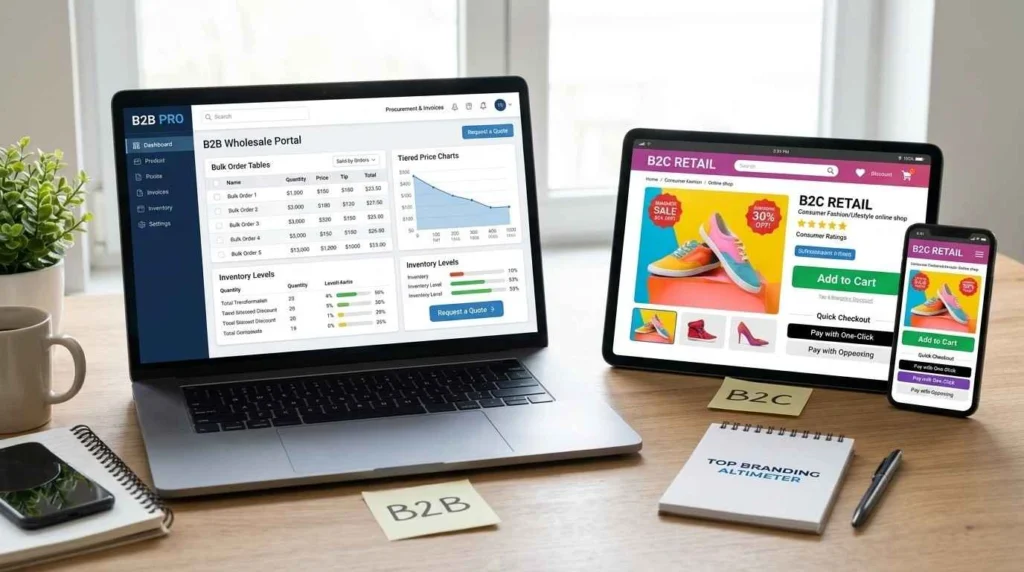
b2b vs b2c ecommerce design
B2B and B2C ecommerce might look similar on the surface — however, the buying behavior behind them is fundamentally different.
This changes the strategy for how the website needs to be designed. Here’s how the two differ:
- Buyer intent: B2C shoppers often browse and buy on impulse; B2B buyers research thoroughly and buy with a specific business need in mind
- Purchase complexity: B2C purchases are typically single-step; B2B purchases often involve quotes, approvals, and negotiated terms before an order is finalized
- Decision-makers: B2C purchases usually involve one person; B2B purchases often involve multiple stakeholders – a buyer, an approver, and sometimes a finance team
- Order size and frequency: B2B orders tend to be larger, recurring, and based on established account relationships rather than one-off purchases
- Pricing structure: B2C pricing is typically fixed and public; B2B pricing is often tiered, negotiated, or account-specific.
What Business Buyers Actually Expect
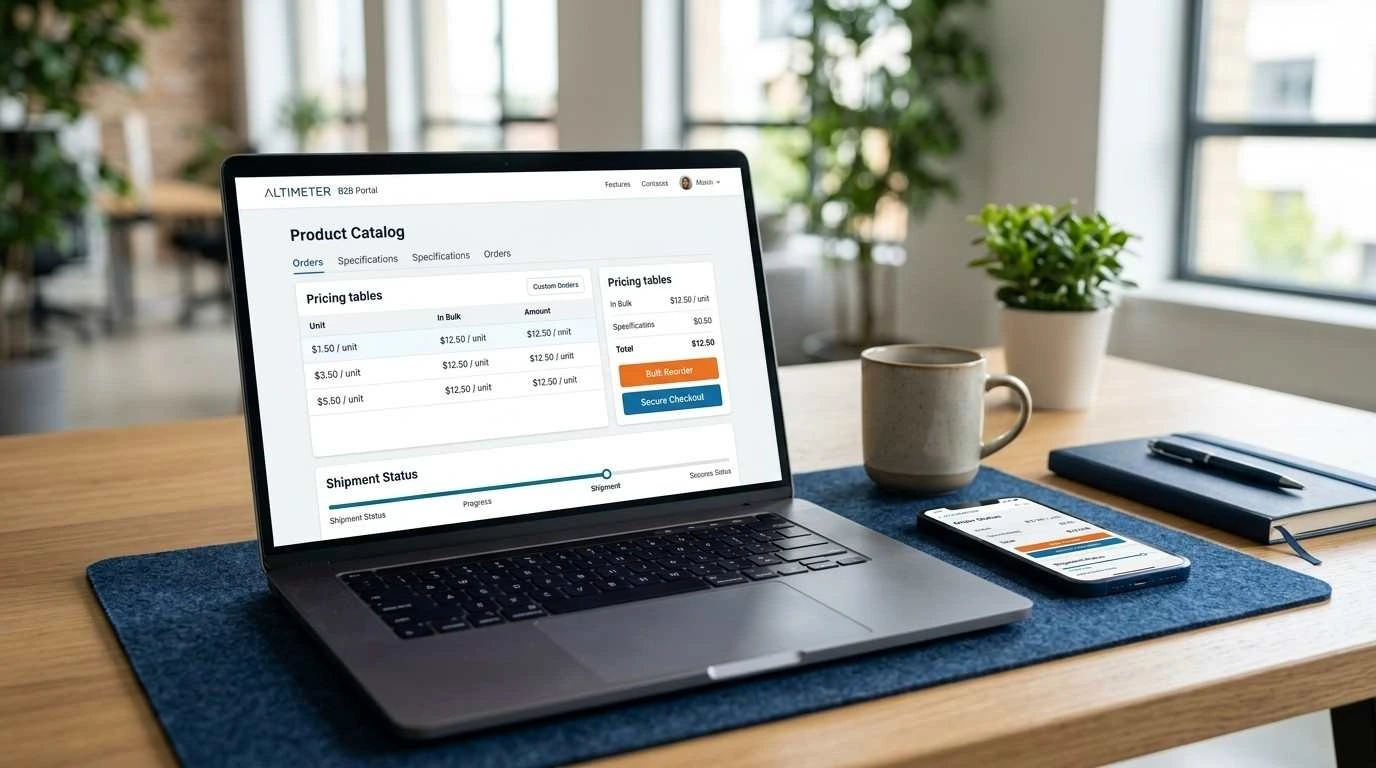
Modern b2b website design buyers are shaped by their consumer experiences, and they bring those same expectations into their professional purchasing decisions.
- Consumer-grade usability: clean navigation, fast load times, and intuitive search, even for complex product catalogs
- Pricing transparency: clear visibility into pricing (even if it’s account-specific), rather than a “call for quote” wall on every product
- Self-service capability: the ability to place orders, check order status, and manage account details without needing to contact a sales rep
- Speed and efficiency: especially for repeat buyers who know exactly what they need and want to reorder quickly
- Mobile accessibility: the ability to browse, reorder, or check order status from a phone, even if the full purchasing process happens on desktop
- Detailed product information: specs, certifications, and documentation that support informed purchasing decisions, especially for technical or regulated products.
Business buyers want the ease of consumer shopping combined with the depth of information and flexibility that complex B2B purchasing requires.
Must-Have Features for a Best B2B Ecommerce Website Design
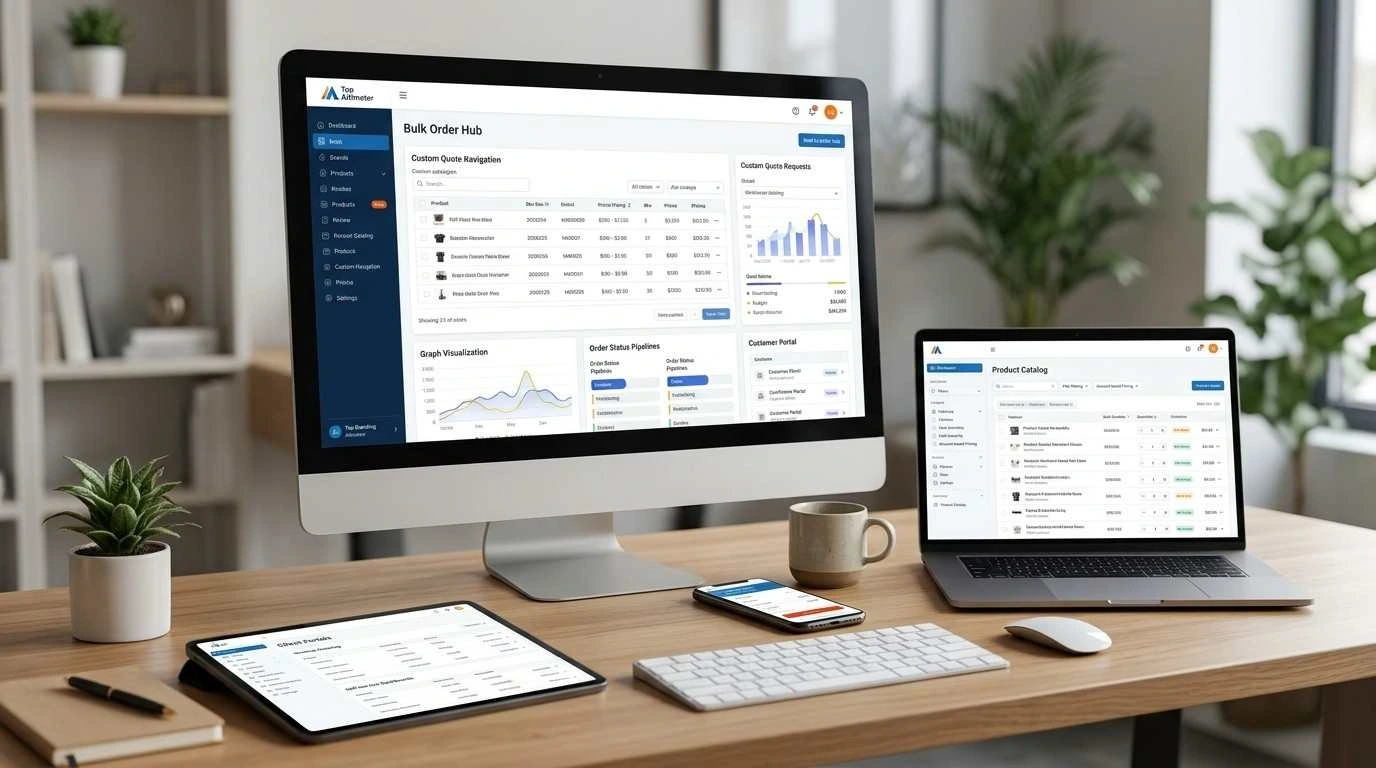
- More than listing products: it needs to support the full complexity of business purchasing. Key features include:
- Bulk ordering & quote requests: the ability to order in large quantities or request custom pricing on complex orders, without needing a phone call
- Account-based, tiered pricing: pricing that reflects negotiated rates or customer tier, visible once a buyer is logged into their account
- Organized catalog management: clear categorization, robust search, and filtering for large SKU counts, plus support for custom catalogs per client
- Self-service account portals: order history, reordering, invoices, and account management available without contacting a rep
- Flexible checkout & payment terms: support for purchase orders, net payment terms, multiple payment methods, and multi-level approval workflows
- Personalization by account: custom pricing, catalogs, and product recommendations tailored to each business account
- Mobile-friendly design: the ability to browse, reorder, or check order status on a phone, even if the full purchase happens on desktop.
Common B2B Design Mistakes
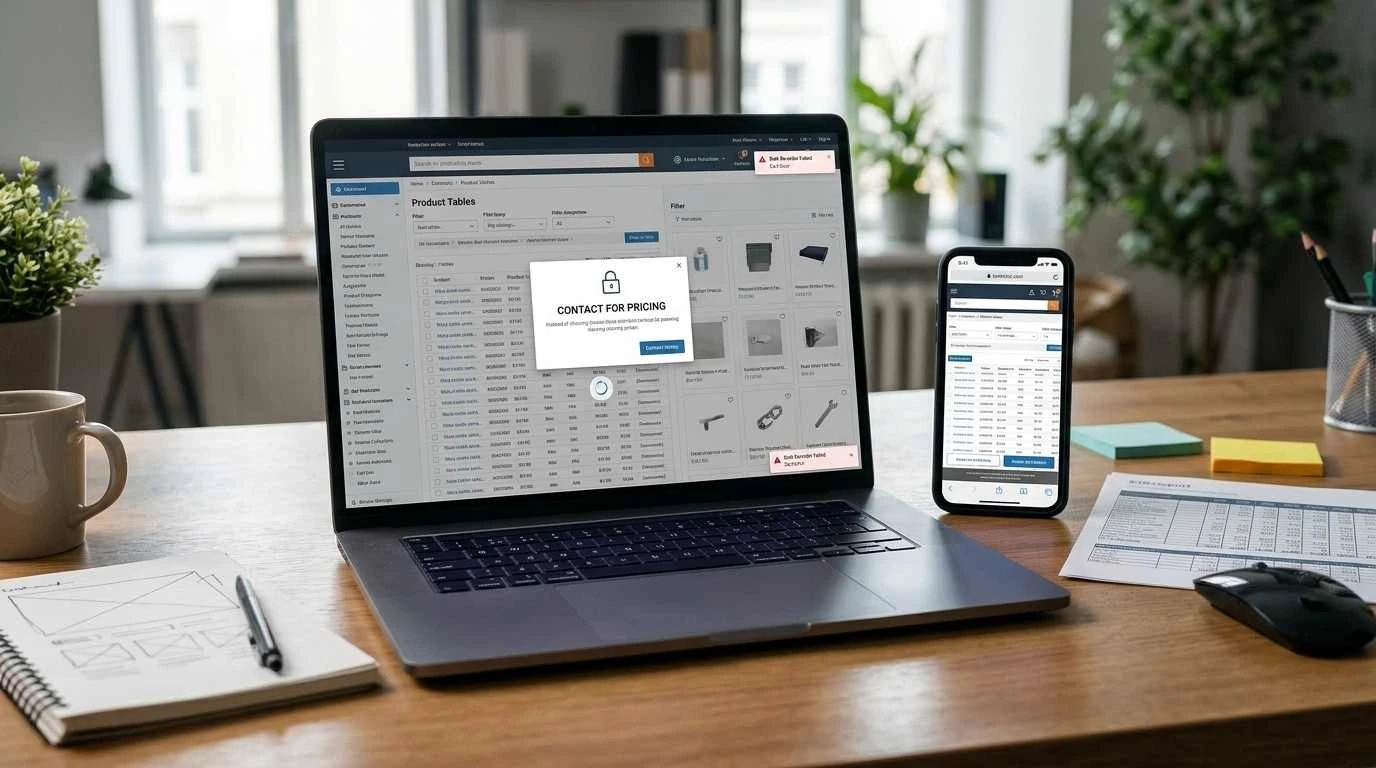
Even well-intentioned B2B sites often fall into avoidable traps that frustrate buyers and slow down sales:
- Treating the site like a B2C store: ignoring the complexity of bulk orders, approvals, and account-based needs
- Hiding pricing entirely: forcing buyers to call for basic pricing information, even when tiered pricing could be shown post-login
- Clunky reordering: making repeat buyers start from scratch instead of offering quick reorder options
- Weak search and filtering: especially damaging for large catalogs where buyers can’t easily find the right SKU
- Ignoring mobile users: assuming all B2B buyers only shop on desktop
- Choosing the wrong platform: picking a B2B ecommerce platform that can’t support the account, pricing, or workflow complexity the business actually needs.
FAQs – Best B2b Ecommerce Website Design Agency
How is B2B ecommerce website design services different from B2C?
B2B design has to support complex purchasing processes like bulk orders, approvals, and negotiated pricing, rather than simple one-off consumer transactions.
What features do business buyers expect from a B2B store?
Buyers expect self-service ordering, transparent account-based pricing, bulk ordering options, and easy reordering, alongside a fast, intuitive user experience.
Should a B2B ecommerce site support bulk ordering and quotes?
Yes, bulk ordering and quote request features are essential for accommodating the larger, more complex orders typical of B2B purchasing.
How important is account-based or tiered pricing on a B2B site?
It’s critical, since B2B pricing is rarely one-size-fits-all and buyers expect to see pricing that reflects their specific account or negotiated terms.
Does a B2B store need a self-service customer portal?
Yes, buyers increasingly expect to manage orders, reorder, and access invoices without needing to contact a sales representative.
How should product catalogs be organized for B2B buyers?
Catalogs should be clearly categorized with strong search and filtering, especially for businesses with large SKU counts or client-specific catalogs.
What payment options matter most for B2B ecommerce?
Support for purchase orders, net payment terms, and multiple payment methods is essential, along with approval workflows for larger organizations.
What are the most common mistakes in B2B ecommerce website design?
The biggest mistakes include hiding pricing, ignoring mobile users, offering weak search functionality, and treating the site like a standard B2C store.
Final Thoughts
B2B buyers expect more than a simple online catalog; they want the speed and ease of consumer shopping paired with the flexibility their business purchasing actually requires.
Not sure if your current B2B store is meeting buyer expectations, or ready to build one from scratch? Contact Top Branding Altimeter now, and let’s design a site your business buyers will actually want to use.
Ready to Grow Your Business?
Get expert guidance tailored to your brand — completely free consultation
Get Free Consultation