- Headless Commerce Explained: Best Guide for Your Store 2027
- What is Headless Commerce
- How Headless Commerce Actually Works
- Headless vs. Traditional Ecommerce (Monolith)
- Key Benefits of Going Headless
- The Trade-Offs: Pros & Cons
- Headless Commerce and SEO
- Cost & Implementation
- Popular Headless Commerce Platforms
- Real-World Examples
- Who Actually Needs Headless Commerce?
- FAQs – headless commerce explained
- Conclusion
Headless Commerce Explained: Best Guide for Your Store 2027
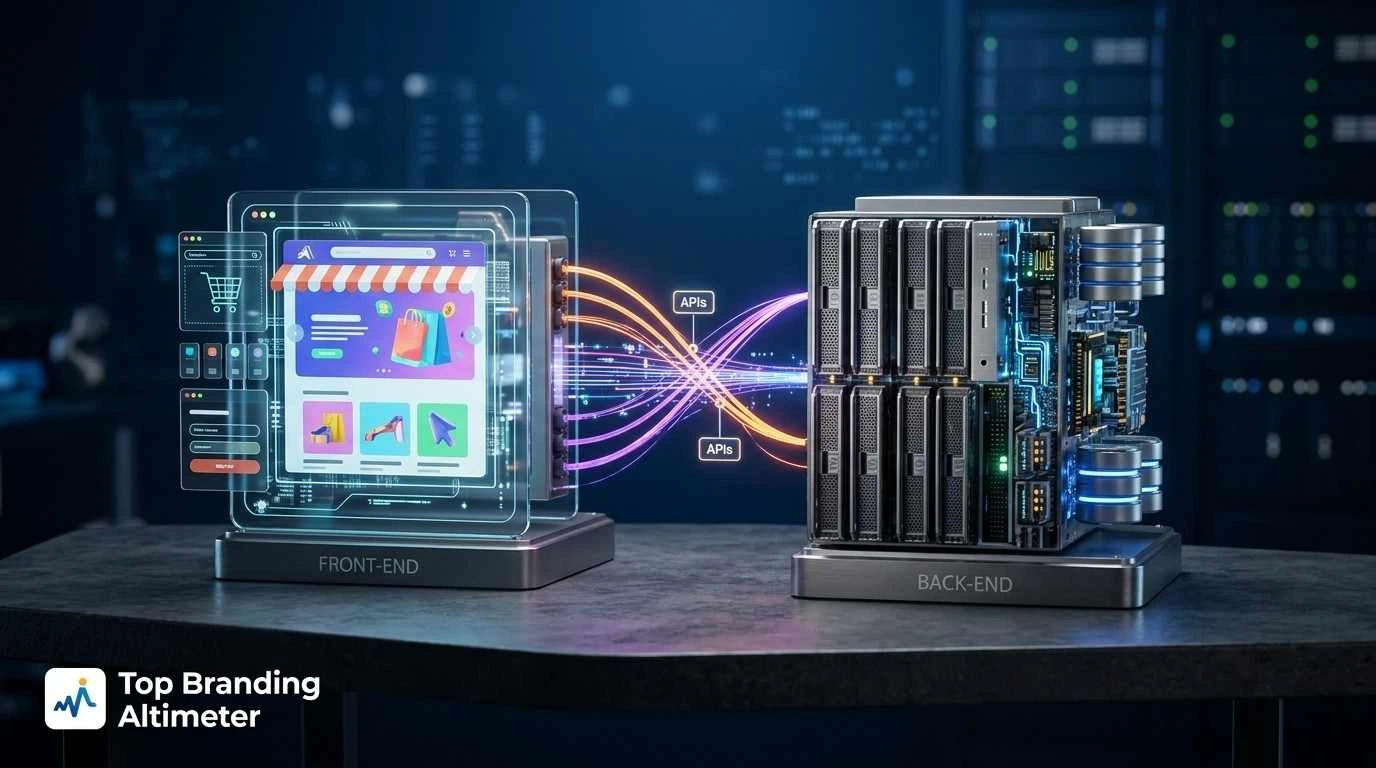
Headless Commerce Explained: it separates your store’s front end from its back end and connects them through APIs, giving more flexibility at higher cost. Top Branding Altimeter helps you decide if it fits.
If you’ve spent time researching ecommerce platforms, then you most likely have heard the term “headless ecommerce” getting dropped into conversations a lot of the time – as if everyone’s already familiar with it.
However, in reality, it is one of the most misunderstood concepts in online retail – often explained with more jargon than clarity.
To explain it in simple words, it’s an approach that separates the front end of your store (what customers see and interact with) from the back end (where your products, inventory, and orders are managed).
That separation opens the door to more flexibility, faster performance, and the ability to sell across multiple channels – but it also comes with real trade-offs in cost and complexity.
This guide breaks down what headless commerce actually is, how it works, and whether it makes sense for your store.
What is Headless Commerce
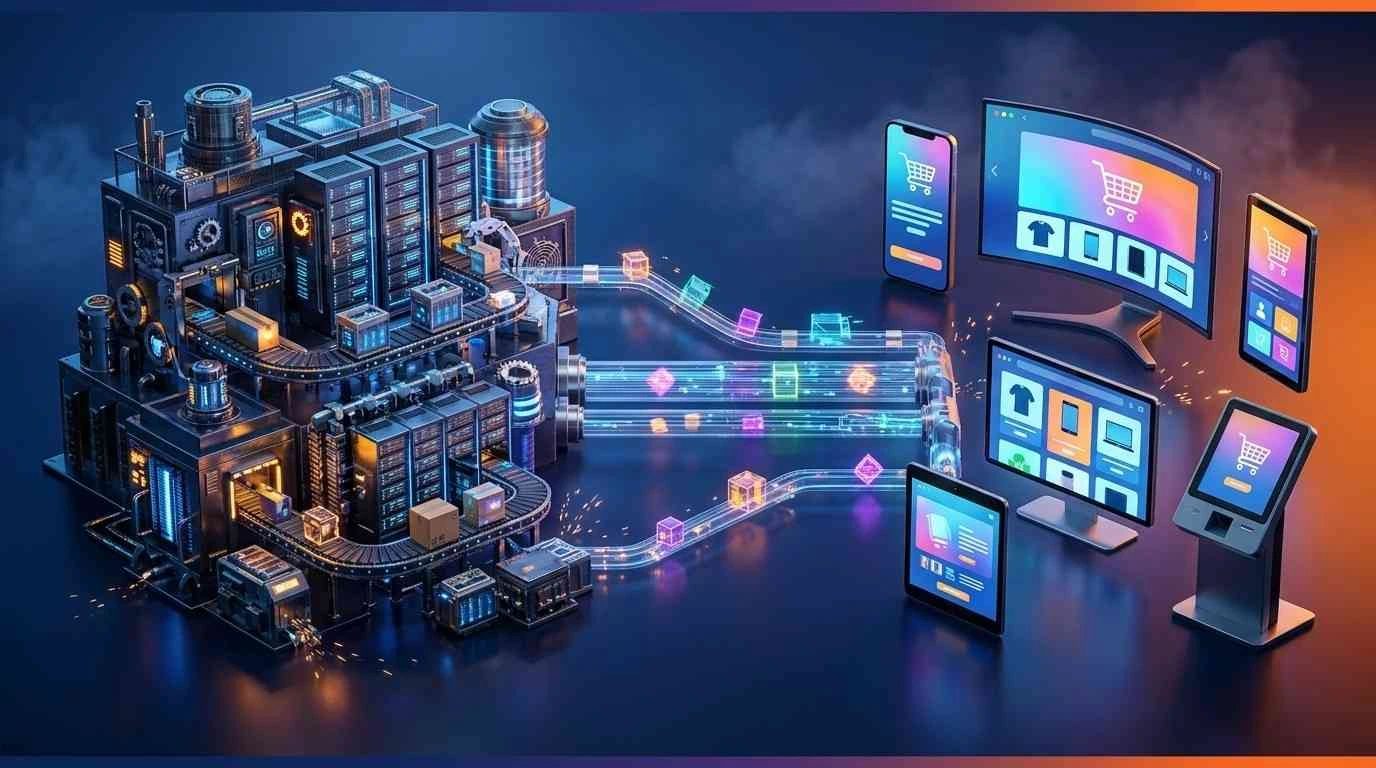
Think of a traditional ecommerce platform like a restaurant where the kitchen and dining room are one connected space: the way food is prepared is tightly linked to how it’s served.
Headless commerce is like moving the kitchen to a separate location and connecting it to the dining room through a delivery system.
The kitchen (your back-end, product data, inventory, orders) keeps doing its job, but the “dining room” (your front end – the website, app, or any customer-facing experience) can be built and changed independently, without touching the kitchen at all.
In technical terms, this connection between front end and back end happens through APIs, small messengers that pass information back and forth so the two sides can function independently while still working together.
How Headless Commerce Actually Works

Once you understand the front-end/back-end split, it helps to see what’s actually happening under the hood.
API-First Architecture
- Headless systems are built around APIs (Application Programming Interfaces), which act as the connective tissue between the front and back end
- Instead of the platform dictating how data is displayed, APIs simply deliver the data (product info, pricing, inventory) to whatever front end is requesting it
- This is what makes it possible to power a website, mobile app, and even smart displays or kiosks from a single back end
The Role of a Headless CMS For Ecommerce
- A headless CMS for ecommerce (content management system) stores and organizes your content and product data, but has no built-in front end of its own
- Developers use the CMS’s API to pull that content into whatever front-end experience they’re building
- This is different from a traditional CMS, where content is created and displayed within the same connected system
Putting It Together
- Back end: manages products, inventory, orders, and content
- API layer: connects back end to any front end
- Front end: fully custom-built, unrestricted by the back end’s design limitations
Headless vs. Traditional Ecommerce (Monolith)
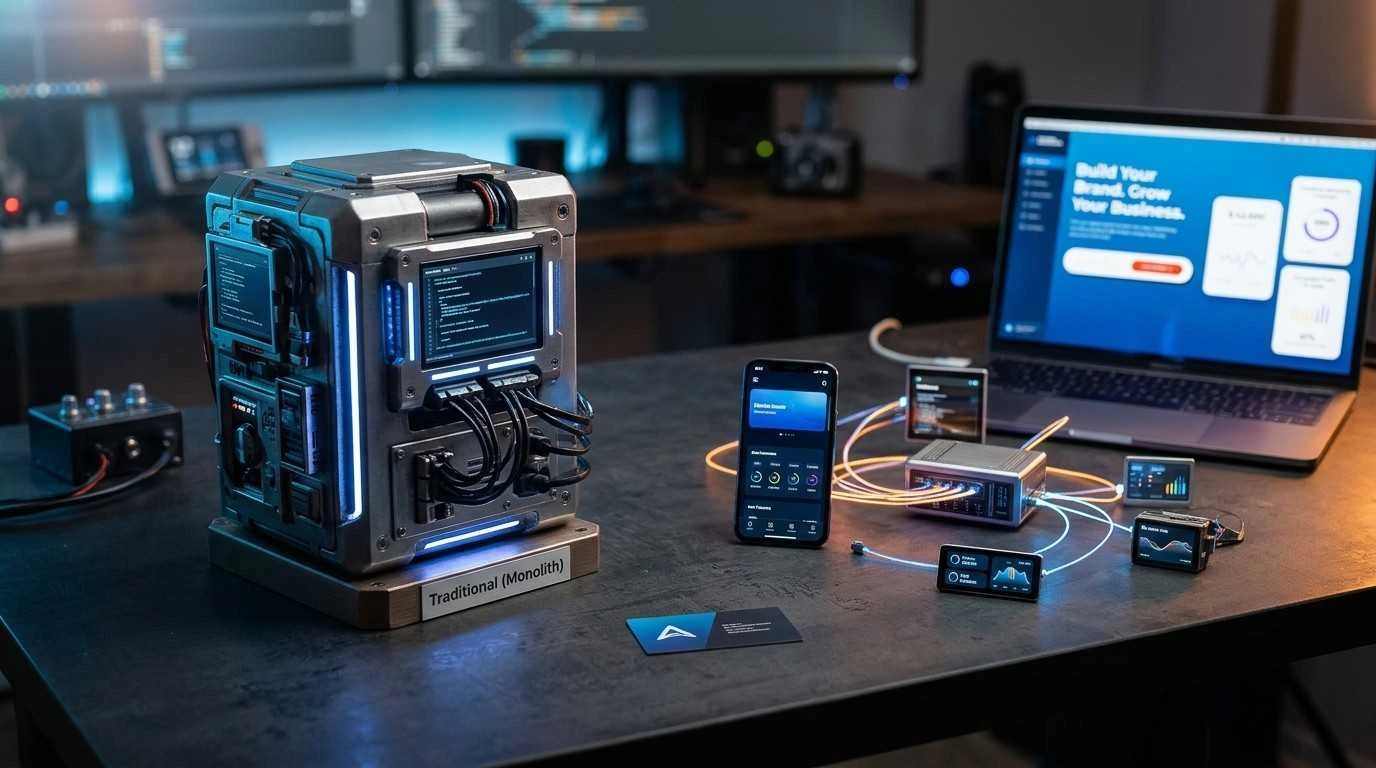
Traditional ecommerce platforms are often referred to as “Monolith Systems”. They bundle the front end and back end into one connected package.
Platforms like a standard Shopify or WordPress/WooCommerce setup fall into this category. Headless systems intentionally break that bundle apart.
| Factor | Traditional (Monolithic) | Headless |
| Front end & back end | Bundled together | Separated, connected via APIs |
| Design flexibility | Limited to platform’s themes/templates | Fully custom, no design constraints |
| Speed to launch | Faster and ready-made themes and tools | Slower and requires custom development |
| Technical requirement | Low to moderate | High and requires developer resources |
| Omnichannel delivery | Limited or requires workarounds | Built for delivering to multiple channels natively |
| Content updates | Managed within the platform’s interface | Managed via CMS, pushed through APIs |
| Best suited for | Small to mid-size stores wanting simplicity | Larger stores needing custom experiences |
Traditional platforms trade flexibility for simplicity and speed, while Headless commerce trades that simplicity for full control, at the cost of needing more technical resources to build and maintain it.
Key Benefits of Going Headless

For the right business, headless ecommerce can unlock advantages that traditional headless e commerce cannot offer:
- Faster site performance: Front ends can be built lean and optimized purely for speed, without being weighed down by the back end’s built-in templates or unnecessary code
- Full design freedom: Developers aren’t limited to a platform’s theme system, meaning the front end can look and function exactly as envisioned
- True omnichannel selling: The same back end can power a website, mobile app, in-store kiosk, or even smart devices, all from a single source of product and content data
- Greater scalability: Front end and back end can be scaled independently, so a traffic spike on the website doesn’t strain the entire system
- Future-proofing: Since front end and back end aren’t locked together, you can swap out or upgrade one without rebuilding the other
- Personalization potential: More control over the front end makes it easier to build highly tailored, dynamic customer experiences.
The Trade-Offs: Pros & Cons
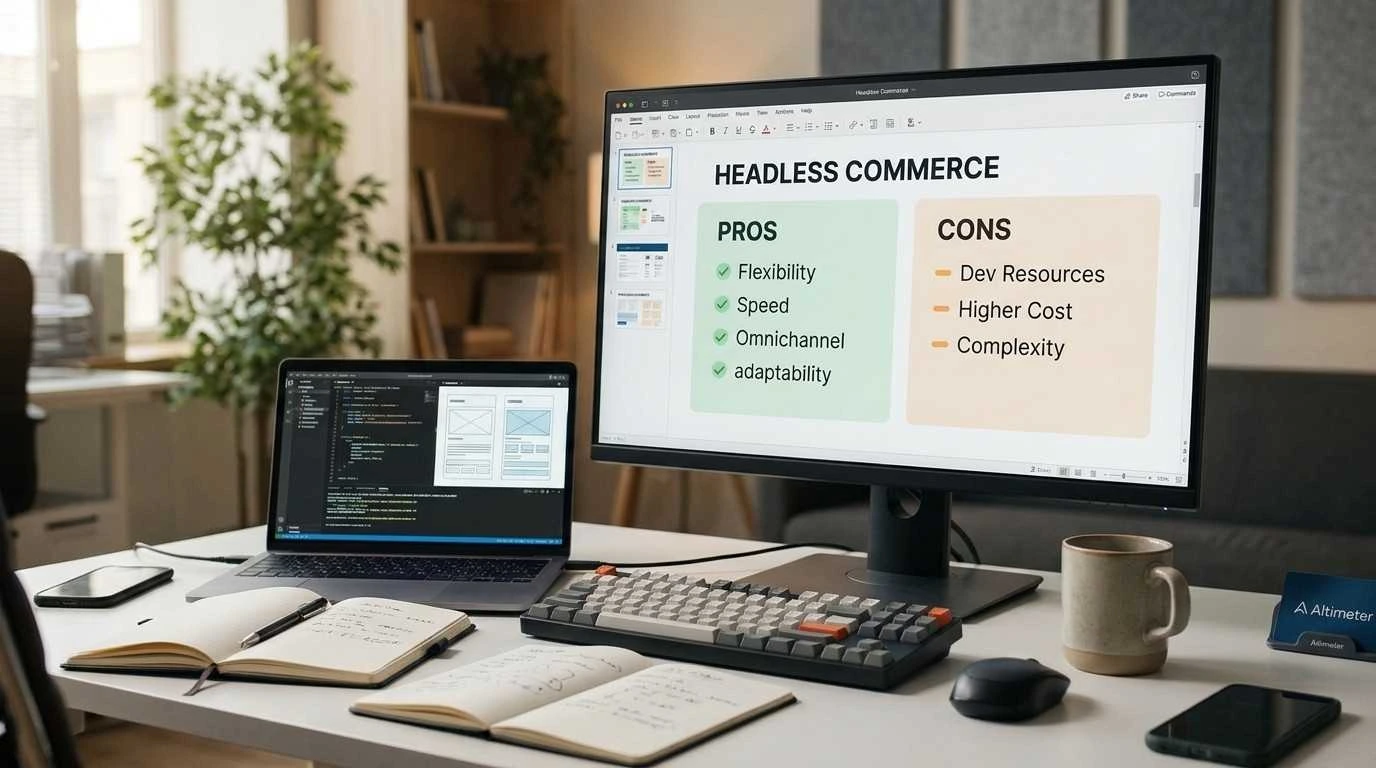
With headless e-commerce, you’re trading off control for simplicity. Here’s a balanced look at both the pros and cons:
Pros
- Full design and front-end flexibility
- Faster, more optimized site performance
- Built for true omnichannel delivery
- Scales front end and back end independently
- Easier to adapt or future-proof as technology changes
Cons
- Requires developer resources to build and maintain.
- Higher upfront development cost compared to traditional platforms
- Longer implementation timeline before launch
- More moving parts to manage (CMS, APIs, front-end framework, hosting)
- Ongoing technical maintenance is more demanding than a traditional platform
Headless commerce rewards businesses with the resources to build and maintain a custom system, but it can be overkill and unnecessarily costly for stores that don’t need that level of flexibility.
Headless Commerce and SEO
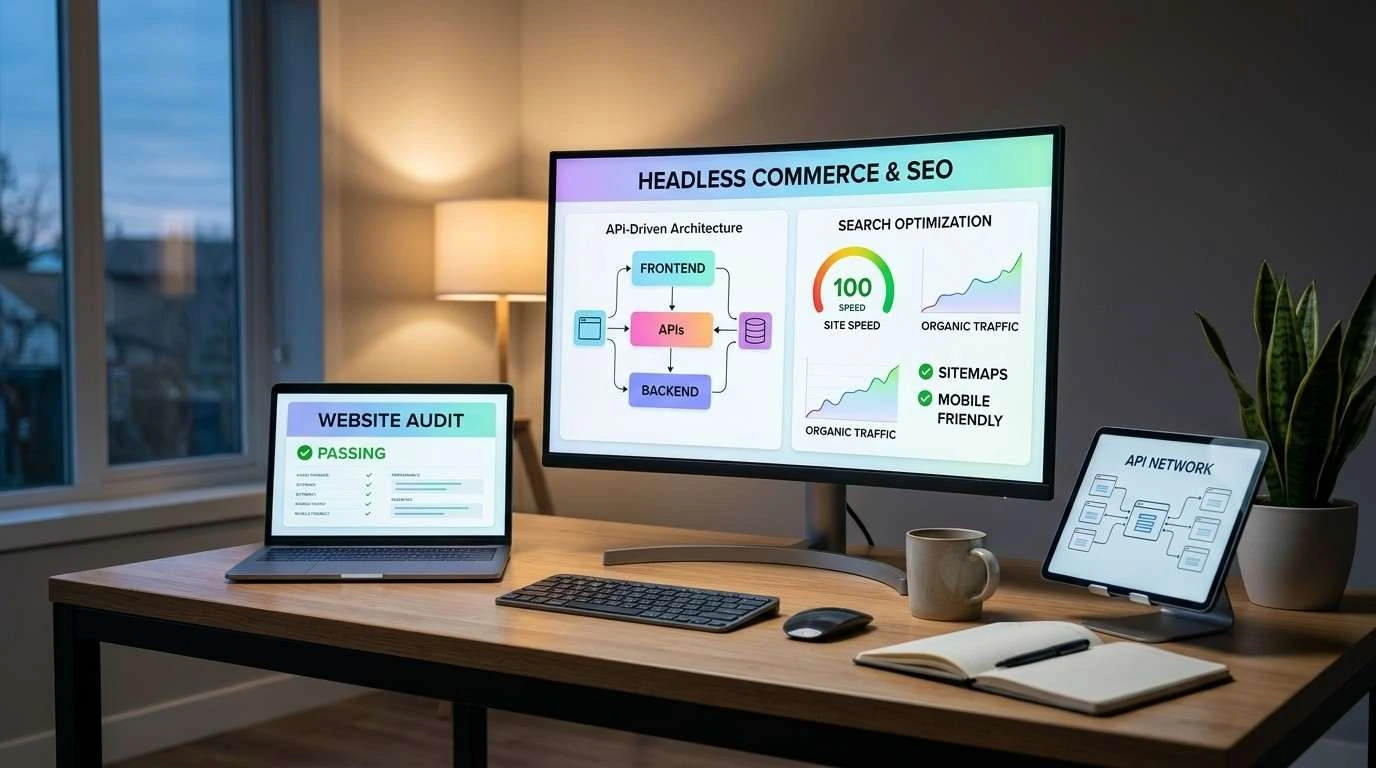
Going headless can affect SEO in both positive and challenging ways, depending on how well it’s implemented.
The Upside
- Faster page load speeds, since the front end isn’t weighed down by unnecessary platform code and site speed is a known ranking factor
- Greater control over technical SEO elements like URL structure, meta tags, and structured data, since developers aren’t restricted by a platform’s built-in limitations
- More flexibility to build content-rich pages optimized for specific keywords and search intent.
The Challenges
- SEO fundamentals that traditional platforms handle automatically (like sitemaps or canonical tags) must be built and maintained manually
- Server-side rendering needs to be configured correctly, or search engines may struggle to properly crawl and index content
- Requires closer collaboration between developers and SEO specialists to avoid technical missteps
Cost & Implementation
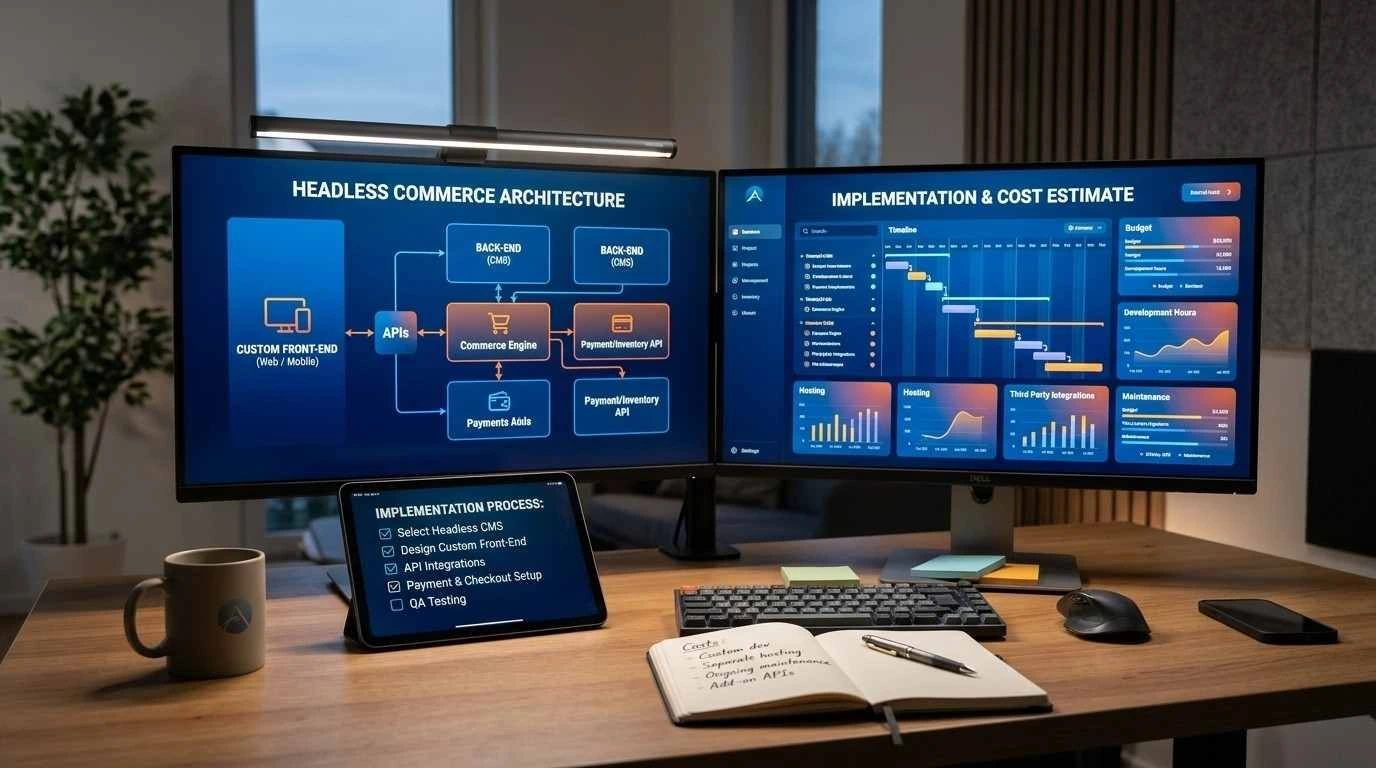
Headless commerce is a bigger investment than a traditional platform setup, both in time and budget.
What Drives the Cost
- Custom front-end development, typically built by experienced developers rather than configured through a theme
- Ongoing costs for hosting the front end separately from the back end
- Ongoing maintenance and updates for both the CMS and the front-end framework
- Potential costs for additional tools or headless commerce development services to fill functionality gaps (search, personalization, checkout, etc.)
What the Implementation Process Typically Looks Like
- Selecting a headless CMS or commerce back end that fits the business’s needs
- Designing and building a custom front end connected via APIs
- Setting up integrations for payments, shipping, inventory, and other core ecommerce functions
- Testing across devices and channels before launch
- Ongoing technical support post-launch, since updates and fixes require developer involvement
Popular Headless Commerce Platforms
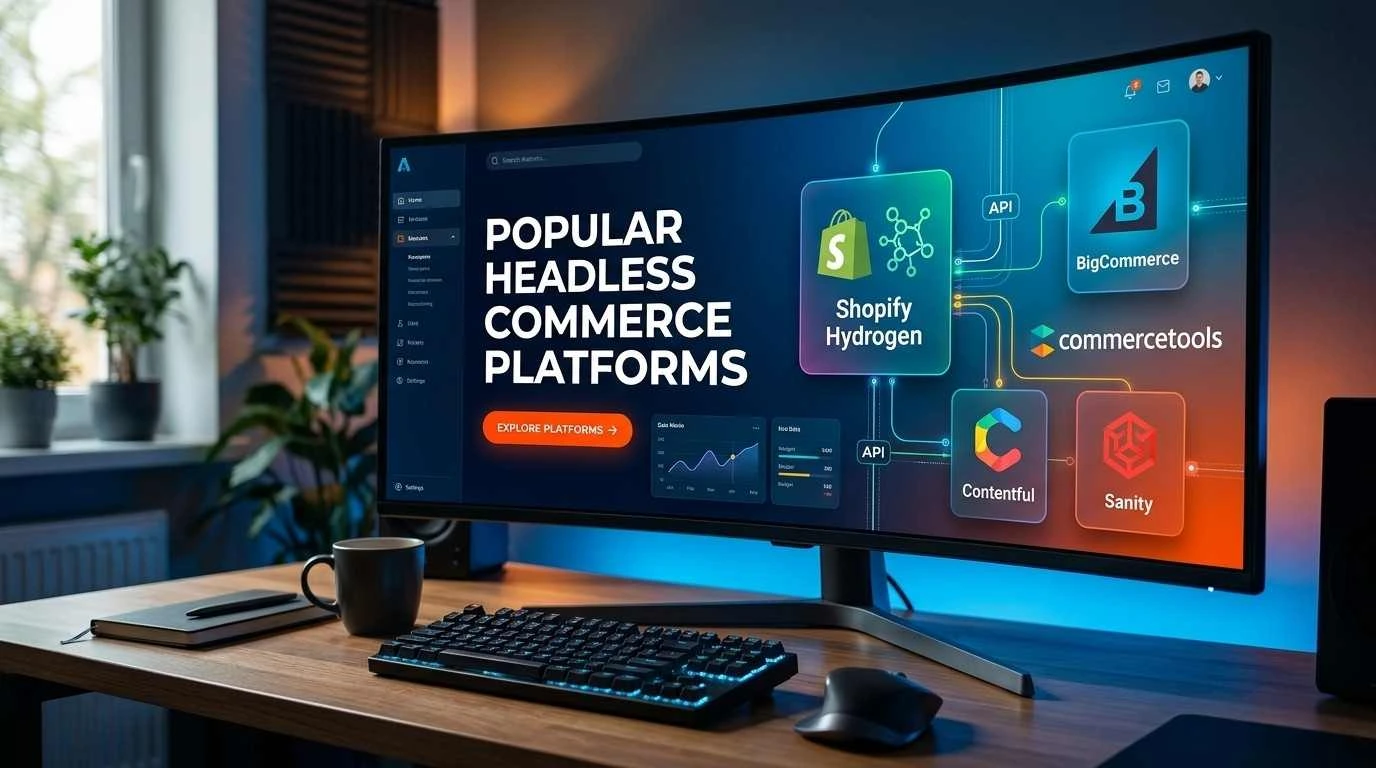
Several platforms and approaches have emerged to support headless setups, ranging from headless-first solutions to traditional platforms offering headless options.
- Shopify Hydrogen: Shopify’s own framework for building custom, headless storefronts on top of Shopify’s back end
- BigCommerce: Offers robust headless/API capabilities alongside its traditional platform option
- Commercetools: A commerce-focused platform built specifically for headless and composable architectures
- Contentful / Sanity: Popular headless CMS options often paired with commerce back ends for content-heavy stores
- Composable commerce: A broader approach where businesses mix and match best-in-class tools (search, checkout, CMS, etc.) instead of relying on one all-in-one platform
Real-World Examples

Headless commerce tends to show up in businesses with specific, complex needs that traditional platforms struggle to support.
- Multi-brand retailers managing several storefronts from a single back end, each with a distinct front-end design
- Businesses selling across multiple channels like website, mobile app, and in-store kiosks all pulling from the same product data
- Content-heavy brands that blend editorial content with shopping experiences, needing more flexibility than a standard blog-plus-store setup
- High-traffic retailers who need front-end performance that can scale independently during major sales events
- Companies with unique, highly custom user experiences that don’t fit within standard theme-based designs
Who Actually Needs Headless Commerce?

Headless commerce likely makes sense if you:
- Sell across multiple channels (web, app, in-store, etc.) and need one back end to power all of them
- Have specific design or user-experience requirements that off-the-shelf themes can’t achieve
- Have the budget and access to developer resources for ongoing build and maintenance
- Are a larger business with the traffic and complexity to justify the investment.
Traditional (non-headless) ecommerce likely makes more sense if you:
- Are a small to mid-size store without a dedicated development team
- Want to launch quickly and manage the store yourself
- Need predictable costs rather than variable development expenses
- Don’t currently have complex omnichannel or custom design needs
FAQs – headless commerce explained
What does “headless commerce” actually mean in simple terms?
Headless commerce means separating the front end of a store (what customers see) from the back end (where products and data are managed), connecting the two through APIs.
How is headless commerce different from a traditional Shopify or WordPress store?
Traditional Shopify or WordPress stores bundle the front end and back end together within one platform. Headless commerce separates them, giving businesses full control over the front-end design and experience.
What are the biggest benefits of going headless?
The biggest benefits are design flexibility, faster site performance, and the ability to deliver consistent product data across multiple channels like web, mobile, and in-store.
Is headless commerce more expensive to build and maintain?
Yes, headless commerce typically costs more upfront due to custom development and requires ongoing developer support to maintain. Traditional platforms are generally more affordable and easier to manage without a dedicated technical team.
Does headless commerce improve website speed and SEO?
It can, since front ends can be built lean and optimized purely for performance, which supports better SEO.
What size of business actually needs headless commerce?
Headless commerce is generally best suited for larger businesses with complex, multi-channel needs and the resources to support custom development. Smaller stores often don’t need the added complexity or cost.
What platforms support a headless commerce setup?
Platforms like Shopify Hydrogen, BigCommerce, and commercetools support headless setups, often paired with a headless CMS like Contentful or Sanity. Many businesses also use a composable approach, combining multiple specialized tools.
Is headless commerce worth it for a small or mid-size store?
For most small or mid-size stores, headless commerce is usually more complex and costly than necessary. It tends to be worth it only when the business has specific omnichannel, performance, or customization needs that a traditional platform can’t meet.
Conclusion
Headless commerce is a serious architectural decision that trades simplicity for control. For large, complex, or highly custom businesses, that trade-off can unlock real performance and flexibility gains.
For smaller stores, a traditional platform often gets the job done with far less cost and complexity.
Not sure whether headless commerce fits your business, or whether a traditional platform still makes more sense? Contact us now, and we’ll help you figure out the right approach for where your store is now and where it’s headed
Ready to Grow Your Business?
Get expert guidance tailored to your brand — completely free consultation
Get Free Consultation