- What Changed in SEO in 2026
- 2. What Are AI Overviews & Why They Matter
- 3. AIO: AI Optimization — The New Dimension of SEO
- 4. E-E-A-T: Google's #1 Trust Signal
- 5. Keyword Strategy for 2026
- 6. On-Page SEO Checklist (2026)
- 7. Technical SEO Essentials in 2026
- 8. Backlinks & Authority Building
- 9. Why Web Design Directly Affects Your SEO
- 10. Social Media & SEO Connection in 2026
- Frequently Asked Questions
- Ready to Grow Your Traffic in 2026?
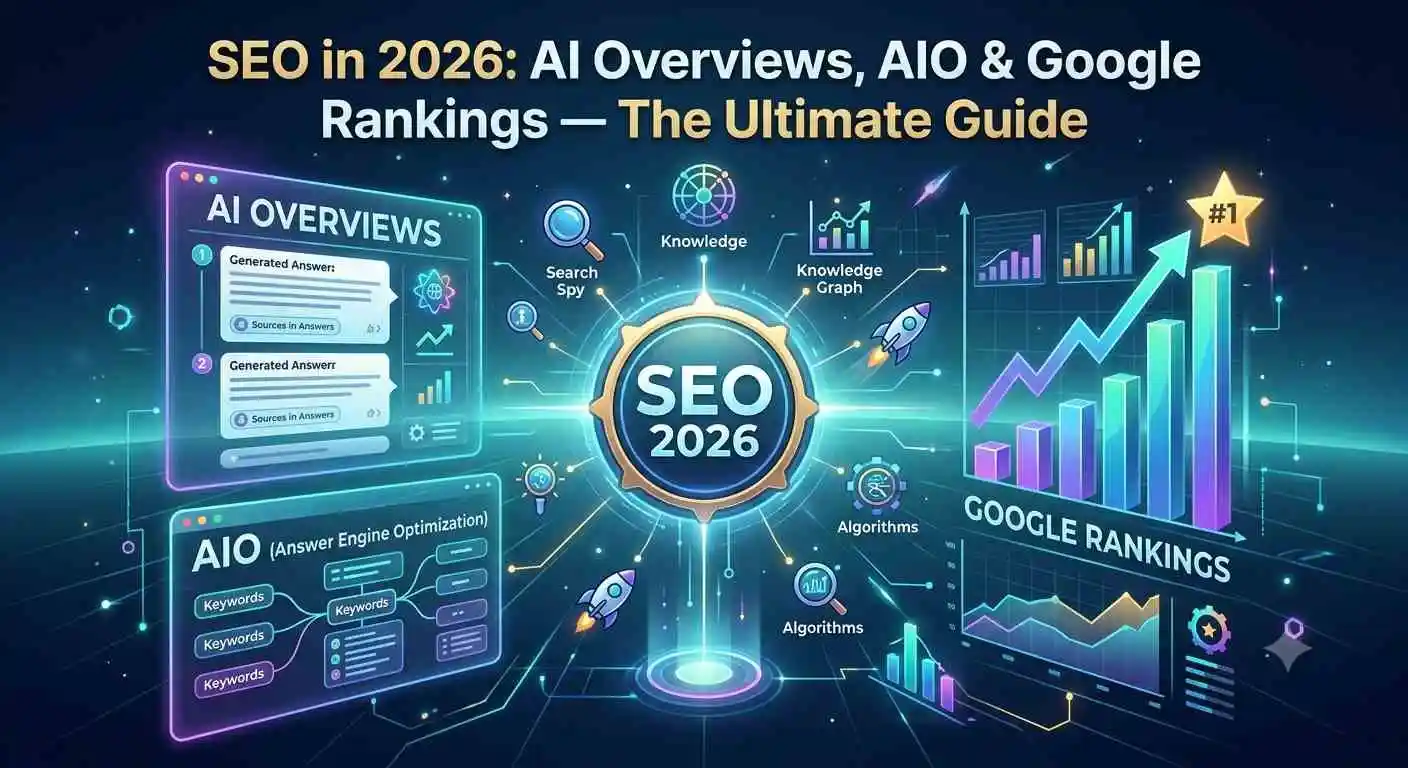
What Changed in SEO in 2026
SEO in 2026 is not the same game it was two years ago. Google has fundamentally changed how it surfaces information — and businesses that ignore these changes are losing traffic fast.
The three biggest shifts: AI-generated answers now dominate the top of search, zero-click searches have increased dramatically, and AI tools like ChatGPT and Gemini are now replacing Google for millions of users.
For businesses today, a strong foundation in SEO basics is no longer optional — it is the baseline requirement to compete online.
Key Insight for 2026: The goal of SEO is not just to rank on page 1 anymore — it is to be cited by AI tools as a trusted, authoritative source. That is the new #1 spot on the internet.
2. What Are AI Overviews & Why They Matter
When you search on Google today, you see a blue AI-written box at the very top of results. That is Google’s AI Overview. Below it are the regular blue links — but most users never scroll that far.
Google picks 3–5 websites to cite inside the AI Overview. If your website is one of them, you get massive visibility — even if you do not rank #1 in traditional results. This is why understanding how SEO works over time is critical before setting expectations.
How to Get Cited in AI Overviews
-
1Write direct answers at the very start of your blog posts. AI picks content that immediately and clearly answers the search query.
-
2Use structured content — H1, H2, H3 headings, bullet points, numbered lists. AI tools love scannable, organized content.
-
3Add FAQ sections with Schema Markup. This is one of the fastest ways to appear in AI Overviews and Google’s People Also Ask.
-
4Build authority and backlinks from reputable sites — Google only cites websites it already trusts.
-
5Keep content updated — outdated or inaccurate information gets removed from AI citations quickly.
3. AIO: AI Optimization — The New Dimension of SEO
AIO (AI Optimization) means optimizing your content not just for Google’s traditional algorithm, but for all AI tools — ChatGPT, Gemini, Google AI Overview, and Google AI Mode. These platforms are now where millions of people go for answers instead of scrolling through search results.
Your website needs to be visible in ALL of these, not just Google’s blue links. Our deep dive into Google E-E-A-T for SEO explains exactly how to build the trust signals that AI tools look for.
AIO Optimization Checklist for 2026
-
✓Write for questions: Structure all content around “how”, “what”, “why”, “best” search queries that users ask AI tools.
-
✓Add a real Author Bio: AI tools strongly prefer content written by real people with verifiable credentials and expertise.
-
✓Use Schema Markup: Article, FAQ, HowTo schema helps AI tools understand exactly what your content is about.
-
✓Cite reputable sources: Link to authoritative external sources — AI tools take this as a signal of content quality.
-
✓Be comprehensive: Cover every aspect of the topic in depth. Thin, shallow content never gets cited by AI tools.
-
✓Mobile-first content: Fast, clean, readable on all screen sizes. Speed is a direct ranking and citation factor.
4. E-E-A-T: Google’s #1 Trust Signal
Google evaluates every single page on the internet using E-E-A-T — Experience, Expertise, Authoritativeness, and Trustworthiness. Pages with strong E-E-A-T signals rank higher, attract more backlinks, and get cited by AI tools.
Experience
Show real-world experience. Add case studies, your own results, screenshots, client testimonials, and personal insights from actually doing what you describe.
Expertise
Demonstrate deep subject knowledge. Write accurate, in-depth content. Include author name, credentials, and a professional bio on every article.
Authoritativeness
Get reputable websites to link to and mention you. Build your brand name in your industry. Be the source others reference.
Trustworthiness
Maintain a clear About page, Privacy Policy, Contact info, HTTPS, accurate information, and consistent brand identity across all platforms.
Building E-E-A-T is directly connected to how your brand is presented online. A professional brand identity and consistent visual presence significantly strengthens your trustworthiness signals in Google’s eyes.
5. Keyword Strategy for 2026
Old keyword strategy was simple: find high-volume keywords and rank for them. In 2026, the approach requires more nuance and topic depth.
Focus on These Keyword Types
-
🎯Long-tail keywords (KD 0–15): Easier to rank, very specific searcher intent. For example: Google Ads optimization strategies for doctors is a perfect long-tail keyword with clear intent.
-
🎯Question keywords: “How to…”, “What is…”, “Best… for…” — these phrases are exactly what gets picked up by AI Overviews and People Also Ask.
-
🎯Intent-matched keywords: Match your content precisely to what the searcher actually wants — informational, commercial, or navigational intent.
-
🎯Topical clusters: Instead of random isolated keywords, build clusters of 10–15 related posts on the same topic. This signals topical authority to Google.
Our guide on SEO content writing breaks down how to naturally weave keywords into content without keyword stuffing.
6. On-Page SEO Checklist (2026)
Every blog post and page on your website must pass this checklist before publishing. Missing even a few of these can significantly hurt your rankings. For a full breakdown, see our dedicated on-page SEO checklist guide.
| Element | Requirement |
|---|---|
| ✅ Title Tag | Include primary keyword. Keep under 60 characters. |
| ✅ Meta Description | Write a compelling 150–155 character description with keyword. |
| ✅ H1 Heading | One H1 per page only, containing your primary keyword. |
| ✅ H2 / H3 Subheadings | Use secondary and related keywords naturally in subheadings. |
| ✅ First 100 Words | Mention your main keyword in the very first paragraph. |
| ✅ Internal Links | Link to 3–5 related pages on your own website per post. |
| ✅ Image Alt Text | Add descriptive, keyword-relevant alt tags to every image. |
| ✅ Schema Markup | Add Article, FAQ, or HowTo schema to every post. |
| ✅ Word Count | Aim for 1,500–2,500 words for competitive keywords. |
| ✅ Canonical URL | Set canonical tag to prevent duplicate content issues. |
| ✅ Page Speed | Page must load in under 2 seconds on mobile and desktop. |
7. Technical SEO Essentials in 2026
Technical SEO is the foundation everything else is built on. Without it, even the best content will not rank well. Our comprehensive guide on technical SEO explained covers every element in detail.
Most Critical Technical SEO Factors
Page Speed: Google uses Core Web Vitals as a ranking factor. Every second of load time costs you rankings and conversions. See our guide on website speed and SEO.
Mobile Responsiveness: Google indexes your mobile site first. A mobile-friendly web design is now a non-negotiable ranking requirement.
8. Backlinks & Authority Building
Backlinks remain one of Google’s strongest ranking signals in 2026. But quality completely beats quantity. One link from a high-authority website is worth more than 500 low-quality links.
⚠️ Important Note
If your site has thousands of backlinks but a low Authority Score, it means most of those backlinks are low quality. Focus on earning 10–20 strong backlinks from reputable industry websites rather than chasing volume.
Best Ways to Get Quality Backlinks in 2026
-
🔗 Guest Posting: Write high-quality articles for reputable blogs in your industry and include a natural link back to your site.
-
🔗 Digital PR: Get your data, research, opinions, or case studies featured in industry publications and news articles.
-
🔗 Resource Pages: Find “best resources” or “useful tools” pages in your niche and request to be included.
-
🔗Broken Link Building: Find broken outbound links on authoritative sites and offer your relevant content as a replacement.
-
🔗Linkable Assets: Original research, free tools, infographics, and comprehensive guides naturally attract backlinks over time.
Getting affordable SEO services that include link building can significantly accelerate your authority growth without breaking your budget.
9. Why Web Design Directly Affects Your SEO
Many businesses treat SEO and web design as separate things. In 2026, they are completely connected. Google measures how users interact with your site — and a poor design causes people to leave immediately, which tanks your rankings.
Whether you need a full professional web design and development or a custom web development solution, your site’s technical performance is directly tied to your search rankings.
Design Elements That Impact SEO
-
Navigation Structure: Clear, logical navigation helps both users and Google crawlers find all your content. Read our guide on website redesign checklist before making changes.
-
Page Layout: Content-first layouts that load key text fast perform better on Core Web Vitals. Poor UX design directly hurts bounce rate and dwell time.
-
Responsive Design: Your site must work perfectly on every screen size. Proper responsive breakpoints are essential for mobile SEO.
-
E-commerce Sites: For online stores, e-commerce SEO basics combined with great design is what drives organic sales.
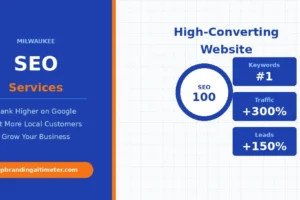
If your website is outdated or slow, consider the impact on your rankings. Our guide to building a high-converting website shows how design and SEO work together to turn visitors into customers.
10. Social Media & SEO Connection in 2026
Social media does not directly affect Google rankings — but it amplifies everything else that does. When your content gets shared widely, more people link to it, more people search your brand name, and your authority grows faster.
Businesses that invest in social media marketing packages alongside their SEO strategy consistently see faster results because the two channels reinforce each other.
How Social Media Supports SEO
-
Content Distribution: Sharing blog posts on social platforms drives initial traffic and signals to Google that people find your content valuable.
-
Brand Search Volume: When people see your content on social media and then search your brand name on Google, it is a positive authority signal.
-
Link Attraction: Viral or widely-shared social content often attracts organic backlinks from other websites and bloggers.
-
Content Marketing Synergy: A strong content marketing strategy that includes both blog and social is the fastest path to sustainable organic traffic.
Frequently Asked Questions
❓ What is AI Overview in SEO 2026?
AI Overview is Google’s AI-generated answer box that appears at the very top of search results. It summarizes information from multiple trusted websites. Getting cited in AI Overview gives your site massive visibility without needing to rank #1 in traditional results.
❓ What does AIO mean in SEO?
AIO stands for AI Optimization — the practice of optimizing your content so it gets cited by AI tools like ChatGPT, Google Gemini, Google AI Mode, and Google AI Overview. It is the most important new dimension of SEO in 2026, and businesses that master it gain a major competitive advantage.
❓ How long does SEO take to show results in 2026?
With consistent effort, most websites start seeing measurable traffic growth within 3–6 months. AI Overview citations can happen faster — sometimes within a few weeks — if your content directly and clearly answers popular search questions with strong E-E-A-T signals.
❓ Is blogging still important for SEO in 2026?
Yes — more than ever. AI tools are trained on written content. High-quality, well-structured blog posts are the primary way to gain both traditional Google rankings and AI citations. Consistent blogging is the single most impactful long-term SEO strategy available to businesses of any size.
❓ What is E-E-A-T and why does it matter?
E-E-A-T stands for Experience, Expertise, Authoritativeness, and Trustworthiness. Google uses these signals to evaluate whether your content is reliable, accurate, and helpful. Strong E-E-A-T is essential for ranking in competitive niches and for getting your content cited by AI tools like Gemini and ChatGPT.
❓ Does web design affect SEO rankings?
Ready to Grow Your Traffic in 2026?
Let Top Branding Altimeter build your complete SEO and AI visibility strategy — from content to technical SEO to web design.
Ready to Grow Your Business?
Get expert guidance tailored to your brand — completely free consultation
Get Free Consultation