- Ecommerce SEO Basics: A Practical Starting Point
- Stop Chasing Keywords, Start Chasing Conversations
- Product Schema: The "Nutrition Label" of Your Store
- Is Your Store Missing Rich Search Results?
- The Death of the "Manufacturer's Blurb."
- Organizing Your Store (The "Messy Closet" Effect)
- Fix a Messy Store Before It Costs You Sales
- Speed, Mobile, and the "Frustration Factor."
- The Rise of AI Search (GEO)
- Get Found in AI Shopping Results Too
- The Bottom Line: SEO is Just Good Service
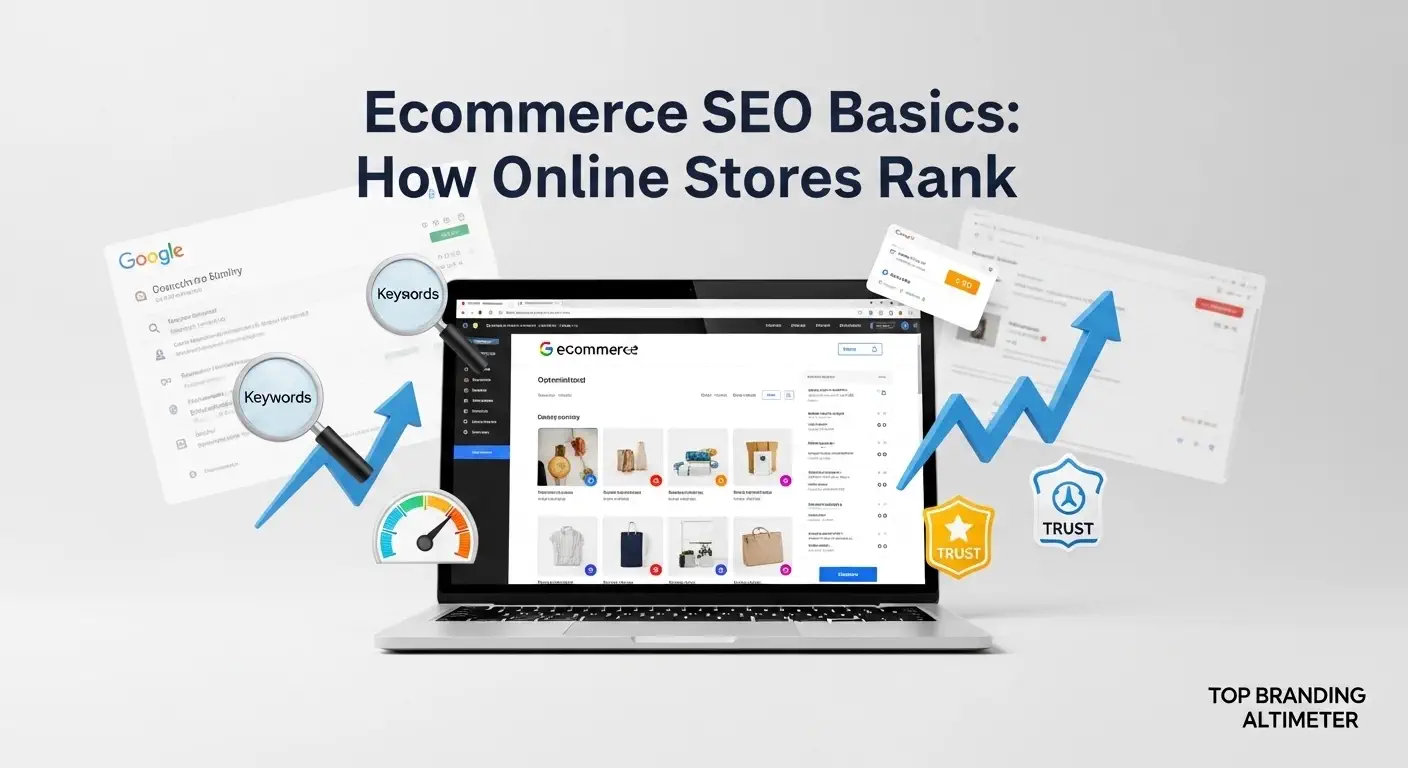
Ecommerce SEO Basics: A Practical Starting Point
If you want consistent traffic without relying on ads, understanding ecommerce SEO basics is where everything begins. It’s not just about adding keywords. It’s about structuring your store so search engines can understand it and customers can trust it. From product pages to site speed, every detail plays a role in how you rank and convert.
What this really means is simple: when your store is optimized the right way, the right people find you at the right time. In this guide, you’ll learn ecommerce SEO basics that help you improve visibility, attract high-intent visitors, and turn clicks into actual sales.
Imagine you’ve just opened a boutique on a quiet side street. The interior is stunning, the lighting is perfect, and your products are world-class. But there’s one problem: the street is empty. No one is walking by because no signs are directing them to your door. In the digital world, ecommerce SEO is that signage. For many brand owners, SEO feels like a “black box” full of secret codes and ever-changing rules.
But at its heart, SEO isn’t about pleasing a robot; it’s about being the most helpful answer to a customer’s question. Whether they are looking for “unbreakable sunglasses” or “the softest bamboo sheets,” your goal is to show up and say, “Hey, I’ve got exactly what you’re looking for.”
Here is how we navigate the online store SEO landscape at Top Branding Altimeter.
Stop Chasing Keywords, Start Chasing Conversations
We’ve all seen those product descriptions that feel like they were written by a computer: “High-quality blue widget for sale, blue widget best price.” It’s robotic, it’s boring, and in 2026, it doesn’t work.
Search engines have grow up ecommerce SEO basics. They now understand intent.
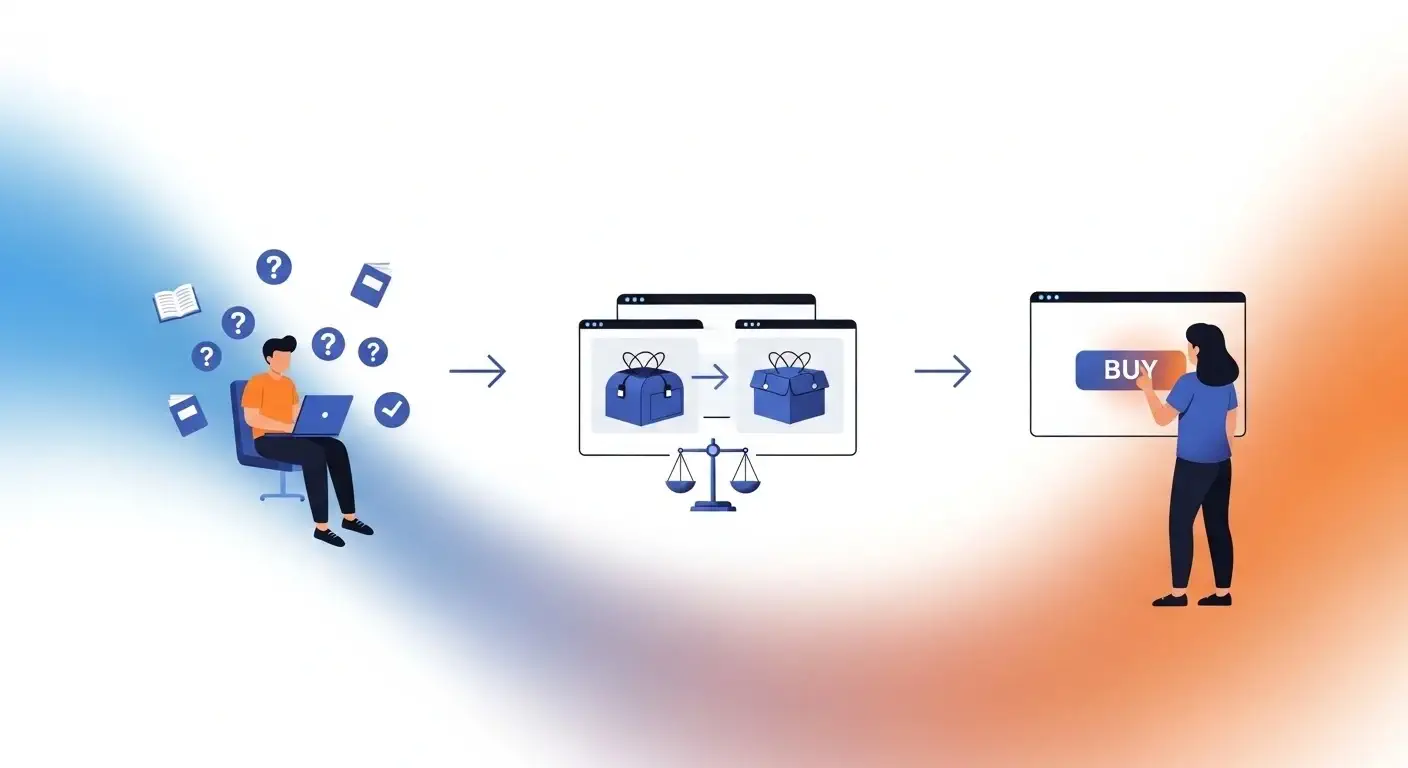
The Three Stages of the Search
When someone sits down at their keyboard, they are usually in one of three mindsets:
- The “Just Looking” Phase: They search for “benefits of silk pillowcases.” They aren’t buying yet; they’re learning.
- The “Comparing” Phase: They search for “silk vs. satin pillowcases.” They’ve identified a need and are weighing their options.
- The “Ready to Buy” Phase: They search for “washable mulberry silk pillowcase queen size.” Don’t just optimize for the product name. Write content that meets them at every stage. If you only show up for the “Ready to Buy” phase, you’ve missed the chance to build a relationship during the “Learning” phase
Product Schema: The “Nutrition Label” of Your Store
If you’ve ever looked at a search result and seen a 5-star rating, a price tag, and an “In Stock” label before you even clicked the link, you’ve seen Product Schema in action.
Think of Schema as the “Nutrition Label” on the back of a cereal box. While the front of the box (your website design) is for the consumer, the label (the code) tells the system exactly what’s inside.
Why it Matters for Trust
In a world where online shopping can feel a bit like the Wild West, showing your price and your reviews directly in the search results acts as an immediate “Trust Signal.” It tells the customer, “We’re transparent. Here is what it costs, and here is what other people think of it.”
By implementing structured data, you aren’t just a link—you’re a reputable option ecommerce SEO basics. It’s the digital equivalent of putting a “Recommended by Locals” sticker in your shop window.
Is Your Store Missing Rich Search Results?
Get product schema & technical SEO set up right for your store
The Death of the “Manufacturer’s Blurb.”
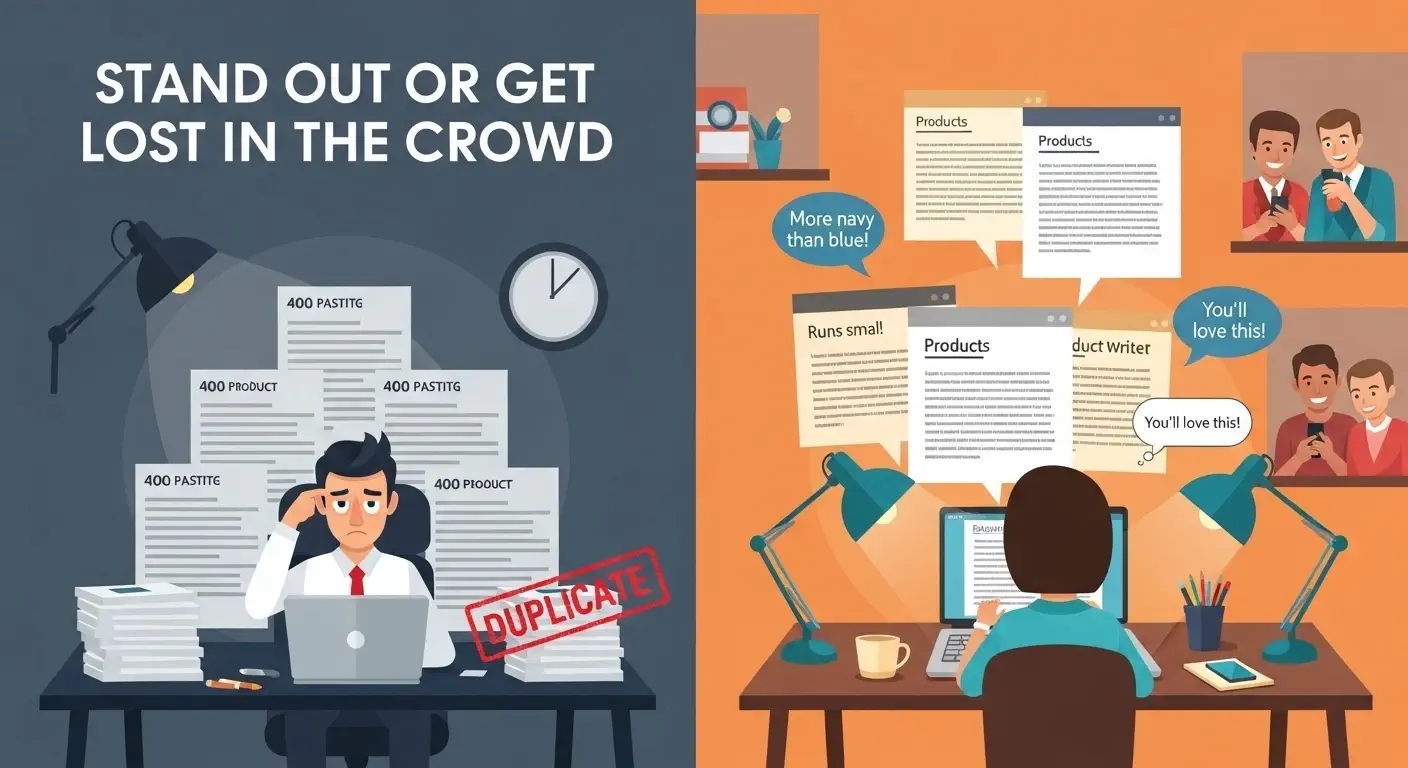
We get it. You have 500 products, and writing a unique description for every single one feels like a mountain you don’t want to climb ecommerce SEO basics. So, you copy and paste the description the manufacturer sent you.
The Problem: So did 400 of your competitors.
Google sees 400 pages with identical text and thinks, “Why should I show this one?” To rank, you need to provide Information Gain.
How to Humanize Your Product Pages:
- Talk about the “Why”: Why did you choose to stock this? What does it actually feel like to use?
- Answer the Unasked Questions: Does it run small? Is the color more “navy” than “royal blue”?
- Use “You” Language: Instead of “This bag has a 10-liter capacity,” try “You’ll have plenty of room for your laptop, a light jacket, and that book you’ve been meaning to finish.”
Organizing Your Store (The “Messy Closet” Effect)
Have you ever walked into a store where the layout made no sense? Where were the socks next to the electronics? You probably left pretty quickly.
Search engines feel the same way about your site architecture. They love logic.
- The Golden Rule: Any product should be reachable in three clicks or fewer.
- Category Pages are the Pillars: Don’t just list products. Use your category pages to explain the collection. A page for “Summer Essentials” shouldn’t just be a grid of items; it should have a paragraph or two explaining how these items help your customer beat the heat.
When your store is organized, customers stay longer. When customers stay longer, Google assumes your site is valuable. It’s a win-win.
Fix a Messy Store Before It Costs You Sales
Let our experts organize your store architecture for SEO & sales
Speed, Mobile, and the “Frustration Factor.”
We’ve all been there: you click a link on your phone while waiting for a train, and the page just… hangs. You wait three seconds. Five seconds ecommerce SEO basics. Then, you hit “back” and click the next result.
In 2026, Ecommerce SEO basics live or dies by mobile performance.
- Optimize Your Images: Your professional photography is beautiful, but if the files are massive, they’re anchors dragging your site down.
- The Thumb Test: Can you buy your product using only your thumb while holding a cup of coffee? If not, your mobile SEO is going to suffer.
The Rise of AI Search (GEO)
As we move further into 2026, people are increasingly using AI to shop. They ask things like, “Find me a durable backpack for a 2-week trip to Europe under $150.”
To show up in these AI-generated answers, you need to be authoritative.
- Be the Expert: Include “Pro-Tips” on your pages.
- Be Specific: If your backpack is 45L and carry-on approved, say that clearly.
- Be Reviewed: AI loves data. The more real, human reviews you have, the more likely an AI is to recommend you as a “top-rated” option.
Get Found in AI Shopping Results Too
Future-proof your store’s SEO for both Google & AI search

The Bottom Line: SEO is Just Good Service
At the end of the day, online store SEO isn’t about “tricking” an algorithm. It’s about being so helpful, so organized, and so clear that the search engine has no choice but to recommend you ecommerce SEO basics.
Think of SEO as a form of customer service that starts before the customer even knows your name. When you focus on clarity, trust, and a frictionless experience, the rankings usually take care of themselves.
Ready to Grow Your Business?
Get expert guidance tailored to your brand — completely free consultation
Get Free Consultation