- What is Graphic Design for Brand Identity?
- Branding vs. Graphic Design: What's the Difference?
- Why Graphic Design Matters When Building a Brand
- Key Elements of a Strong Brand Identity System
- What's Included in a Professional Brand Identity Design Package
- Graphic Design for Brand Identity Pricing
- Signs Your Brand Identity Needs a Refresh
- How Long Does a Brand Identity Project Take?
- How Brand Guidelines Help Maintain Consistency
- How to Create a Memorable Brand Identity
- Ready to Build a Brand That's Memorable?
- FAQs – Graphic Design for Brand Identity
Quick Answer
Graphic design for brand identity is the creation of logos, colors, fonts, and visual elements that make your business easy to recognize. A strong brand identity helps people remember your business, build trust, and create a consistent look across your website, social media, and marketing materials.
Have you ever come across a business online and then later completely forgot what it was called? This is usually because of a branding problem. When a business lacks a clear, consistent appearance, it just doesn’t stick.
This is exactly why graphic design for brand identity is so important – the visual and symbolic elements tying the brand together. This could be your website, your packaging, or simply an Instagram post.
In this guide, we’ll break down what brand identity design really involves, why it matters more than most business owners realize, pricing, and how to tell when it’s time for a refresh.
What is Graphic Design for Brand Identity?
Graphic design at its core is basically just turning a brand’s personality into something that people can instantly recognize.
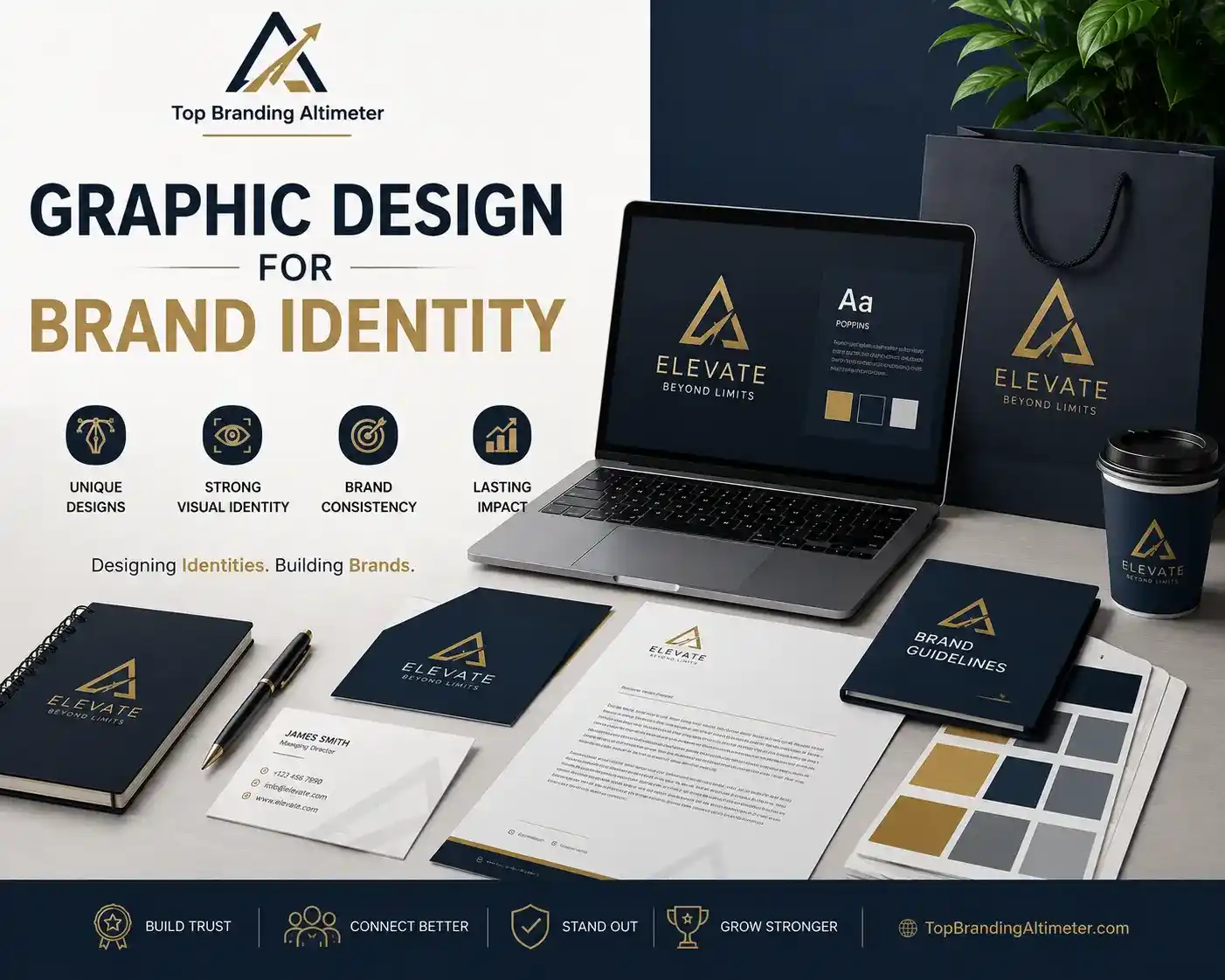
This could be their logo, colors, fonts, imagery style, even the little visual details that show up across your website, packaging, and social media.
You can think of it like giving your brand a face. When done right, brand identity design creates a cohesive visual language that represents who you are and what you stand for, before you’ve said a single word.
Branding vs. Graphic Design: What’s the Difference?
Since the two get mixed up quite often, let’s clear up the differences. For a deeper breakdown, see our full guide on branding vs. marketing as well.
Branding is the strategy: who you are, what you stand for, how you want people to feel about your business. It’s the thinking behind the scenes.
Graphic design is the execution: the actual visuals that bring that strategy to life. Your logo, color palette, typography, and overall look are all part of the design side.
Put simply: branding is the “why,” and graphic design is the “how it looks.” You need both working together; a great strategy with weak visuals falls flat, and great visuals with no strategy behind them just look pretty without meaning anything.
Why Graphic Design Matters When Building a Brand
First impressions matter a lot for brands. People can judge businesses within seconds, and a good part of that impression comes down to visuals.
Here’s why a strong, consistent design is important:
- Builds trust: a polished, professional design gives the impression that you take your brand and customers’ needs seriously.
- Improves recognition: consistent visuals mean people recognize your business faster, often with just the name.
- Shapes perception: the color choices, fonts, and the overall visual style of your brand tell people whether you’re premium, friendly, modern, traditional, etc.
On the flip side, inconsistent branding sends mixed signals to customers. If your logo looks one way on your website and another on your packaging, it can feel like something is “off” and create distrust. Our guide on consistent branding covers this in more depth.
Small businesses especially can’t afford to skip this. You’re often competing against bigger, more established names, and strong visual branding is one of the fastest ways to level that playing field.
Key Elements of a Strong Brand Identity System
A strong brand identity system is a collection of elements that all work together consistently. Here’s what it includes:
- Logo: Your most recognizable asset. It needs to work at any size, in color or black-and-white, and across every platform you use. Avoid the pitfalls covered in our post on logo design mistakes.
- Color palette: Colors carry emotional weight before people even process what they’re looking at. A defined palette (primary + secondary colors) keeps everything visually connected.
- Typography: The fonts you use for headlines, body text, and everything in between. Consistent typography makes your brand feel put-together instead of thrown together.
- Imagery style: Whether you lean toward bright and playful photos, minimal illustrations, or clean product shots, this style should stay consistent across your website, social media, and marketing materials.
- Tone and voice: Not strictly “graphic” design, but it pairs with your visuals to shape how people feel about your brand overall.
- Brand guidelines: The rulebook that ties all of the above together, so your visual identity design stays consistent no matter who’s creating content for you.
When these elements work as a system rather than standalone pieces, that’s when a brand actually starts to feel memorable and trustworthy.
Build Your Complete Brand Identity
Get a logo, colors, and typography that work together seamlessly.
What’s Included in a Professional Brand Identity Design Package
If you’re looking into brand identity design services, it helps to know what you’re actually paying for. Most professional brand identity design packages include:
- Primary logo, plus variations (icon-only, horizontal, stacked, etc.)
- A defined color palette with exact color codes
- Typography selections for headlines and body text
- A brand style guide documenting how everything should be used
- Templates for common needs — social media posts, business cards, letterheads, etc.
Larger projects, especially corporate brand identity design work, might also include packaging design, signage guidelines, or a full brand book covering tone of voice and messaging alongside the visuals.
The exact scope varies by provider and budget, but the goal is always the same: giving you a complete, ready-to-use visual toolkit instead of just a logo file sitting in your inbox. See our own logo design services for an example of what’s typically included.
Graphic Design for Brand Identity Pricing
Every package below is currently 50% off.
| Logo Basic Package | Logo Pro Package (Popular) | Business Plus Package (Best Choice) |
|---|---|---|
| $75 |
$150 |
$299 |
| 3 Logo Design Concepts 3 Revisions Free Color Options Free Grayscale Format 6 To 24 Hours TAT |
6 Logo Design Concepts 6 Revisions Free Grayscale Format Free Icon 6 To 24 Hours TAT |
8 Logo Design Concepts 8 Revisions Free Stationery Design (Business Card, Letterhead, Envelope) Free Icon |
For rush delivery or a custom quote, call us at (608) 745-2868 or order now.
Signs Your Brand Identity Needs a Refresh
Not sure if it’s time for a change? Here are some common red flags:
- Outdated logo and branding — your visuals look like they’re stuck in a different decade, or just feel dated compared to competitors.
- Inconsistent usage — your logo looks different across your website, social media, and printed materials because there’s no clear guideline in place.
- Business growth mismatch — your visuals still reflect a business you’ve outgrown, whether that’s a new market, new services, or a more established reputation.
- No visual differentiation — you blend in with competitors instead of standing out.
If any of these sound familiar, it might be time to redesign brand identity elements rather than patch things piece by piece.
A refresh doesn’t always mean starting from scratch — sometimes it just means tightening up what’s inconsistent and modernizing what feels stale.
Refresh Your Outdated Brand
Modernize your logo and visuals without losing what works.
How Long Does a Brand Identity Project Take?
This depends a lot on scope, but here’s a general idea:
- Logo-only projects: roughly 1–2 weeks
- Full brand identity systems (logo, colors, typography, guidelines): around 3–6 weeks
- Larger corporate rebrands with extensive guidelines, packaging, and rollout materials: 2–3 months or more
Timelines shift based on how many revision rounds are involved, how quickly feedback comes back, and how complex the business’s needs are.
A single-location small business will typically move faster than a company managing multiple product lines or locations.
How Brand Guidelines Help Maintain Consistency
Without brand guidelines, it’s easy for branding to drift — a slightly different logo version here, an off-brand font there — especially once multiple people (employees, freelancers, agencies) are creating content for the business.
A solid set of guidelines typically covers:
- Approved logo versions and spacing rules
- Exact color codes (not just “kind of blue”)
- Which fonts to use and where
- Do’s and don’ts for using the brand visuals
This keeps everything aligned no matter who’s designing what, which is exactly what prevents the “inconsistent branding” problem from creeping back in over time.
Get Custom Brand Guidelines
Keep your visuals consistent across every platform and team.
How to Create a Memorable Brand Identity
If you’re pulling this together, the short version looks like this:
- Get clear on your brand strategy before jumping into visuals
- Build a full system — logo, colors, fonts, imagery — not just a logo
- Document everything in brand guidelines
- Apply it consistently across every platform and touchpoint
- Revisit and refresh when your business outgrows its current look
None of this needs to happen overnight. Even small, consistent steps toward a more unified visual identity will move the needle on how memorable and trustworthy your brand feels. Browse real examples in our portfolio.
Ready to Build a Brand That’s Memorable?
A strong brand identity doesn’t happen by accident; it’s built intentionally, piece by piece, with everything working together.
If your current branding feels inconsistent, outdated, or like it’s not quite hitting the mark, Top Branding Altimeter can help you build (or rebuild) a visual identity that actually represents your business well.
FAQs – Graphic Design for Brand Identity
What is graphic design for brand identity?
It’s the process of turning a business’s personality and values into visual elements — logo, colors, fonts, imagery — that people can recognize instantly across every platform.
Why is graphic design important for building a brand?
It shapes first impressions, builds trust, and makes a business easier to recognize and remember, all within seconds of someone seeing it.
What is the difference between branding and graphic design?
Branding is the strategy behind who you are as a business; graphic design is the visual execution that brings that strategy to life.
What are the key elements of a strong brand identity?
A logo, defined color palette, typography, consistent imagery style, tone of voice, and brand guidelines that tie it all together.
How does graphic design improve brand recognition?
Consistent visuals shown repeatedly across platforms train people to recognize a brand quickly, even without reading the name.
What is included in a brand identity package?
Typically a logo suite, color palette with codes, typography selections, a brand style guide, and templates for common marketing materials.
How long does it take to create a brand identity?
Logo-only projects take about 1–2 weeks, full brand identity systems 3–6 weeks, and larger corporate rebrands 2–3 months or more.
When should a business refresh its brand identity?
When the logo feels outdated, usage is inconsistent across platforms, or the visuals no longer match how much the business has grown.
Can small businesses benefit from professional brand identity design?
Yes, often more than larger companies, since strong, consistent branding helps small businesses compete and build credibility on a limited budget.
How do brand guidelines help maintain consistency?
They document exact colors, fonts, logo usage rules, and do’s/don’ts, so branding stays consistent no matter who’s creating content.
You Might Also Find Helpful
- Web Design & Development Services — pair your new brand identity with a website that matches it.
- Shopify Store Development — for brands selling products online.
- Social Media Marketing Packages — keep your new brand identity consistent on every platform.
- Google Ads for Doctors — for medical practices ready to pair branding with paid ads.
- Web Design in New York City — local web design support if you’re NYC-based.
- Web Development in Los Angeles — local web development support if you’re LA-based.
Ready to Grow Your Business?
Get expert guidance tailored to your brand — completely free consultation
Get Free Consultation