
- Why KPIs Are the "Altimeter" of Your Brand
- Tracking the right data allows you to:
- The Financial Pillars: ROI and CAC
- Is Your Marketing Actually Profitable?
- Traffic and Awareness Metrics
- Conversion Metrics: The Moment of Truth
- Small Tweaks, Bigger Conversion Rates
- Retention and Brand Loyalty
- Stop Losing Customers You Already Won
- How to Use Analytics to Generate Engagement
- Building Your Custom Dashboard
- From Insight to Impact
In the high-stakes world of digital branding, a common trap for business owners is “vanity metrics.” It feels great to see a post get a thousand likes or a video hit ten thousand views, but if those numbers don’t translate into growth, they’re just noise.
If you’re writing for a platform like Top Branding Altimeter, you know that “branding” isn’t just about pretty logo—it’s about elevation and precision.
To scale, you need to move beyond the surface. You need to look at digital marketing KPIs (key performance indicators) not as cold, hard numbers, but as the heartbeat of your business. They tell you where your brand is thriving and where it’s gasping for air.
If you aren’t measuring your performance, you’re essentially flying a plane in a storm without a dashboard. To help you navigate, we’ve broken down the essential marketing metrics, the importance of ROI, and how to use analytics to turn your data into a story of success.

Why KPIs Are the “Altimeter” of Your Brand
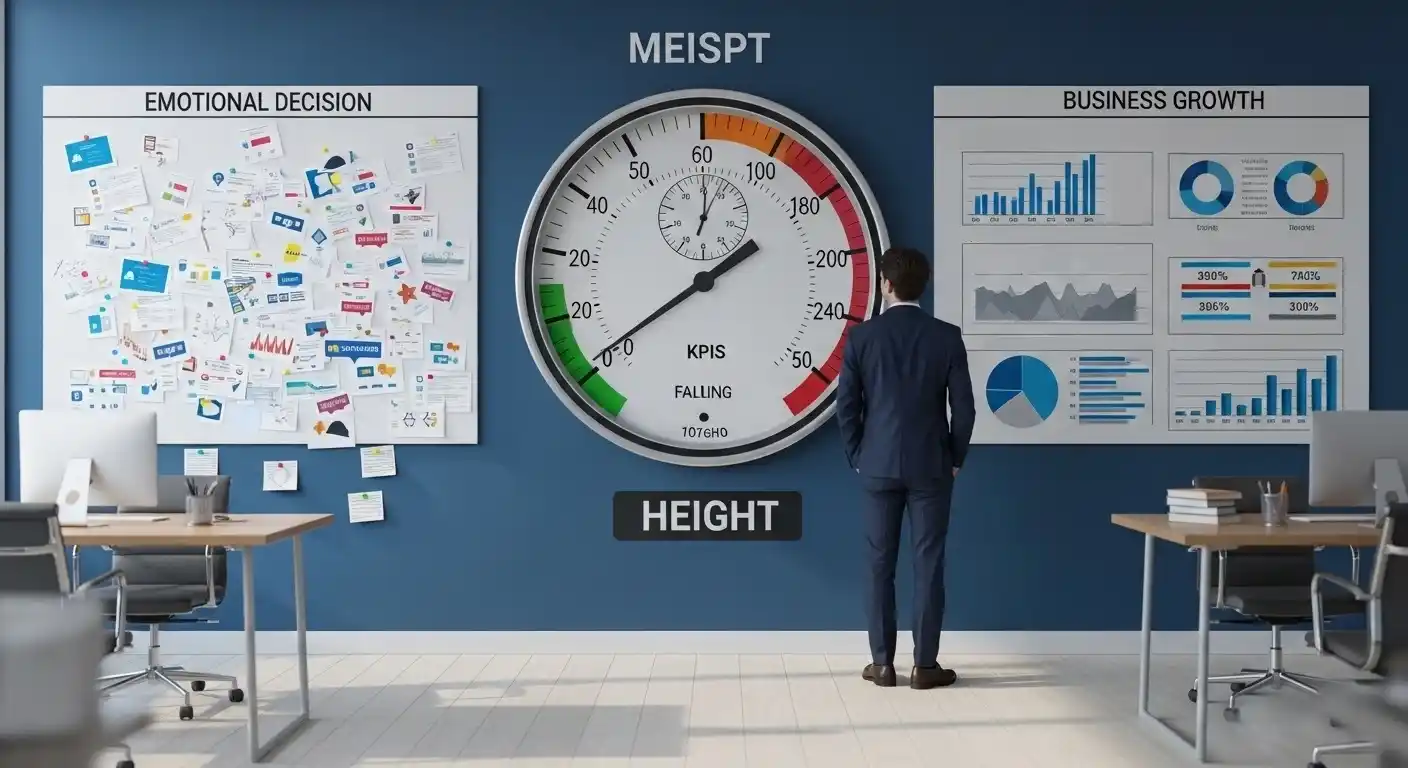
In aviation, an altimeter tells a pilot their altitude above a fixed level. In digital marketing KPIs do the same. They tell you if you are soaring toward your goals or if you are dangerously close to the ground.
Without these metrics, you are prone to making emotional decisions. Maybe you feel like your Facebook ads are working because people are commenting, but the data might show that those commenters never actually buy anything.
Conversely, you might think your blog is a waste of time, but the analytics show it’s actually your #1 source of high-quality leads.
Tracking the right data allows you to:
-
- Stop wasting money on channels that don’t perform.
- Double down on strategies that actually move the needle.
- Prove value to stakeholders and investors by showing clear growth.
The Financial Pillars: ROI and CAC
If we are talking about business, we have to talk about money. At the end of the day, marketing is an investment, not an expense.
Return on Investment (ROI)
This is the “North Star” of digital marketing KPIs. ROI measures the profit or loss generated by your marketing campaigns relative to the amount of money invested.
If your ROI is consistently positive, your brand is healthy digital marketing KPIs. If it’s negative, you need to reassess your “Top Branding” strategy immediately.
However, remember that ROI isn’t always instant. Some branding efforts, like SEO, take months to show a financial return, but the long-term value is often much higher than paid ads digital marketing KPIs.
Customer Acquisition Cost (CAC)
How much does it actually cost to “buy” a customer? To calculate CAC, you take your total marketing spend over a specific period and divide it by the number of new customers acquired digital marketing KPIs.
- The Goal: Keep your CAC as low as possible while maintaining high quality.
- The Reality: If your CAC is higher than the “Lifetime Value” of a customer, your business model is unsustainable.

Is Your Marketing Actually Profitable?
Get a free marketing audit to see your real ROI and CAC
Traffic and Awareness Metrics
Before someone buys from you, they have to know you exist. This is where marketing metrics related to reach and awareness come into play.
Total Website Traffic
While traffic is a broad metric, it’s a vital indicator of brand health. Are people finding you? You should look at this through three specific lenses:
- Organic Search: People finding you via Google (the gold standard of branding).
- Direct Traffic: People typing your URL into their browser (a sign of strong brand recall).
- Referral Traffic: Other website linking to you (a sign of authority).
Bounce Rate and Time on Page
It’s not enough to get people to your “Altimeter” page; you have to keep them there.
- Bounce Rate: If someone lands on your site and leaves immediately, your content likely didn’t match their intent.
- Time on Page: High engagement here means your brand story is resonating digital marketing KPIs. If your average time on page is 10 seconds, your content isn’t hitting the mark.

Conversion Metrics: The Moment of Truth
A “conversion” doesn’t always mean a sale. It could be a newsletter sign-up, a whitepaper download, or a “Contact Us” form submission. These metrics tell you if your brand is persuasive.
Conversion Rate (CR)
This is the percentage of visitors who take a specific action. If 1,000 people visit your site and 20 buy something, your conversion rate is 2%.
Small tweaks in your branding—like changing a button color or sharpening your headline—can boost this number significantly.
Small Tweaks, Bigger Conversion Rates
Let our experts optimize your site to turn more visitors into buyers
Click-Through Rate (CTR)
Used primarily in email marketing and paid ads, CTR measures how many people clicked a link compared to how many saw it digital marketing KPIs. A low CTR suggests that your messaging is “off” or that you are targeting the wrong audience.

Retention and Brand Loyalty
True branding isn’t about the first sale; it’s about the tenth. It’s much cheaper to keep an existing customer than to find a new one.
Customer Lifetime Value (LTV)
LTV predicts the total revenue a business can expect from a single customer account throughout the business relationship.
This is a crucial digital marketing KPIs for long-term branding because it justifies spending more on high-quality customer service and loyalty programs.
Churn Rate
This is particularly important for subscription-based businesses. It measures the percentage of customers who stop using your service over a given period.
High churn is a “silent killer” for brands. It often indicates a disconnect between what your marketing promised and what your product delivered.
Stop Losing Customers You Already Won
Build a brand experience that keeps customers coming back

How to Use Analytics to Generate Engagement
Numbers can feel cold, but they represent human behavior. When you look at your analytics dashboard, don’t just see graphs. See people.
- The “Why” Behind the “What”: If your analytics show a high drop-off rate on your checkout page, don’t just see a lost sale. Imagine a frustrated human being trying to find a “Submit” button that won’t load.
- Segmentation: Group your users’ digital marketing KPIs. Are your mobile users happier than your desktop users? Is your brand resonating more with people in New York than in London? This allows you to tailor your brand voice to the people who actually care digital marketing KPIs.
Building Your Custom Dashboard
Not every business needs to track every single digital marketing KPI metric. A local bakery doesn’t need to obsess over the same KPIs as a global SaaS company. To choose yours, ask:
- What is my primary goal? (Awareness? Sales? Retention?)
- Which 3-5 metrics directly impact that goal?
- How often will I review them? (Weekly is usually best for staying agile).
From Insight to Impact
In the world of Top Branding Altimeter, the goal is to rise above the competition. Mastering these digital marketing KPIs means you can stop guessing and start growing. Marketing is both an art and a science. The art is your brand story—the “human” element that connects with hearts. Science is the marketing metric—the data that ensures your story is being heard by the right people at the right time.
Ready to Grow Your Business?
Get expert guidance tailored to your brand — completely free consultation
Get Free Consultation