- Trucking Company Web Design Guide (Examples + Features)
- Why Trucking Companies Need a Professional Website
- Build B2B Trust With a Professional Site
- Is Your Trucking Website Booking Freight?
- What Makes a High-Converting Trucking Website
- Must-Have Features for Trucking Company Websites
- Best Trucking Website Design Examples
- How to Design a Trucking Website (Step-by-Step)
- Common Mistakes to Avoid in Trucking Website Design
- Templates vs. Custom Trucking Website Design
- How a Website Helps Trucking Companies Get More Clients
- Need a Trucking Website? Let's Build It Together.
- Frequently Asked Questions: Trucking Company Web Design
- Turn Your Website Into a Freight Sales Tool
Trucking Company Web Design Guide (Examples + Features)
Author Name Written by John J. Michaels
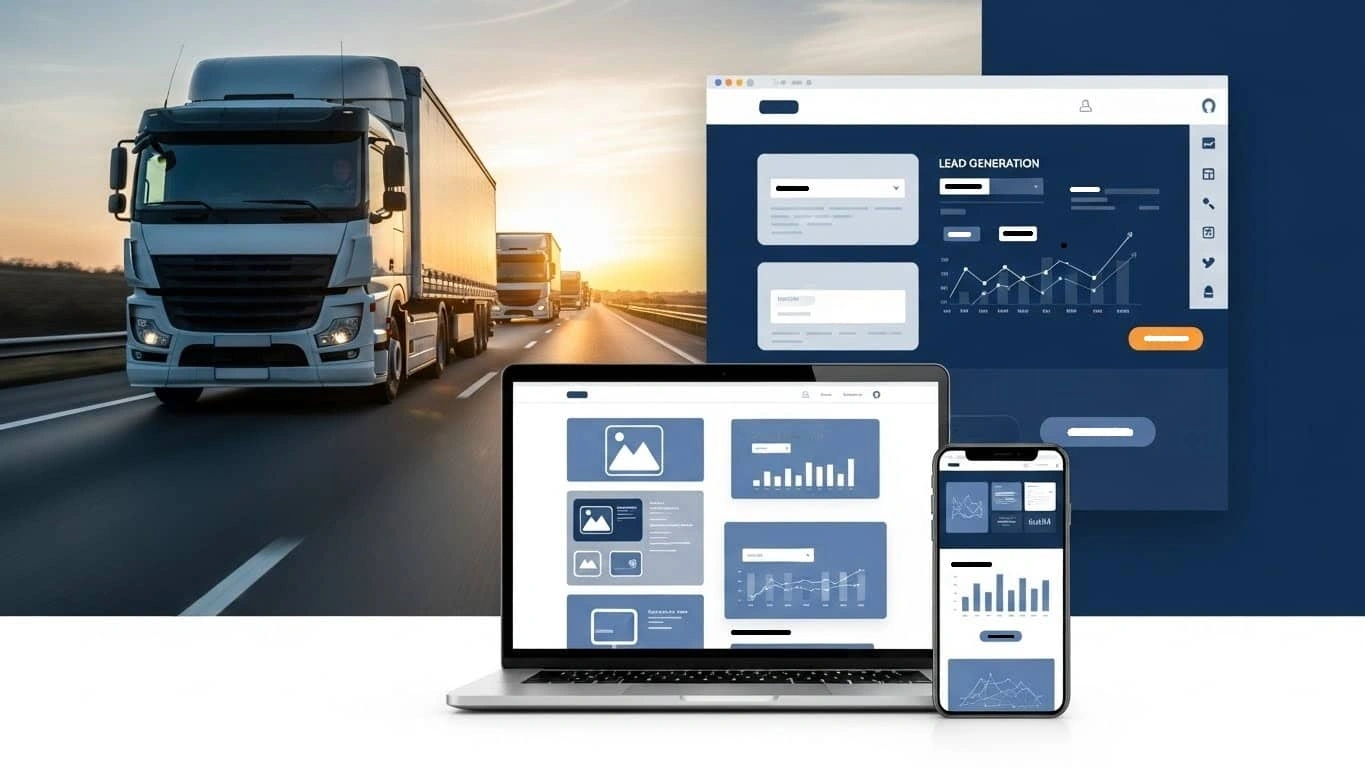
If you run a trucking business in the USA, your trucking website design is your most powerful sales tool — and most trucking websites are quietly losing thousands of dollars in contracts every single month. Whether you haul freight across state lines, run a local fleet, or manage a logistics network, your online presence is the first thing B2B clients, freight brokers, and shippers evaluate before picking up the phone.
At Top Branding Altimeter, we specialize in trucking company web design that does one thing above all else — turns website visitors into paying freight clients. This complete guide walks you through the best ideas, must-have features, proven design examples, and step-by-step strategies to build a trucking website that works as hard as your drivers.
Why Trucking Companies Need a Professional Website
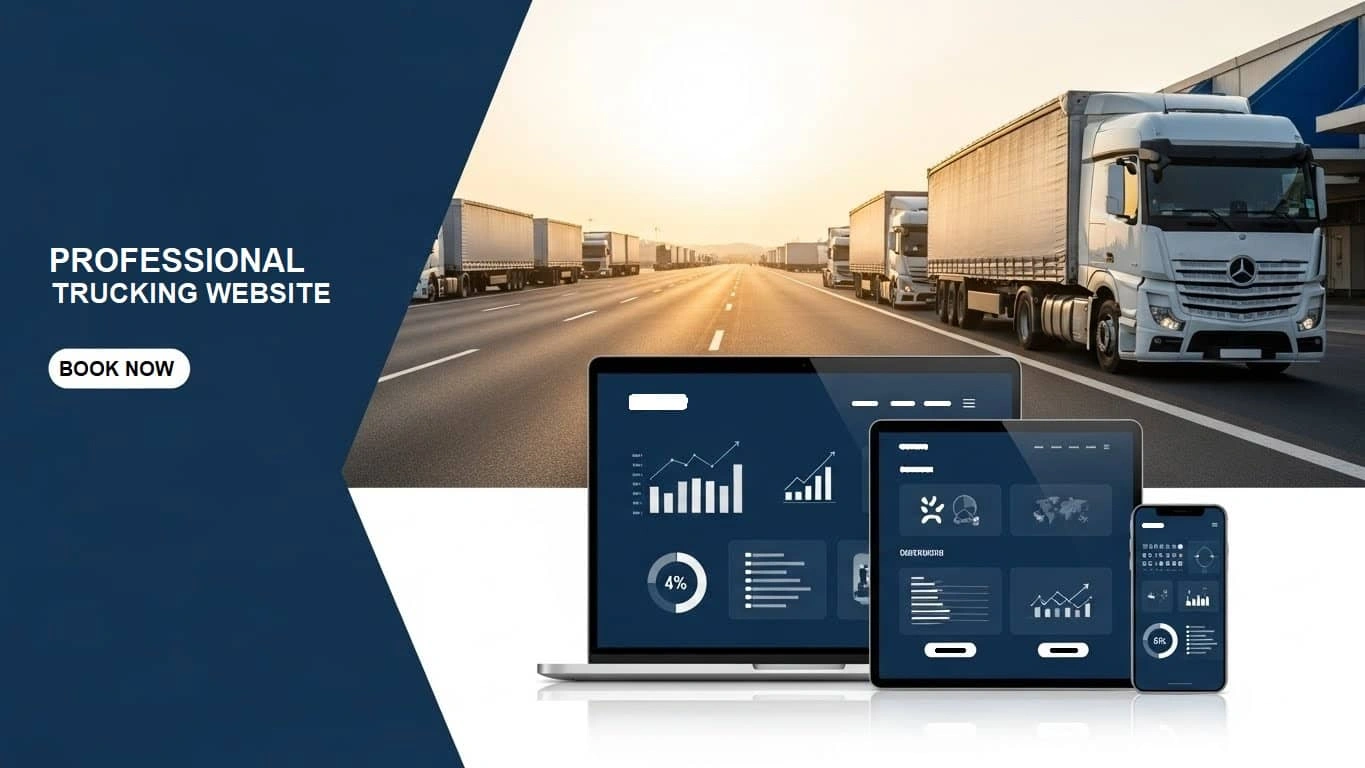
The American trucking industry moves over 70% of all freight in the United States. With that level of competition, standing out means more than having a logo on the side of your truck. Today, every freight broker, supply chain manager, and logistics buyer searches online before making a call. If your website doesn’t communicate professionalism, reliability, and capacity, your competition does.
Here’s what a professionally designed trucking company website does for your business:
A well-designed website serves as the digital face of your trucking business. It creates the first impression on potential clients and partners, significantly influencing their decision to engage with your services. Here are the key reasons why a professional trucking website design is essential:
B2B Credibility
When a supply chain director in Chicago searches for a freight carrier in Texas, they’re not picking randomly. They’re evaluating your website like a portfolio. A clean, modern, and well-structured logistics company website design instantly signals that your business is organized, professional, and capable of handling high-value cargo.
Credibility online comes from:
- A professional logo and cohesive brand identity
- Clean, fast-loading page layouts
- Case studies or client testimonials from recognizable brands
- Certifications (FMCSA, USDOT, carrier authority numbers)
- A consistent visual identity that reflects your fleet’s scale
Without these trust signals, even the most experienced fleet operators lose contracts to smaller competitors with better websites. Your digital storefront must match the professionalism of your fleet.
Build B2B Trust With a Professional Site
Custom trucking web design that wins shipper & broker confidence
Lead Generation
A trucking website that isn’t generating leads is just a digital business card — and a static one at that. The best trucking website design services build websites with a clear conversion funnel that captures freight inquiries around the clock, even at 2 AM when your drivers are mid-route.
Effective lead generation for trucking companies includes:
- Prominent “Get a Quote” buttons above the fold on every key page
- Contact forms designed for freight-specific information (origin, destination, load type)
- Click-to-call phone numbers are visible on mobile
- Live chat or callback request tools
- Service area pages targeting specific lanes and cities
A properly optimized logistics web design functions as a 24/7 sales representative — qualifying leads, capturing contact details, and routing freight inquiries directly to your dispatch team.
Is Your Trucking Website Booking Freight?
Get a custom trucking website built to capture 24/7 freight leads
Competitive Advantage: Trucking Company Web Design
Right now, your competitors are investing in their websites. The best trucking company websites in 2026 combine conversion-focused design with aggressive local SEO to dominate regional freight searches. If you’re not on page one of Google for your core freight lanes and service areas, you’re invisible to a large segment of shippers looking for exactly what you offer.
A professionally built trucking company website design from an experienced agency like Top Branding Altimeter gives you:
- Higher rankings in local and national search results
- More qualified inbound freight inquiries
- Lower cost-per-lead versus paid advertising
- A digital asset that appreciates in value over time
What Makes a High-Converting Trucking Website
Not all trucking websites convert at the same rate. The difference between a website that books 2 calls a week and one that books 20 comes down to a handful of critical design and content decisions. Here’s what separates the best trucking website examples from the rest.
Clear Services
Shippers and freight brokers need to know — within 5 seconds of landing on your page — exactly what you haul, where you operate, and how to request a quote. Clarity beats creativity every time in the trucking and logistics space.
Your services section should clearly communicate:
- Equipment types (dry van, flatbed, reefer, step deck, etc.)
- Load capacities and weight limits
- Specialty freight capabilities (hazmat, oversized, temperature-controlled)
- Primary lanes and service corridors
- Dispatch hours and transit time expectations
Every service page on your freight company web design should be written for both search engines and real decision-makers — because both need to understand what you offer immediately.
Trust Signals
In B2B freight, trust is everything. Shippers are handing over inventory worth tens or hundreds of thousands of dollars. Your trucking company website needs to visually communicate reliability and track record at every scroll point.
High-impact trust signals include:
- Years in operation (“Serving USA Freight Lanes Since 2004”)
- Number of trucks in your fleet
- Miles hauled or loads delivered annually
- Safety rating displayed prominently
- Insurance coverage details
- Customer logos or partner badges
- Google reviews and third-party ratings are embedded on-page
Top Branding Altimeter integrates these trust elements into every trucking and logistics web design we produce — because trust isn’t just felt, it’s designed.
Fast Loading
Page speed is a ranking factor and a conversion factor. Studies consistently show that every additional second of load time costs you approximately 7% in conversions. For trucking companies targeting high-value B2B clients, a slow website is a direct revenue leak.
Your trucking company website design should load under 2 seconds on both desktop and mobile. This requires:
- Compressed and properly formatted images (especially fleet photos)
- Minimal third-party script bloat
- Efficient hosting (preferably cloud-based CDN)
- Core Web Vitals optimization
- Lazy loading for below-the-fold content
Mobile Optimization
Over 60% of B2B search queries now happen on mobile devices. Freight brokers check carrier websites on their phones between calls. Shippers Google local trucking companies while standing in a warehouse. If your trucking business website isn’t optimized for mobile, you’re invisible to more than half your potential customers.
A mobile-optimized trucking website includes:
- Large, thumb-friendly CTA buttons
- Tap-to-call phone number integration
- Simple, collapsible navigation menus
- Fast-loading mobile-optimized images
- Forms that auto-fill and work seamlessly on touchscreens
Must-Have Features for Trucking Company Websites
Beyond design aesthetics, your trucking company website needs functional features that serve both clients and internal operations. Here are the core features every website design for trucking companies should include.
Quote Request Form
This is the #1 conversion feature on any trucking website design. Every page on your site should have a clear path to request a freight quote. The form itself should be simple enough to complete in under 2 minutes, but detailed enough to capture qualified lead information.
An effective trucking quote form collects:
- Pickup and delivery locations (city/state or zip code)
- Freight type and commodity description
- Weight and dimensions
- Preferred pickup date
- Contact information (name, company, phone, email)
Keep the form short. The more fields, the lower your conversion rate. Capture the essential details, then let your dispatch team qualify the lead over the phone.
Shipment Tracking
If your operation uses a TMS (Transportation Management System) with a public-facing tracking portal, integrating it into your trucking company website dramatically increases client retention. B2B shippers expect real-time visibility. Offering an embedded logistics tracking system on your website adds professional value and reduces inbound “where’s my load?” calls to your team.
Even a simple carrier tracking integration (linking to carrier-specific tracking pages) improves the client experience significantly.
Fleet Showcase
Your fleet is your proof of capacity. A dedicated fleet page with high-quality photos of your trucks, trailers, and equipment builds confidence with prospective shippers who want to know you can handle their freight volume.
Your fleet showcase should include:
- Professional exterior and interior photos of each equipment type
- Specifications (GVW, payload, trailer dimensions)
- Compliance and safety certification details
- DOT and FMCSA information
A freight company web design that visually showcases a well-maintained fleet communicates professionalism before a single word is read.
Driver Recruitment Page
The trucking industry faces a persistent driver shortage. A well-designed driver recruitment page on your trucking company website attracts qualified CDL drivers and reduces recruitment costs. This page should clearly outline:
- Current open positions (regional, OTR, local, dedicated)
- Pay structure (CPM, hourly, percentage)
- Home time and schedule expectations
- Benefits (health insurance, 401K, paid time off)
- Equipment and technology perks
- Easy application form or link to your ATS (Applicant Tracking System)
Treat your driver recruitment page with the same conversion focus as your freight sales page — because finding great drivers is just as important as finding great freight.
Service Area Coverage
Local and regional SEO for trucking companies relies heavily on clearly defined service area coverage pages. Each primary lane, corridor, or metro area your company serves should have dedicated content on your website.
For example:
- “Trucking Services: Chicago to Dallas Freight Lane”
- “Flatbed Carriers Serving the Southeast USA”
- “Last-Mile Delivery in Los Angeles Metro”
These geo-targeted pages improve your rankings in location-specific freight searches and help shippers quickly confirm that you service their origin/destination pairs. This is a cornerstone of effective local logistics web design strategy.
Best Trucking Website Design Examples
The best trucking company websites in 2026 share a set of common design principles while differentiating through brand identity and niche positioning. Here’s what the top-performing freight and logistics websites do exceptionally well.
Layout Inspiration
Leading trucking website layouts prioritize hierarchy: the most important information (who you are, what you haul, how to contact you) is always above the fold. Secondary information (fleet details, service areas, testimonials) flows naturally below as the user scrolls.
Effective layout principles for trucking company website design:
- Full-width hero image or video showing your fleet in motion
- Bold, high-contrast headline with your core value proposition
- Immediate CTA (“Get a Freight Quote”) within the hero section
- Three-column service grid below the fold
- Social proof strip (logos, reviews, certifications) early in the scroll
- Clean footer with contact info, service links, and USDOT/MC number
UI/UX Ideas
The user experience of a trucking website should be effortless. B2B buyers have low patience — they want answers fast and friction eliminated completely.
UI/UX best practices for trucking and logistics web design services:
- Use professional photography (real trucks, real drivers, real facilities — not stock photos)
- High-contrast color palette (dark blues, bold oranges, deep grays) that reflects the industry
- Minimal but purposeful animation (subtle parallax on hero, hover effects on cards)
- Sticky navigation bar with a persistent “Get a Quote” CTA
- Clear visual hierarchy with scannable headings and bullet points
- Breadcrumb navigation on service and location pages
Conversion Elements
The best trucking website examples are engineered to convert visitors into freight inquiries. Every element on the page should serve that goal.
High-converting elements every trucking company website design should include:
- Urgency-driven CTA language (“Get Your Free Quote Today,” not just “Contact Us”)
- Phone number in the header — clickable on mobile
- Live chat widget during business hours
- Review badges from Google, BBB, or industry-specific platforms
- “Why Choose Us” section that directly addresses shipper pain points
- FAQ section targeting pre-purchase questions (helps with Featured Snippets and AI Search)
How to Design a Trucking Website (Step-by-Step)
Building a high-performing trucking company website isn’t just about picking a template and filling in your company name. Here’s the professional process Top Branding Altimeter follows for every freight and logistics client.
Step 1: Choose Your Platform
The platform you build on determines your long-term flexibility, SEO capability, and maintenance requirements.
WordPress remains the most popular choice for trucking company website design because of its:
- Unmatched SEO plugin ecosystem (Yoast, RankMath)
- Extensive plugin library for forms, booking, and tracking integration
- Full design flexibility with page builders (Elementor, Divi)
- Strong developer community and long-term support
Webflow is an excellent choice for design-forward trucking and logistics company web design projects that require pixel-perfect custom layouts without heavy plugin dependency. Many of the best web design agencies for moving sites to Webflow and logistics rebrands now favor Webflow for its performance and design control.
Wix is accessible for very small operators looking for a basic trucking company Wix website, but it limits advanced SEO and customization as the business grows.
For most trucking companies — especially those targeting B2B freight clients and investing in SEO — WordPress or Webflow custom builds deliver the strongest long-term ROI.
Step 2: Structure Your Pages
A well-structured trucking company website follows a logical page hierarchy that serves both users and search engines:
- Homepage — Core value proposition, services overview, trust signals, primary CTA
- About Us — Company history, team, fleet size, safety record, mission
- Services — Individual pages for each service (dry van, flatbed, reefer, LTL, FTL, etc.)
- Service Areas — Geo-targeted pages for each lane, region, or city served
- Fleet — Equipment specifications and photos
- Driver Careers — Recruitment page with open positions and application form
- Blog/Resources — Industry content for SEO and thought leadership
- Contact/Quote — Primary conversion page with form and contact details
- Tracking — Client portal or carrier tracking integration
Step 3: Add Content
Content is what converts visitors and ranks your pages. Every page of your trucking website design needs original, professionally written copy that:
- Speaks directly to your target shipper or freight broker
- Answers the questions your clients ask before they call
- Includes your primary and secondary keywords naturally and contextually
- Reflects your brand voice — professional, reliable, direct
- It is updated regularly to stay relevant and fresh
At Top Branding Altimeter, our web design and development services include professional copywriting tailored to the trucking and logistics industry — because great design without great content doesn’t convert.
Step 4: Optimize for SEO
On-page SEO for trucking company websites involves a layered approach targeting both local and national search intent.
Core SEO optimization steps:
- Title Tags & Meta Descriptions — Written with primary keywords and local intent (e.g., “Flatbed Trucking Services | Dallas to Chicago Freight Lane”)
- Header Structure — Logical H1/H2/H3 hierarchy with keyword-rich headings
- Image Alt Text — Descriptive alt tags for all fleet and facility photos
- Internal Linking — Connect service pages, location pages, and blog content
- Schema Markup — LocalBusiness, FAQPage, and Service schema for rich snippet eligibility
- Google Business Profile — Synced with your website for local SEO dominance
- Core Web Vitals — Speed, interactivity, and visual stability optimization
- Backlink Building — Authoritative industry citations and partner links
Our dedicated SEO services at Top Branding Altimeter are built specifically for industries like trucking, logistics, and freight — where local search visibility directly translates to contract revenue.
Common Mistakes to Avoid in Trucking Website Design
Thousands of trucking companies in the USA are leaving money on the table because of avoidable website mistakes. Here are the most common — and how to fix them.
Poor Navigation
If a shipper can’t find your service area list or quote form in under 10 seconds, they’re gone. Complex navigation menus, broken links, and unclear page labels are conversion killers on any freight company web design.
Fix it: Use a simple top navigation with no more than 6-7 primary items. Include a persistent CTA button (“Get a Quote”) in the header on every page. Use a footer with a full site map.
No CTA
This is the #1 mistake on trucking company websites across the USA. Beautiful design, good content — but no clear instructions telling the visitor what to do next. Every section of every page needs a contextual CTA.
Fix it: Include at least one CTA per major section. Use action-oriented language: “Request a Freight Quote,” “Call Our Dispatch Team Now,” “See Our Available Fleet.” Make buttons large, high-contrast, and impossible to miss on both desktop and mobile.
Outdated Design of Trucking Company Web Design
A trucking website last updated in 2017 signals to B2B clients that your operation may be equally outdated. Freight managers and supply chain directors make snap judgments based on visual presentation. An outdated truck company website with low-resolution images, cramped layouts, and generic fonts undermines your credibility before they read a single line.
Fix it: Audit your website against the best trucking company websites in 2026. If your design is more than 3-4 years old, a professional redesign delivers measurable ROI in lead quality and conversion rate. Top Branding Altimeter‘s web design team specializes in trucking and logistics website redesigns that modernize your brand and rebuild your conversion funnel from the ground up.
Templates vs. Custom Trucking Website Design
One of the most common questions trucking company owners ask is: “Should I use a trucking website template, or do I need a fully custom design?” Here’s an honest breakdown.
Pros and Cons
Trucking Website Templates:
Pros:
- Lower upfront cost
- Faster launch timeline
- Sufficient for very small owner-operators
- Basic SEO structure already in place
Cons:
- Generic design shared by many competitors
- Limited flexibility for custom features (tracking, dispatch forms, load boards)
- Harder to rank in competitive freight markets
- Doesn’t differentiate your brand in a crowded space
- Template limitations become expensive to work around as you grow
Custom Trucking Website Design:
Pros:
- Built specifically for your services, fleet, and target lanes
- Fully optimized for conversion and local SEO from day one
- Unique brand identity that competitors can’t copy
- Scalable architecture that grows with your business
- Better performance scores (speed, Core Web Vitals)
Cons:
- Higher initial investment
- Longer build timeline (typically 4-8 weeks)
When to Go Custom Trucking Company Web Design
Choose a custom truck web design when:
- You operate 5+ trucks or serve multiple freight lanes
- You’re targeting B2B shippers and freight brokers (not just retail)
- You’ve invested in branding and want a consistent premium presentation
- You need specific features (tracking portal, load board integration, driver portal)
- You’re actively investing in SEO, content marketing, and digital marketing
- Your current template-based site isn’t generating meaningful leads
For owner-operators just starting out, a well-configured trucking website template can get you online quickly. But as soon as you’re ready to compete for B2B freight contracts, a custom-built website from a specialized agency like Top Branding Altimeter pays for itself in the first few won contracts.
How a Website Helps Trucking Companies Get More Clients
A professionally designed trucking company website isn’t just a marketing expense — it’s an active revenue asset that generates qualified leads 24 hours a day, 7 days a week, 365 days a year.
B2B Lead Generation
The freight industry runs on relationships — but those relationships now start online. Before a supply chain director calls your dispatcher, they’ve already visited your website, evaluated your service pages, and compared you against 3-5 competitors.
A high-converting trucking website generates B2B leads by:
- Capturing freight inquiries through optimized quote request forms
- Ranking organically for lane-specific and commodity-specific search terms
- Building trust through social proof that pre-qualifies leads before the first call
- Retargeting website visitors through integrated digital ad campaigns
- Providing enough information that qualified shippers are ready to commit when they call
Our Web Development USA team at Top Branding Altimeter engineers every trucking website around this lead generation framework — because we understand that your website’s ROI is measured in freight contracts, not just design awards.
SEO Impact on Trucking Company Web Design
SEO for trucking companies is one of the highest-ROI digital marketing investments available in the industry. Unlike paid ads that stop delivering the moment your budget runs out, a well-optimized trucking company website continues generating organic search traffic and leads for years.
Key SEO benefits for trucking companies:
- Rank for high-intent freight searches (“dry van carrier Chicago,” “flatbed trucking Texas,” “LTL freight services California”)
- Dominate local map pack results for regional freight searches
- Build topical authority as the go-to carrier resource in your lanes
- Reduce dependence on load boards by attracting direct shipper relationships
- Compound organic growth as your content library and backlink profile expand
Top Branding Altimeter — recognized as a leading Website Design Wisconsin agency and broader USA digital partner — combines technical SEO, conversion-focused design, and industry-specific content strategy to help trucking companies dominate their target freight markets online.
Need a Trucking Website? Let’s Build It Together.
If your current trucking company website isn’t generating consistent freight leads, ranking in local search results, or reflecting the professionalism of your fleet, it’s time for a change.
Top Branding Altimeter is a full-service digital agency specializing in trucking company web design, logistics branding, and freight industry SEO across the USA. We build custom trucking websites that attract the B2B shippers and freight brokers you want, and convert them into long-term clients.
Here’s what you get when you partner with us:
- 100% custom design built around your fleet and freight niche
- Mobile-optimized, fast-loading architecture built for Core Web Vitals compliance
- SEO-optimized from day one — targeting your specific lanes and service areas
- Professional copywriting written by freight industry content specialists
- Conversion-focused page structure with quote forms, trust signals, and clear CTAs
- Ongoing SEO and content support to grow your organic freight leads month over month
Ready to turn your website into your most powerful freight sales tool?
View Our Web Design & Development Services See Our Portfolio Get in Touch Today
Frequently Asked Questions: Trucking Company Web Design
What should a trucking company website include?
A professional trucking company website should include a clear services page describing your freight capabilities (dry van, flatbed, reefer, LTL/FTL, etc.), a quote request form, service area or lane coverage pages, fleet showcase with photos and specs, a driver recruitment page, trust signals (certifications, reviews, DOT/MC numbers), and mobile-optimized design with fast page load times. Every page should have a clear call-to-action guiding visitors toward requesting a freight quote or contacting your dispatch team.
How much does a trucking website cost?
Trucking website costs vary based on scope and customization level. Template-based websites typically range from $500–$3,000. Custom-designed trucking websites built by a professional agency like Top Branding Altimeter generally range from $3,000–$15,000+, depending on features, page count, integrations (tracking portals, dispatch forms), and SEO setup. For B2B freight companies, a professionally built custom website delivers a strong ROI — one secured shipper contract often recovers the full investment. Visit our pricing page to explore our packages.
Turn Your Website Into a Freight Sales Tool
See our custom trucking website packages built for real ROI
What features are important for logistics websites?
The most important features for a logistics or trucking website include: a real-time or integrated shipment tracking system, quote request and contact forms, fleet showcase pages, service area and lane coverage pages, trust signals (certifications, reviews, insurance info), driver recruitment functionality, mobile responsiveness, and SEO-optimized service and location pages. For larger fleets, integrations with load boards, dispatch software, or a TMS add significant operational and marketing value.
Can a trucking website generate leads?
Absolutely. A well-designed and properly SEO-optimized trucking company website is one of the most cost-effective lead generation tools available to freight businesses. By ranking organically for freight-intent searches and converting visitors through optimized quote forms and clear CTAs, a professional trucking website can generate consistent inbound freight inquiries without ongoing ad spend. The key is combining great design with targeted content and local SEO — all of which Top Branding Altimeter delivers as part of every trucking web design engagement.
Which platform is best for trucking websites?
WordPress is the most versatile and SEO-friendly platform for most trucking companies, offering flexibility, plugin support, and strong long-term scalability. Webflow is an excellent choice for design-forward brands that want highly customized layouts with clean code. Wix is accessible for very small owner-operators, but has limitations for serious B2B freight marketing. Avoid building on platforms that restrict your SEO or limit your ability to add features as your business grows.
Do trucking companies need SEO?
Yes — SEO is one of the highest-ROI marketing investments for trucking companies. Most shippers and freight brokers search for carriers online before making contact. Without strong SEO, your trucking company website is invisible to this audience. Local and lane-specific SEO helps trucking companies rank for the exact freight searches their ideal clients are performing, generating organic inbound leads that reduce dependence on load boards and expensive broker relationships. Our SEO services are built specifically for freight and logistics companies targeting competitive USA markets.
What are the top web design agencies for trucking companies?
Top Branding Altimeter is a leading web design agency for trucking companies across the USA, with deep expertise in freight industry branding, trucking website design, logistics SEO, and conversion-focused web development. We combine industry knowledge with technical excellence to deliver trucking websites that rank, convert, and grow. Explore our services and portfolio to see our work across trucking, logistics, and freight industry clients.
How to make a trucking website?
To build a professional trucking company website: (1) Define your target audience (B2B shippers, freight brokers, direct customers) and core value proposition. (2) Choose a platform (WordPress or Webflow recommended). (3) Plan your page structure — homepage, services, service areas, fleet, careers, contact. (4) Write SEO-optimized content for each page targeting specific freight and lane keywords. (5) Design with mobile-first, fast-loading architecture. (6) Add conversion elements — quote forms, click-to-call, live chat. (7) Optimize for local and national SEO. (8) Launch and monitor performance with Google Analytics and Search Console. Or — skip the learning curve and partner with Top Branding Altimeter for a custom-built trucking website that’s engineered to generate freight leads from day one.
Ready to Grow Your Business?
Get expert guidance tailored to your brand — completely free consultation
Get Free Consultation