Let’s be honest: in the trades, your reputation is built on the quality of your work. You would never leave a job site with a half-built deck, uneven grading, or a patchy lawn.
Yet, many contractors leave their digital storefront—their website—looking completely abandoned.
In today’s market, homeowners and commercial project managers aren’t flipping through the phone book.
They are looking you up online. If your website is slow, confusing, or looks like it was built in 2005, prospective clients will assume your field work is just as sloppy.
Key Takeaways
- A contractor website is a 24/7 sales rep — it must build trust within 3 seconds of landing.
- Trust signals matter most — licensing, bonding, insurance, and reviews reduce client risk.
- The build process follows 3 phases: Blueprint (UX), Framework (Development), and Finishes (Content & SEO).
- Mobile responsiveness is critical since most homeowners search on their phones.
- Visual proof — project galleries and before/after photos — directly drives quote requests.
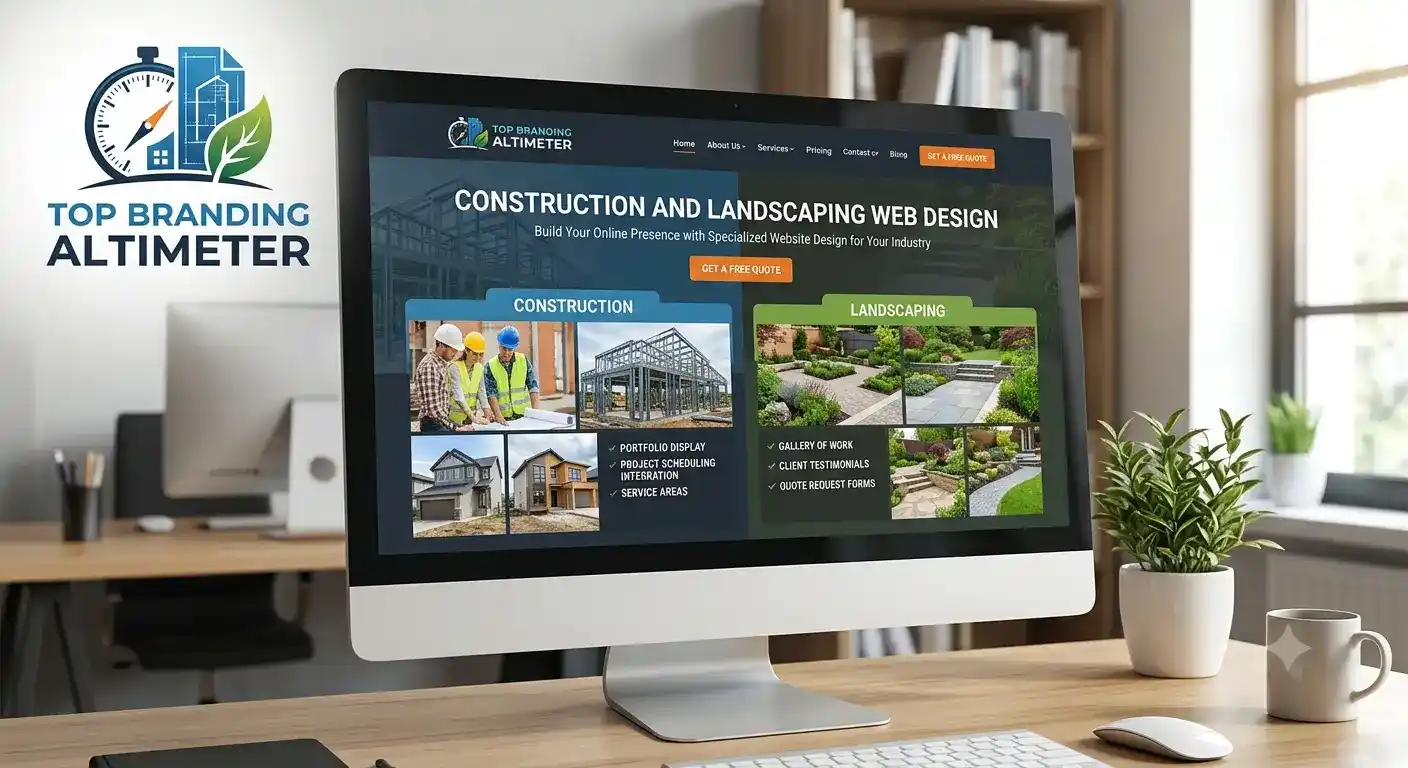
Construction and landscaping web design is the specialized practice of building, structuring, and optimizing websites specifically for builders, general contractors, specialty trades, and lawn care professionals.
It is about more than just making a page look pretty; it is about creating a functional sales tool that builds immediate trust, proves your capability, and converts casual browsers into high-value contract leads.
The Core Elements of Contractor Website Design
A generic, cookie-cutter template won’t cut it for a specialized business. Effective construction web design and landscaping web design require a deep understanding of how property owners make hiring decisions.
Whether you are pouring concrete foundations or designing high-end outdoor living spaces, your digital presence must satisfy specific UX design principles for construction sites (User Experience design).
- Clear Value Proposition: Within three seconds of landing on your page, a visitor must know exactly what services you offer and the specific geographic areas you serve.
- Frictionless Navigation: Property owners are often looking for specific answers—such as structural capabilities, licensing, or commercial project portfolios. The path to this information must be completely obvious.
- Visible Trust Signals: Your licensing, bonding, insurance certifications, and local safety credentials must be prominently displayed to mitigate client risk.
The Contractor Website Development Process
Building a high-performing site doesn’t happen by accident. A professional contractor website development process follows a structured blueprint, very similar to a construction project:
+--------------------+      +--------------------+      +--------------------+
|   1. Blueprint     | ---> |  2. Framework      | ---> |  3. Finishes & SEO |
| Wireframing & UX   |      | Development & Code |      | Launch & Lead Gen  |
+--------------------+      +--------------------+      +--------------------+
- The Blueprint (Discovery & Wireframing): Mapping out the site architecture. This phase determines the user journey and plans out the specific pages needed to convert traffic.
- The Framework (Development): Writing clean code, setting up a secure Content Management System (CMS), and ensuring rapid loading speeds through proper custom web development.
- The Finishes (Content & Design): Integrating high-resolution project imagery, writing SEO-optimized copy, and embedding clear call-to-action (CTA) buttons.
Landscaping Marketing Strategy 2026: The Digital Shift
The residential and commercial markets have changed. A modern landscaping marketing strategy 2026 heavily relies on a concept called “visual proof.”
Modern clients expect an interactive experience. Landscaping website development must focus heavily on localized search optimization, similar to local SEO strategy tactics, and lifestyle marketing.
Homeowners aren’t just buying lawn mowing; they are buying an outdoor lifestyle, an entertainment space, and improved curb appeal.
Your web design must reflect that aspirational feeling through immersive, high-quality digital layouts — the same approach used in our construction website design projects.
FAQs: Construction and Landscaping Web Design
Why do contractors need professional websites?
A professional website acts as your 24/7 digital sales representative. It validates your business legitimacy, differentiates you from unlicensed “trunk slammers,” and allows you to control the narrative of your brand instead of relying solely on third-party review platforms.
How does web design help generate leads?
Good design guides a user’s eyes naturally toward your business goals. By strategically placing clear contact forms, click-to-call buttons, and prominent “Request a Quote” buttons, professional web design removes the friction that normally prevents a user from reaching out to a company.
What features should a contractor website have?
Every high-converting trade site needs a fast-loading project gallery, an easily accessible online contact form, real-time customer testimonials, clear service area maps, and detailed pages detailing your specific licensing and insurance credentials.
Why is mobile responsiveness important?
Most homeowners search for emergency repairs or local landscaping ideas on their smartphones while sitting on the couch or standing in their yards. If your site doesn’t display perfectly on a mobile-friendly web design, users will immediately back out and click on a competitor’s link.
Does web design affect SEO rankings?
Yes, significantly. Search engines like Google actively penalize sites that load slowly, have poor mobile layouts, or confuse users. Clean, semantic coding and a strong structural layout form the foundation of successful small business web design for builders.
What pages should landscaping websites include?
Beyond the homepage, a solid site requires dedicated pages for individual core services, a comprehensive Project Gallery, a clear Service Area page, an About Us page introducing the crew, and a dedicated Contact/Quote Request page.
How often should a contractor website be redesigned?
To keep pace with evolving security standards, modern design trends, and Google’s algorithm updates, you should consider a professional refresh or full website redesign every 3 to 5 years.
Can a better website increase quote requests?
Absolutely. A user-friendly layout that addresses consumer pain points, displays stunning visual proof of past projects, and offers an incredibly simple estimation form can easily double or triple your existing conversion rate.
What makes a high-converting contractor website?
High-converting sites combine beautiful visual proof with clear, direct psychological reassurance. This means pairing high-resolution imagery of your completed work directly alongside real, authentic customer reviews and prominent call-to-action buttons, following the same high-converting website principles used across industries.
Should construction websites include project galleries?
Yes. Your portfolio is your primary closing tool. Property owners want to see visual proof that you have completed projects identical to theirs. Always include high-resolution “Before and After” galleries with summaries detailing the scope of the work.
When should I hire a web design agency?
You should hire a specialized contractor website design agency when your current site is failing to bring in qualified leads, when you lack the technical expertise to optimize for local search engines, or when your business has expanded to the point where your digital presence no longer reflects the true quality of your physical work. Learn more about choosing a web design agency.
Explore More From Top Branding Altimeter
The links below didn’t fit naturally into the article above, but are added here as required:
- Web Design Phoenix AZ
- Web Development Services
- Shopify Store Development
- Google Ads for Doctors SEO Outline
- Social Media Marketing Packages
Ready to Grow Your Business?
Get expert guidance tailored to your brand — completely free consultation
Get Free Consultation