
- What Is Topical Authority in SEO?
- Why Topical Authority Matters in 2026
- How Google Measures Topical Authority
- Topic Clusters vs. Traditional Keyword Targeting
- How to Build Topical Authority Step by Step
- Common Topical Authority Mistakes
- Tools for Building Topical Authority
- How Topical Authority Improves AI Search Visibility
- Topical Authority SEO Pricing
- How Our SEO Team Builds Topical Authority
- FAQs – Topical Authority SEO
Topical authority SEO means building a connected body of content—a pillar page plus supporting cluster articles—that proves to Google and AI search tools your site genuinely understands a subject, instead of publishing single, isolated posts hoping to rank for one keyword.
But if you’ve noticed your posts sitting on page two no matter how well you optimize them, the problem probably isn’t your writing; it’s your strategy.
Google isn’t just looking at individual pages anymore; it’s looking at your whole site and asking: does this business actually know this topic, or did they just write one good article about it?
That’s what topical authority SEO is about — building content that proves depth, not just relevance.
In this guide, we’ll break down what topical authority actually means, why it matters more than ever in 2026, pricing for working with an SEO team, and exactly how to build it step by step even if you’re running a small site with limited resources.
What Is Topical Authority in SEO?
Topical authority is how much Google trusts your site to be a reliable source on a given subject based on the breadth and depth of content you’ve published about it, not just how well one page targets one keyword.
Here’s the distinction that trips most people up: ranking for a keyword means one page answered one query well.
Topical authority means your entire site has demonstrated, across multiple connected pages, that you understand a topic from every angle a reader might search it.
A single well-optimized blog post can rank. But it takes a body of related, well-linked content to convince Google and readers that you’re actually an authority.
This is where topical relevance and semantic SEO come in. Google’s algorithms don’t just match exact keywords anymore; they understand the relationships between concepts.
So if you write about “logo design,” Google expects to see your site also cover related ideas like brand identity, color psychology, or typography because that’s what a genuine expert on the topic would naturally write about. Our own brand identity design guide is a good example of this kind of connected coverage.
Sites that only ever publish isolated, keyword-targeted posts with no connective tissue between them read as shallow to both Google and readers, even if each post is well-written.
The practical upshot: if you want to rank, you can’t just write good posts anymore. You have to build topic coverage.
Why Topical Authority Matters in 2026
Search has changed more in the last two years than in the decade before it.
Google’s AI Overviews, ChatGPT, Perplexity, and other AI-driven search tools don’t just crawl for keyword matches; they’re trying to understand what a source knows and whether it can be trusted enough to summarize or cite.
That shift makes topical authority more important now than it’s ever been, because shallow, one-off content simply doesn’t give these systems enough signal to work with.
For small businesses especially, this is actually an opportunity. You don’t need the domain authority of a national brand to build topical authority — you need focus.
A local roofing company that thoroughly covers every angle of roof replacement, from cost to materials to insurance claims, can out-rank a much bigger site that only has one thin page on the topic. This is the same logic behind our approach to contractor SEO.
Entity SEO plays into this too: Google is increasingly good at recognizing your business as an “entity” tied to a specific topic, and every well-connected piece of content you publish reinforces that association.
Search intent matters more here than ever, too. Ranking isn’t just about matching words anymore — it’s about proving your content actually answers what the searcher meant to ask, at the stage they’re asking it.
How Google Measures Topical Authority
Google doesn’t have a single “topical authority score” it hands out, but its systems evaluate a cluster of signals that add up to the same effect.
- Depth of coverage: Do you have multiple pieces of content addressing different angles, questions, and subtopics within a subject — or just one page trying to cover everything?
- Internal linking: How your pages connect matters almost as much as the content itself. A pillar page that links out to supporting articles, and supporting articles that link back, tells Google these pages are part of a deliberate, organized body of knowledge, not a random collection of posts.
- Content freshness: Topics evolve, and so should your content. Regularly updated pages signal that your site is actively maintaining its expertise, not coasting on something written years ago.
- EEAT: This stands for Experience, Expertise, Authoritativeness, and Trust; the framework Google’s quality raters use to evaluate content. Experience means showing you’ve actually done the thing you’re writing about, not just researched it. Expertise is demonstrated knowledge. Authoritativeness comes from other sites and sources recognizing you as credible. Trust covers accuracy, transparency, and things like clear business information and honest claims. Topical authority and EEAT reinforce each other — see our full breakdown of Google E-E-A-T SEO for more. The more topical depth you build, the more naturally EEAT signals tend to follow.
- Keyword clustering: Google groups related search queries together, and sites that cover a cluster comprehensively rather than chasing one keyword in isolation tend to be rewarded across the entire group of related searches, not just the one they optimized for.
Topic Clusters vs. Traditional Keyword Targeting
For years, the standard SEO playbook was simple: pick a keyword, write a page, optimize it, repeat.
That approach isn’t dead, but on its own, it’s no longer enough, and understanding why comes down to the difference between traditional keyword targeting and topic clusters.
Traditional keyword targeting treats each page as its own island. You write one post about “roof replacement cost,” another about “roof repair signs,” another about “roofing materials,” each optimized in isolation, with little or no connection between them. Individually, these pages might rank. But Google has no strong signal that your site, as a whole, is an authority on roofing.
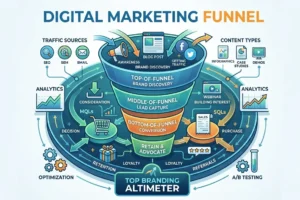
Topic clusters flip that model. Instead of isolated pages, you build a pillar page — a broad, comprehensive page covering a core topic, supported by cluster content: a set of related articles that each go deep on a specific subtopic and link back to the pillar.
Together, these form a content silo: a clearly organized section of your site that Google can recognize as a complete, connected body of knowledge on one subject. This is also the exact structure behind our on-page SEO checklist.
The practical difference shows up in results. A single standalone post might rank for one query. A well-built topic cluster tends to rank for dozens of related queries simultaneously, because it demonstrates comprehensive coverage rather than a single answer.
It also compounds. Every new piece of cluster content you add doesn’t just rank on its own; it reinforces the authority of the entire cluster, including pages you published months or years earlier.
How to Build Topical Authority Step by Step
Building topical authority isn’t complicated, but it does require a plan. Publishing at random won’t get you there no matter how much content you produce. Here’s the process:
- Choose your core topic: Pick a broad subject central to your business. Something you genuinely have expertise in and that your customers actually search for.
- Map subtopics through keyword research and search intent: Identify the full range of questions and related topics people search around your core subject. Group them by intent: informational, commercial, transactional, so you know what kind of content each subtopic needs.
- Build your pillar page: Create one comprehensive page that broadly covers the core topic and links out to each subtopic you’ll cover in more depth elsewhere.
- Build cluster content: Write focused articles on each subtopic identified in step two, each one going deeper than the pillar page can on that specific angle.
- Internal link strategically: Link every cluster article back to the pillar page, and link related cluster articles to each other where it makes sense. This internal linking structure is what actually signals topical authority to Google. Content alone isn’t enough.
- Maintain and expand: Topical authority isn’t a one-time project. Update existing content as the topic evolves, and keep adding new cluster pieces as you identify gaps or new subtopics worth covering.
Build a Content Cluster That Ranks
Get a pillar-and-cluster strategy that grows your organic traffic.
Common Topical Authority Mistakes
Even businesses that understand the concept of topical authority often undermine their own efforts with a few avoidable mistakes.
- Publishing without a content plan. Writing posts as ideas come to you, with no map of the topic as a whole, almost always produces overlapping or disconnected content instead of a real cluster.
- Skipping internal linking. This is the most common mistake by far. Businesses write strong, relevant content but never link it together so Google sees a pile of separate pages instead of one organized body of knowledge.
- Overlapping or duplicate topics. Writing multiple posts that answer nearly the same question splits your own authority instead of building it, and can cause your pages to compete against each other in search results.
- Ignoring search intent. A subtopic might be worth covering, but if the content doesn’t match what someone at that stage is actually looking for — informational content answering a transactional query, for example — it won’t perform, no matter how well-researched it is.
- Chasing volume over relevance. Publishing a high quantity of thin, loosely related posts doesn’t build topical authority; it dilutes it. A smaller cluster of genuinely comprehensive, well-connected content consistently outperforms a large volume of shallow posts.
Fix Your SEO Content Gaps
Get an expert audit to find and fix weak or disconnected content.
Tools for Building Topical Authority
You don’t need an expensive tech stack to build topical authority, but a few categories of tools make the process significantly more efficient:
- Keyword research tools help you map the full scope of a topic, the subtopics, questions, and related searches you need to cover to build genuine depth.
- Content clustering and planning tools help you organize keywords into logical groups, so you can see which subtopics belong together in the same cluster before you start writing.
- Internal link auditing tools show you how your existing pages connect (or don’t), which is essential for identifying gaps in a cluster’s link structure.
- Content gap analysis tools compare your existing content against a topic’s full scope, or against competitors, to surface subtopics you haven’t covered yet.
None of these tools build topical authority on their own — they simply make it easier to plan and execute the strategy consistently, which is where the real results come from.
How Topical Authority Improves AI Search Visibility
AI-driven search, Google’s AI Overviews, ChatGPT, Perplexity, and similar tools work differently from traditional search results.
Instead of just ranking pages, these systems summarize or cite sources they judge to genuinely understand a topic.
That judgment leans heavily on the same signals that build topical authority in traditional SEO: depth of coverage, internal linking, and consistent, connected content on a subject.
A single isolated blog post rarely gets pulled into an AI-generated answer, because it doesn’t give the AI system enough context to confirm expertise.
A well-built topic cluster does the opposite — it gives these tools multiple connected pieces of evidence that your site actually knows the subject, which makes it far more likely to be surfaced or cited.
This is part of why topical authority matters more now than it did even a few years ago. It’s no longer just about ranking on a results page; it’s about being the source AI tools trust enough to reference at all.
Businesses that build genuine topic clusters now are positioning themselves for visibility across both traditional and AI-driven search, instead of optimizing for a search landscape that’s already shifting.
Get Found in AI Search Results
Future-proof your content strategy for Google AI and ChatGPT visibility.
Topical Authority SEO Pricing
Every SEO package below is currently 50% off and includes guaranteed ranking on Google within a minimum of 3 months.
| Basic SEO Package | Startup SEO Package (Popular) | Business SEO Package (Best Choice) |
|---|---|---|
| $299 |
$699 |
$1299 |
| 10 Keywords Guaranteed Ranking On Google (Min 3 Months) Off-Site Optimization On-Site Optimization |
25 Keywords Guaranteed Ranking On Google (Min 3 Months) Off-Site Optimization On-Site Optimization |
40 Keywords Guaranteed Ranking On Google Off-Site Optimization On-Site Optimization Technical SEO |
For rush delivery or a custom topical authority audit, call us at (608) 745-2868 or order now.
How Our SEO Team Builds Topical Authority
At Top Branding Altimeter, building topical authority isn’t a one-off blog project — it’s a structured process built into every SEO service we run for clients.
We start by identifying a core topic central to your business, then map out the full range of subtopics your customers are actually searching for, grouped by search intent.
From there, we build a genuine pillar-and-cluster structure: comprehensive pillar pages supported by focused cluster content, all connected through deliberate internal linking, not scattered posts hoping to rank individually. If you’re just getting started, our SEO for beginners guide is a good place to start.
We also treat topical authority as ongoing, not a one-time project. As search behavior shifts and new subtopics emerge, we update existing content and expand clusters to keep pace, rather than letting content go stale.
If you’re ready to move beyond one-off blog posts and start building content that genuinely ranks and holds its ranking,
reach out to our team for a topical authority audit of your site.
FAQs – Topical Authority SEO
What Is Topical Authority in SEO?
Topical authority is how much Google trusts your site as a reliable source on a subject, based on the breadth and depth of related content you’ve published — not just how well one page targets one keyword.
Why Topical Authority Matters in 2026?
Search has shifted from keyword-matching to understanding entities and intent, especially with AI Overviews and AI-driven search tools. Sites that demonstrate genuine depth on a topic get rewarded across many related searches, not just one.
How Google Measures Topical Authority?
Google evaluates a cluster of signals: depth of content coverage, internal linking between related pages, content freshness, and EEAT (Experience, Expertise, Authoritativeness, Trust). There’s no single score — these signals work together.
How to Build Topical Authority Step by Step?
Choose a core topic, map subtopics through keyword research and search intent, build a pillar page, create supporting cluster content, link everything together strategically, and maintain and expand the cluster over time.
Topic Clusters vs Traditional Keyword Targeting
Traditional keyword targeting treats each page as an isolated island. Topic clusters connect a pillar page with related cluster content through internal linking, forming a content silo that signals comprehensive topical coverage to Google.
Common Topical Authority Mistakes
The biggest ones: publishing without a content plan, skipping internal linking, creating overlapping or duplicate topics, ignoring search intent, and prioritizing volume over relevance.
Tools for Building Topical Authority
Keyword research tools, content clustering and planning tools, internal link auditing tools, and content gap analysis tools all help, but none of them build topical authority on their own. Consistent strategy and execution do.
How Topical Authority Improves AI Search Visibility
AI search tools favor sources that show connected, in-depth coverage of a topic over single isolated pages. A well-built topic cluster gives these tools enough context to trust and cite your content.
How Our SEO Team Builds Topical Authority
We identify a core topic, map subtopics by search intent, build a pillar-and-cluster content structure connected through deliberate internal linking, and maintain and expand it over time as search behavior evolves.
You Might Also Find Helpful
- Web Design & Development Services — a fast, well-structured site makes topical authority easier to build.
- Shopify Store Development — for ecommerce sites building topical authority around products.
- Social Media Marketing Packages — distribute your cluster content to build wider topic signals.
- Google Ads for Doctors — pair topical authority with paid visibility for medical practices.
- Web Design in New York City — local web design support if you’re NYC-based.
- Web Development in Los Angeles — local web development support if you’re LA-based.
Ready to Grow Your Business?
Get expert guidance tailored to your brand — completely free consultation
Get Free Consultation