Mobile Friendly Website Design Matters
Written by John J. Michaels | Dec 26, 2025
Here’s the truth: people are impatient online. If a website doesn’t load fast, doesn’t fit the screen, or makes you zoom in just to read a sentence, most people leave within seconds. No second chances. No scrolling. They’re gone.

Google knows this. That’s why mobile friendly website design isn’t optional anymore — and by 2026, it’s one of the biggest factors deciding whether your site gets seen or ignored.
Your Website Is Judged on Mobile First

Google now looks at your website the same way most people do: on a phone.
That means the mobile version of your site is what determines your rankings. Not your desktop design.
Not how good it looks on a big screen. If your mobile experience is slow, messy, or confusing, Google assumes users won’t like it — and your rankings drop. Simple as that.
What “Mobile-Friendly” Actually Means
A lot of people think mobile-friendly just means “it fits on a phone.” That’s not enough.

A mobile-friendly website:
- Loads quickly, even on slower connections
- It is easy to read without pinching or zooming
- Has buttons you can actually tap
- Feels smooth, clean, and effortless
If using your site feels like work, users won’t stick around. And neither will search engines.
Bad Mobile Experience = Bad SEO
Google pays close attention to what people do on your site. If visitors land on a page and leave right away, it’s a red flag.

A poor mobile experience leads to:
- Higher bounce rates
- Less time on your site
- Fewer clicks and interactions
All of that tells Google your site isn’t helping users — which hurts your SEO.
On the other hand, when your mobile site is easy to use, people stay longer, read more, and engage. That’s exactly what Google wants to see.
Why Core Web Vitals Matter More Than You Think
Core Web Vitals are just Google’s way of measuring how frustrating (or smooth) your website feels.

They look at things like:
- How fast does the main content load
- How quickly the site responds when someone taps
- Whether the page jumps around while loading
You don’t need to understand the technical side to get the point: a faster, more stable mobile site ranks better.
Writing Content for Mobile Users (Not Just Search Engines)
Most people aren’t carefully reading blogs on their phones. They’re skimming.
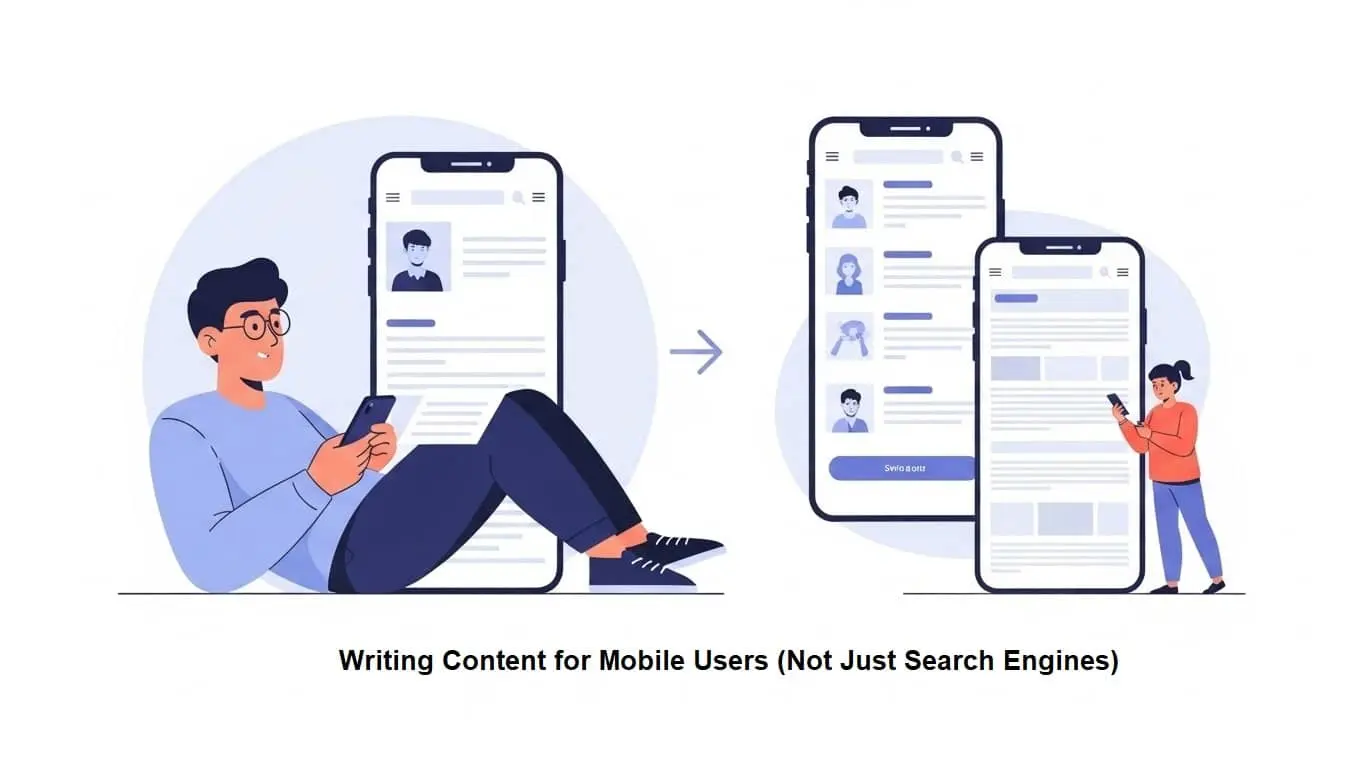
That’s why mobile-friendly content should:
- Use short paragraphs
- Break ideas into clear sections
- Get to the point quickly
- Feel natural, not stuffed with keywords
Yes, keywords like mobile friendly web design, responsive website, and mobile UX still matter. But if the content doesn’t feel human, people won’t read it — and Google notices that too.
What This Means for SEO in 2026
SEO in 2026 is less about tricks and more about experience.
Websites that win are the ones that:
- Works perfectly on mobile
- Load fast
- Feel easy and natural to use
- Respect the user’s time
If your site does that, Google will reward it. If it doesn’t, no amount of optimization will save it.
If your website isn’t mobile-friendly, you’re not just behind — you’re invisible.
People expect websites to work smoothly on their phones. Google expects it too. And by 2026, there’s no excuse not to get it right.
A mobile-friendly website isn’t about following trends. It’s about meeting people where they are — which, most of the time, is on their phone.