
- Branding Strategy for Startups: Step-by-Step Guide
- The Foundation: Why Startup Branding Isn't Just a Logo
- Phase One: Master Your Brand Messaging (The "Soul")
- Phase Two: Visual Identity (The "Skin")
- Phase Three: Strategic Positioning (The "Battlefield")
- Phase Four: The Rollout (The "Execution")
- Measuring Success: How Do You Know It's Working?
- The Altimeter Conclusion: Branding is a Marathon, Not a Sprint
Branding Strategy for Startups: Step-by-Step Guide

Let’s be honest: in the early days of a startup, “branding” usually sits at the bottom of a very long, very stressful to-do list.
You’re worried about runway, product-market fit, and fixing that bug that’s crashing the beta at 3:00 AM. You figure you’ll just grab a sleek font, a blue-ish color palette, and call it a day.
But here’s the cold, hard truth: Product gets people to try you. Brand gets them to stay.
In a crowded market, your branding strategy for startups is your moat. It’s the emotional shorthand that tells a customer, “We get you.” If you wait until you’re “big enough” to care about branding, you’ve already lost the chance to own your narrative.
The Foundation: Why Startup Branding Isn’t Just a Logo

Before we talk about hex codes or typography, we have to debunk a myth. Your brand is not your logo. Your logo is just the storefront sign. The brand is the experience people have once they walk through the door.
For a startup, branding is about trust-building at scale. You are the new kid on the block. No one knows you, and frankly, no one owes you their attention.
A cohesive startup branding effort bridges the “credibility gap.” It makes you look like a permanent fixture rather than a fleeting experiment.
The Psychology of First Impressions

Research shows it takes about 0.05 seconds for users to form an opinion about your brand online. In that blink of an eye, your brand identity has to communicate:
- What do you do?
- Who do you do it for?
- Why you’re better than the “big guys.”
Phase One: Master Your Brand Messaging (The “Soul”)

If you can’t explain what you do to a five-year-old, you don’t have a messaging problem; you have a clarity problem. Brand messaging is the most vital—and most ignored—part of the startup journey.
Step 1: The Value Proposition

Stop listing features. No one cares that your app has a “proprietary AI-driven backend.” They care that your app saves them two hours of soul-crushing admin work every Friday.
- Feature: 24/7 automated syncing.
- Benefit: Never lose a file again.
- Value: Peace of mind.
Step 2: Defining the Brand Voice

Are you the “Cool Older Brother” (approachable, experienced, slightly casual) or the “Expert Surgeon” (precise, formal, authoritative)?
Your voice should be consistent across every touchpoint—from your 404 error pages to your investor pitch decks. If your website is formal but your social media is full of memes, you’re creating “brand friction.” Friction leads to confusion, and confusion kills conversions.
Phase Two: Visual Identity (The “Skin”)
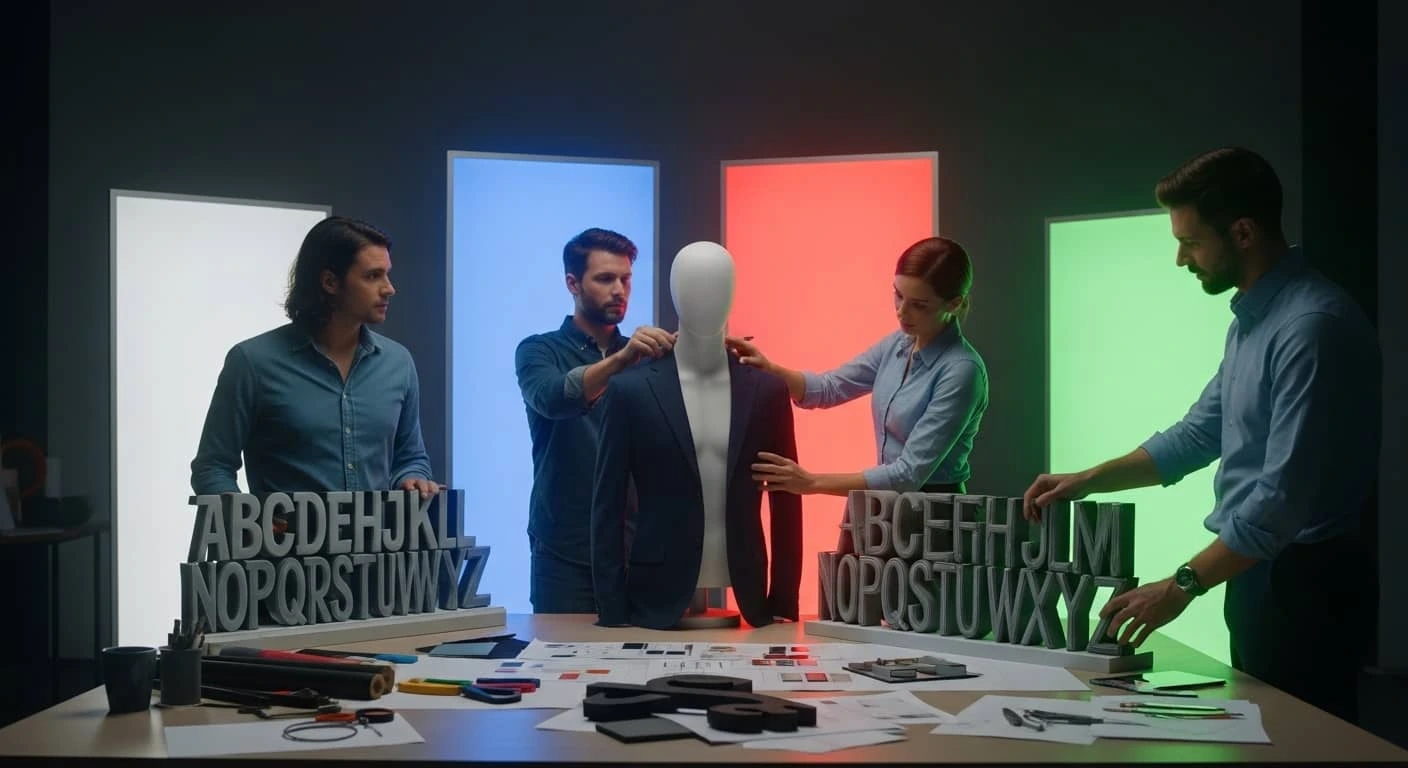
Once the soul is defined, it’s time to give it a face. This is your visual identity. For startups, the goal here is scalability and recognition.
The Power of Color and Type

Don’t just pick colors because you like them. Use color psychology.
- Blue: Trust, security, and stability (Why every bank and tech giant uses it).
- Red: Urgency, passion, and excitement (Netflix, Coca-Cola).
- Green: Growth, health, and calm.
Typography matters just as much. A bold, sans-serif font screams “modern and disruptive,” while a classic serif font whispers “heritage and reliability.” Choose a “suit” that fits the job you’re trying to do.
The Logo: Keep it Simple
Think of the most iconic startup-turned-giants: Airbnb, Uber, Slack. Their logos are so simple a child could draw them from memory.
Your logo needs to work on a massive billboard and as a tiny 16×16 pixel icon on a browser tab. If it’s too intricate, it’s not a logo; it’s an illustration.
Phase Three: Strategic Positioning (The “Battlefield”)
You don’t win by being “the same, but better.” You win by being different. Finding the “White Space”
Look at your competitors. If they are all talking about “efficiency,” you should talk about “creativity.” If they are all focusing on “enterprise-grade security,” you focus on “human-centric design.”
Market differentiation is about finding the gap in the conversation and standing right in the middle of it.
Developing Your Narrative
Every great startup is a “David” fighting a “Goliath.”
- The Villain: What is the old, broken way of doing things?
- The Hero: Your customer.
- The Guide: Your brand.
Your branding should position your startup as the guide that helps the hero defeat the villain.
Phase Four: The Rollout (The “Execution”)
A branding strategy for startups is useless if it stays in a PDF on Google Drive. You have to breathe life into it.
Consistent Touchpoints
Every time a customer interacts with you, it’s a “brand deposit” or a “brand withdrawal.”
- The Website: Does the copy match the tone? Is the UX seamless?
- Email Marketing: Are you providing value, or just shouting “Buy Now”?
- Customer Support: This is where brands are truly made. A startup that handles a mistake with grace and personality wins a customer for life.
Internal Branding: Start from Within
Your first five employees are your biggest brand ambassadors. If they don’t understand the mission or the identity, how can you expect your customers to? Branding should be part of your onboarding process. Every team member should know the “Why” behind the “What.”
Measuring Success: How Do You Know It’s Working?
Branding is notoriously hard to measure, but for a startup, there are key indicators:
- Direct Traffic: Are people typing your URL directly into the bar?
- Referral Rates: Are customers telling their friends about you? (People don’t refer to products; they refer to stories).
- Price Sensitivity: Can you charge a premium because people trust your name?
- Talent Acquisition: Are high-level candidates reaching out to you because they love what you stand for?
The Altimeter Conclusion: Branding is a Marathon, Not a Sprint
Your brand will evolve. The identity you have at the Seed stage might look very different by Series C. That’s okay. The most successful startups are the ones that are agile enough to pivot their product but grounded enough to keep their core brand values intact.
Don’t just build a company. Build a legacy with Top Branding Altimeter. Start with a strategy that treats your brand as your most valuable asset, because, in the long run, it is.